

Depression-Era Potato Soup Remains An Affordable Option And Only Requires 3 Ingredients
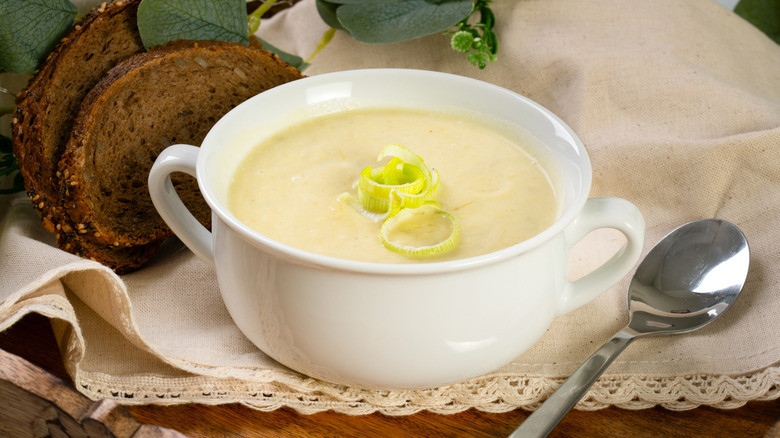
If you've ever sat through history class, you'll know that the Great Depression was an unprecedented era of hardship in American history. Quieting the excess and frivolity of the Roaring Twenties, it ushered in a decade where families had to get by with whatever little they could afford. One of the most visible signs of the Depression was food. A cuisine once defined by abundance and diversity was stripped down to the bare necessities, but people are resourceful, and plenty of delicious, affordable recipes were born out of pure necessity — like meatloaf, America's favorite dinner. A perfect example of this was potato soup, a humble concoction of potatoes, milk, and butter that offered a comforting escape from hard times.
One no-frills potato soup recipe was published in a 1935 edition of the Journal Tribune: "Potato soup is nice and inexpensive. Take four potatoes boiled and mashed, one quart of milk, [a] piece of butter [the] size of a walnut, [as well as] pepper and salt to taste. Put potatoes in milk when heated. Serve." To the modern palate, this simple recipe doesn't sound like much, but we've got to appreciate the context: Potatoes have long been a go-to during periods of food insecurity. Beyond being inexpensive, they're nutritional powerhouses, packed with complex carbohydrates that provided much-needed fuel, along with essential vitamins, minerals, protein, and fiber. They're also remarkably easy to grow, requiring only a small plot of land while producing high yields that could keep an entire family fed for long stretches of time. Milk was another essential, forming the base of countless stripped-back recipes. It was both revered as a "superfood" packed with essential nutrients and an economic boost for struggling dairy farmers.
Give Depression-era potato soup a modern twist
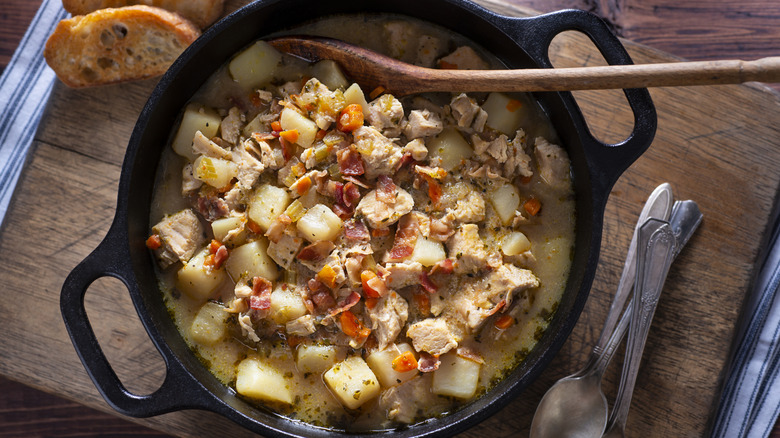
Depression-era potato soup was a recipe born out of necessity, but like many dishes from that period, it's stuck around. These days, most households have access to a much wider variety of fresh produce and seasonings, giving cooks plenty of room to boost the flavor while keeping that same creamy, comforting soul intact.
Giving potato soup a modern upgrade isn't about reinventing it; it means adding what Depression-era cooks simply didn't have access to. Take bacon, for instance. In the 1930s, bacon became a luxury ingredient, and those who had it worked hard to save the rendered fat to flavor beans, season pans, or spread straight onto bread. While it's still never a bad idea to save leftover bacon grease (it's a wonder for frying green tomatoes), we now have the luxury of not having to think twice about whether or not we can spare it. In a modern potato soup, that same fat, rendered slowly until crisp, does double duty; it builds a smoky backbone the original recipe never had while the bacon itself becomes a crunchy garnish.
Aromatics tell a similar story. Onion and garlic prices actually collapsed during the Depression as crop values cratered across the board, but that didn't mean struggling families could suddenly afford them. This meant that building a proper flavor base was simply out of reach for many as the crops were left to rot in the field. Today, sauteing onion and garlic before everything else hits the pot is a non-negotiable for most home cooks — and is the first step in building a complex flavor profile for any dish. Throw in a few spices, another ingredient Depression cooks could only dream of, and you've got a bowl of soup that nods to the hard times while celebrating just how good we've got it today.