

How To Prevent Your Espresso Martini From Being Watery
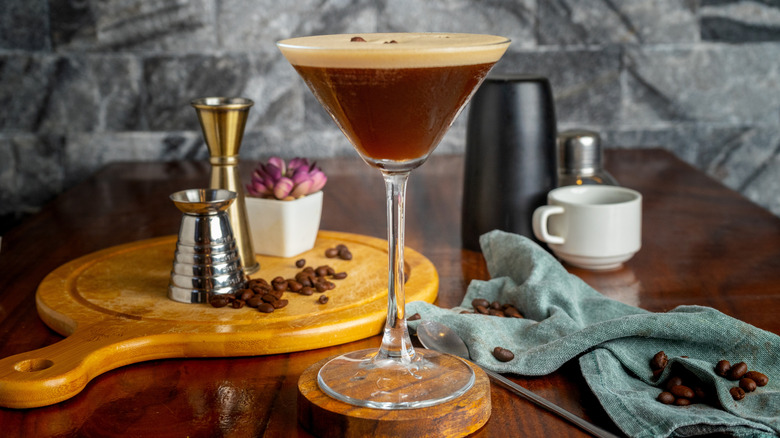
The espresso martini first emerged in the 1980s, shaken up into wide-ranging pairings of coffee and spirits ever since. All in all, the cocktail is straightforward to make, but there are a few details to note when making a batch at home. Most notably, the tipple too easily turns watery — yielding an over-diluted, unbalanced drink.
After all, an espresso martini calls for a hot component amidst preparation, unusual for a chilled cocktail. So if you pour a hot shot of espresso straight into a cold shaker with ice, the mixture melts quickly, resulting in a watery mess. It's a common hiccup that's easy to neglect — but one that comes with many solutions.
For the easiest adjustment, simply cool your freshly pulled espresso prior to shaking, letting it chill for a few minutes in the freezer. You'll lose a touch of flavor and foaming potential, but with a high-quality coffee liqueur, the difference is negligible. Then, you can proceed with a classic espresso martini recipe, combining the coffee, liqueur, and vodka in a shaker with ice. Strain the result, and you'll get a cocktail with a texture that won't disappoint.
More strategies to prevent a watery espresso martini
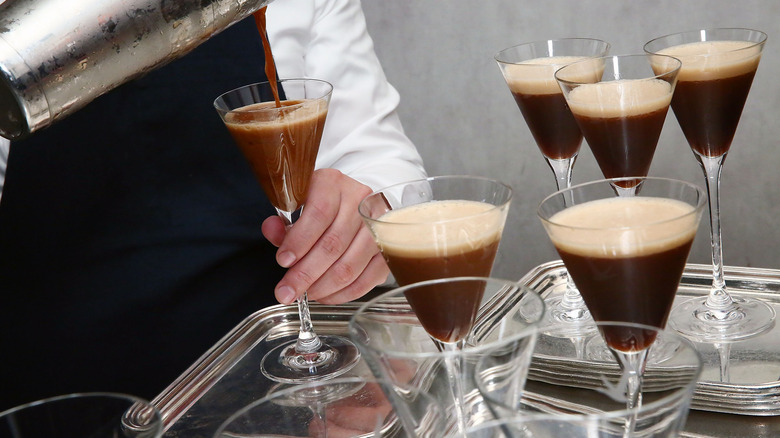
Cooling the espresso is an easy fix, but it's not the only insurance against wateriness. To contrast the heat, ensure other components are kept uber-cold, too. Keep your vodka in the freezer for dependably cold pours, and refrigerate the coffee liqueur – such storage will extend its shelf life anyway. While you're at it, chill your serving vessel. It's one of Ina Garten's cocktail tips, and such a small consideration further prevents heat loss. Keep your cocktail components cold enough, and chilling the espresso becomes less crucial.
Furthermore, you can look toward ditching espresso altogether. Such a cocktail won't be identical — the coffee type is in the name after all — but with proper technique, the drink will still hit the spot. One easy substitute is instant coffee, which offers an intense flavor comparable to espresso but is even easier to prepare. Many bartenders also use cold brew concentrate for a shelf-stable option, avoiding issues of temperature regulation completely. Such coffee types won't always produce the same foamy top, but they won't sacrifice in flavor. So experiment pairing spirits and brew — just don't forget to think about temperature control in the process.