

Here's What Happened To Grocery Store Coin-Operated Rides
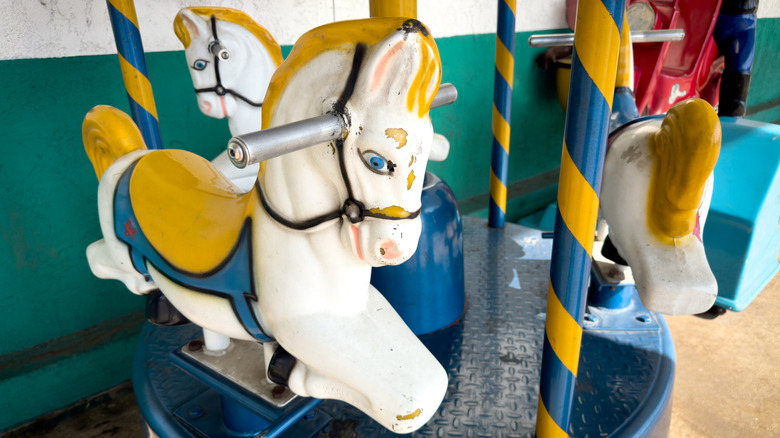
Many folks have fond childhood memories of sitting astride coin-operated kiddie rides at their local grocery store. The amusements ranged in design from mechanical horses and other animals to vehicles like Harley-Davidson motorcycles, John Deere tractors, and speedboats, and they were kid-sized and pure magic. You (or your parents) popped in a coin, and the machine whirred to life, giving you a sized-down version of riding on the real thing.
One doesn't see these attractions much anymore, but in their heyday, they were virtually everywhere and collectively raked in millions of dollars annually (all in coins). There are various reasons why they've largely disappeared. One is liability concerns. An estimated 11,000 injuries resulting from these store-based kiddie rides were reported between 1990 and 2010 (per Hanflik Lawyers), making them a legally unattractive prospect for store operators.
The machines also aren't as profitable as they once were. Kids have changed since the rides were first invented in the 1930s, and the age range of children interested in such amusements has shrunk considerably. With today's technology advances, a mechanical horse that gyrates for a few minutes at a time doesn't hold much interest for an older child. After about age 5, kids want something much more sophisticated to entertain them.
Maintaining the rides and servicing them can also be a hassle, and that problem has only worsened as former U.S. manufacturers have gone out of business, leaving owners of the machines bereft when problems arise. Many remaining machines have fallen into disrepair, further discouraging the patronage of riders. "[Every] swipe/coin is a gamble since most are not maintained or broken," one Reddit user lamented.
Kiddie rides are endangered but not extinct
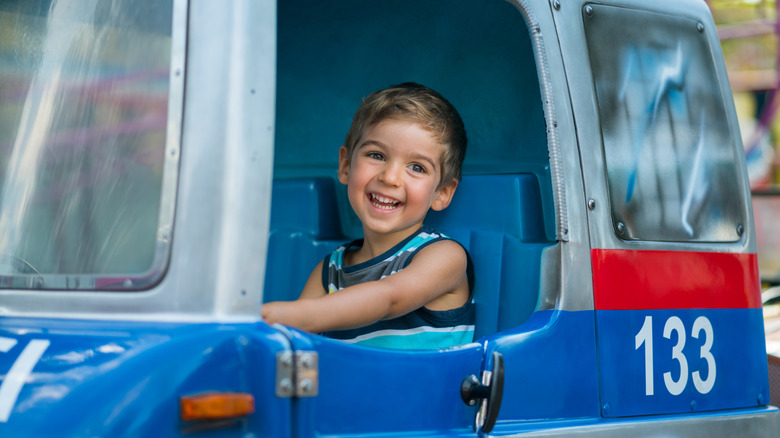
While the market for mechanical kiddie rides has greatly diminished, both new and antique machines still exist. You can sometimes find them at outlying branches of some of America's oldest grocery store chains, for instance, or kid-focused, old-school pizza chains like Chuck E. Cheese. You may even find one lurking at the oldest restaurant in your state.
Some of these mechanical marvels still, wonderfully, survive in my neck of the woods. At an older market a few blocks from my house, there's a vintage motorcycle that lurches back and forth rather aggressively and a much tamer horsey ride, and my toddler loves them. While these machines were originally installed in stores as revenue makers, my local market keeps a supply of coin-shaped tokens on hand so kids can ride for free, and that's the way many of the machines operate nowadays.
The website for a company called Kiddie Rides USA proclaims it to be the "last [standalone] kiddie ride company left in America," and many of its customers don't make any money from the rides they purchase but purchase them for other reasons. The manufacturer's clientele includes medical offices that use the rides as rewards for child patients, as well as private buyers who purchase the machines as amusements for their grandchildren. The company also creates custom, branded rides for corporations that want to display them, and film production companies use the rides as movie set pieces.
For machines still installed as moneymakers, the price has gone up considerably since the days when a turn on the devices cost only a nickel. People report paying more than $3 per ride nowadays, with some of the contraptions converted to accept cashless payments rather than coins.