

Olive Garden Customers Have A Major Gripe With The Chain's Pasta
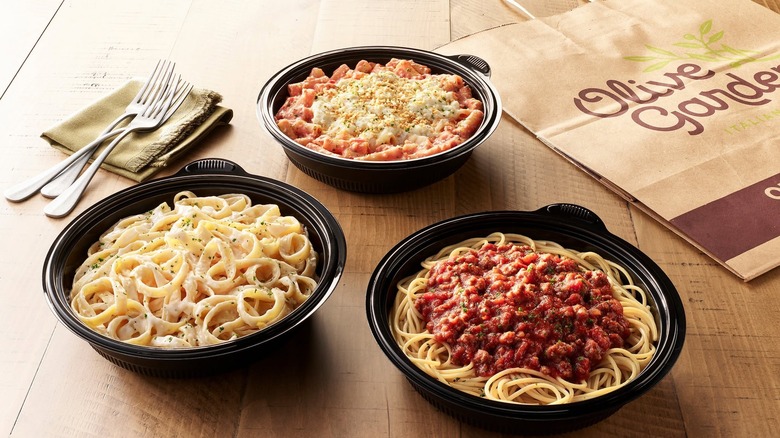
Ever since opening in 1982, Olive Garden has consolidated its place within American casual dining culture, becoming the United States' biggest Italian-themed restaurant franchise — although some question whether it truly serves traditional Italian food in the first place. Instantly synonymous with its hefty portions of pasta with even more substantial sauces, like its fettuccine Alfredo, the chain is not immune from complaints: For some diners, its noodles are considerably mushier than desired.
As per Italian cooking tradition, pasta is supposed to be al dente — cooked through while retaining a firm bite — rather than being sloppy and soft. Cooking times vary according to the pasta's shape and thickness, but most packaged instructions for dried pasta — the sort many large Italian restaurant chains use — suggest around 8 to 12 minutes for the perfect al dente consistency. Overcooking it is often deemed one of the cardinal sins in Italian cooking, one which Olive Garden has been accused of.
The claim that Olive Garden serves overdone pasta has followed the chain through the years, and is particularly prevalent online. In one Reddit discussion, Olive Garden's pasta texture has been compared to a "fine slurry," although other users pushed back, stating they had no issue with it. While the evidence is anecdotal rather than universal, there may be a deliberate reason behind it — which is rooted in Italian-American cooking and the U.S.'s own culinary sensibilities.
Olive Garden might be choosing broad appeal over al dente authenticity
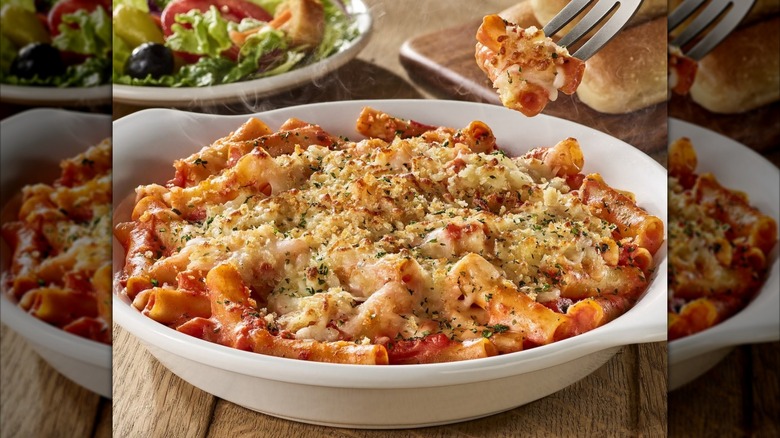
While exploring the reasons behind Olive Garden's (in)famously softer pasta, part of the reason may be practical: Essentially, it's probably linked to the demands of high-volume preparation. In a Reddit thread about Olive Garden's kitchen process, commenters who claimed to be familiar with the restaurant service described pasta being cooked in large batches, chilled, divided into portions, and then briefly reheated. "When an order comes in, the pasta is reheated by dunking it in boiling water for a few seconds or heating it up in the sauce," one user wrote. While this account is anecdotal and not confirmed by Olive Garden itself, it's a common approach for restaurants handling many orders. While it may reduce ticket times, it can also make pasta mushier — often described as one of the key mistakes people make when cooking the ingredient.
But the chain's reported penchant for noodles on the softer side may be an even more intentional choice. Reporting cited by The Wall Street Journal in 2011 stated that Olive Garden served its pasta soft rather than the traditionally firmer Italian approach since it appealed more to the chain's diners. The company's then president also avoided describing the food as authentic, preferring to call it "Italian inspired" (via Eater). When compared to Italy, Americans often prefer their pasta on the more cooked side — and, indeed, pasta doesn't always have to be al dente to be enjoyable. It mostly boils down to subjective taste, with fresh pasta, for instance, being a lot softer than its dried counterpart.