

Martha Stewart Will Probably Never Buy This Kitchen Appliance Again

When you've got a kitchen and career like Martha Stewart's, you get the chance to splurge on appliances that you may not use every day, but that still make your life easier. Still, though Stewart may have the space for a deep fryer, she admitted to Homes & Gardens that she'd probably not buy one again.
Deep fryers are truly remarkable tools that turn one of the messiest, most labor-intensive cooking methods into something as simple as boiling pasta. With computer-controlled temperature gauges, deep wells that prevent splatters, and built-in tools for scooping food from hot oil, they're indispensable appliances in most restaurants, turning an amateur's kitchen into a heavy-duty workstation. However, Stewart said that in 20 years of ownership, she's only used hers once, explaining that she prefers frying in a pot because it uses less oil. Additionally, she pointed out that it takes up a lot of space that could have been put to better use with "two more [stove] burners."
What's more, cleaning a deep fryer is one of the least enviable jobs in a kitchen, right up there with hosing down floor mats and cleaning out the walk-in freezer. While having one may be one reason why potato wedges always taste better at restaurants, it's a pretty huge investment without much return. Stewart instead chooses to use other prep tools, like mandoline slicers and spider baskets, to make the overall process easier and avoid using her hefty appliance.
From outdoor pots to skillets, frying offers endless options
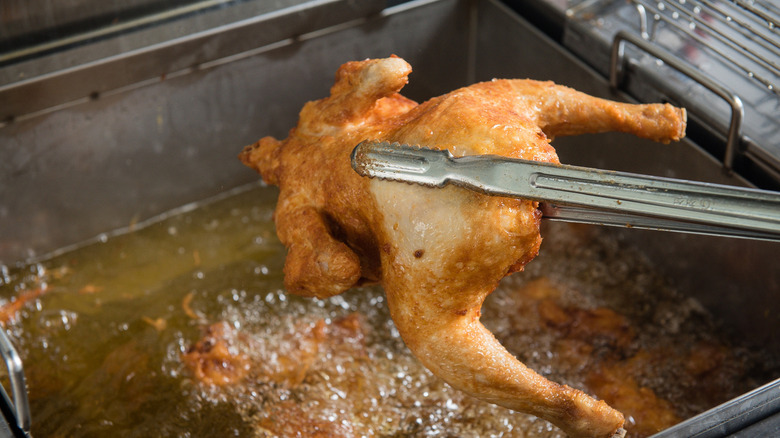
Provided you're developing a crispy, hearty crust and bringing your ingredients to food-safe temperatures, there's no wrong way to fry food. For example, if you've ever seen a video of someone deep-frying a turkey, you've probably noticed that they're doing it outside in a massive steel pot. Broadly considered one of the most efficient ways to fry, this method saves both time and heavy-duty cleanup. Although frying a whole turkey can require up to five gallons of oil, this is actually on the low end compared to what a standard commercial fryer holds. Cooking outdoors also keeps the house from smelling like a burger joint and makes any accidental spills easy to hose down.
For smaller quantities of food, you can also get a little old-school and opt for a cast-iron pan. Not only do these hold and distribute heat quite well, a vital aspect of frying, but they're often deep enough to get the job done without requiring tons of excess oil. While your food may touch the bottom, you can avoid burning with careful heat control and frequent flipping, giving your ingredients good coverage and an even exterior.