

German Vs American Potato Salad: What's The Difference Between The Tried-And-True Classic Sides?
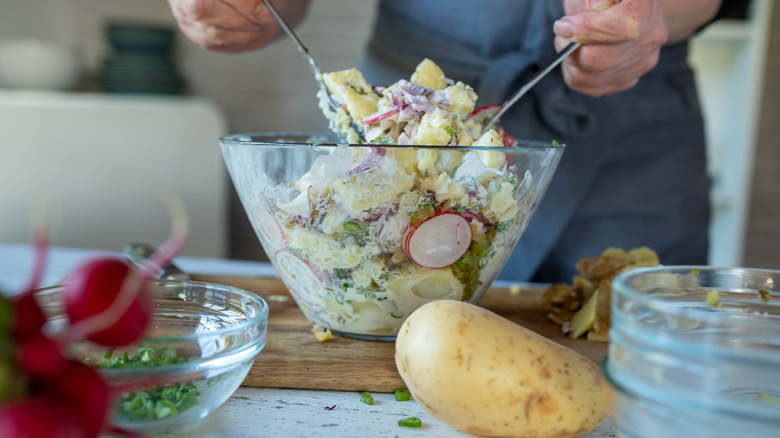
Potato salad is a favorite American side dish that makes an appearance at barbecues and family gatherings but may also arrive in a small cup next to your sandwich at a deli or diner. There are many different types of potato salads in the USA, and even more beyond our borders, including a Russian version. Potatoes originated in the Andes close to 2,000 years ago somewhere around modern-day Peru and Bolivia. The Spanish first incorporated them into a sort of salad based on Iberian recipes for salpicón and escabeche, which include vinegar, oil, and spices, and versions of these Hispanic dishes are still enjoyed today throughout Latin America.
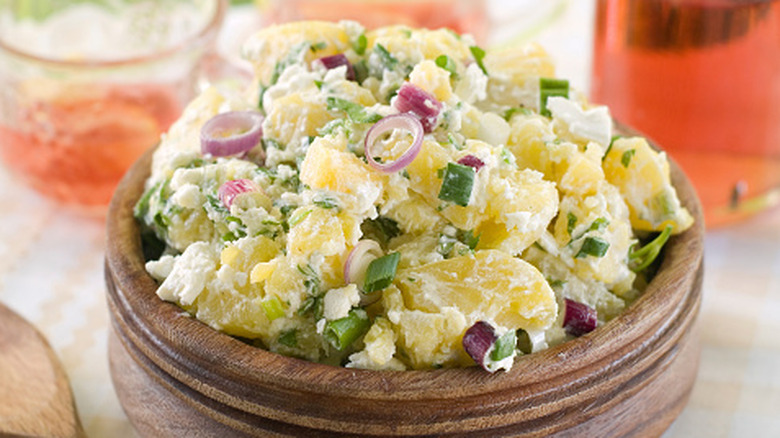
But these early potato salads weren't what inspired the creamy cookout concoction we enjoy in the United States. For that, we need to thank the German immigrants who arrived in the country over 100 years ago. The recipe they brought with them was similar to the early Spanish version in that it contained vinegar and oil. Over time, the preparation evolved to include mayonnaise, which is how modern American-style potato salad emerged. Nevertheless, German-style potato salad is still a thing in the United States, and there are a couple of differences between it and its New World descendant. Besides its tangy, non-creamy dressing, the Teutonic version is served warm, whereas the American version is served cold and almost always dressed with mayonnaise. But there's a little more to the story of how these two types of starchy sides have come to coexist in American cuisine.
German potato salad is still enjoyed in the US as it is in Germany
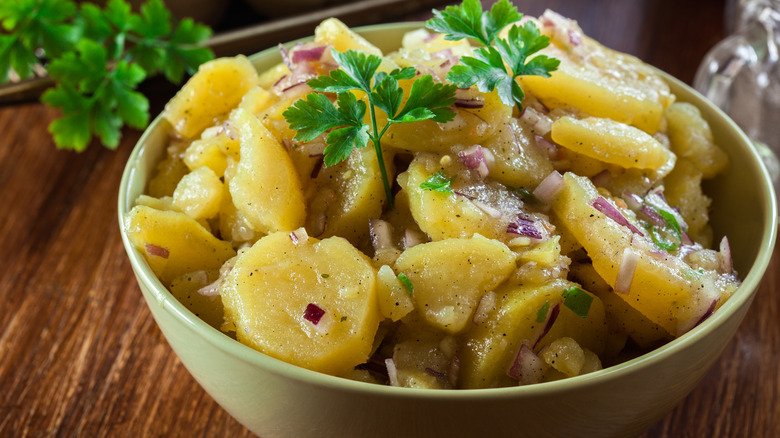
According to the American Community Survey in 2022, more Americans claimed German ancestry than any other, which may explain why that country's style of dressing potatoes not only influenced one of the most popular American cold dishes today — but also why the original style is still just as popular. German immigrants settled throughout the United States, from the Deep South to Pennsylvania, and from Texas to the Upper Midwest, and you may still find their version of potato salad over the mayonnaise-dressed style on tables in places like western Pennsylvania and central Texas.
There are actually several styles of traditional potato salad in Germany, and not all of them feature vinegar. In fact, the vinegar-based salads are typically associated with southern Germany, while the North incorporates mayonnaise into its version. Many Germanic immigrants, including the Pennsylvania Dutch, originally came from the southern half of the European nation. And even if they did come from the North, mayonnaise hadn't become widely available in Europe by the time many Germans brought their recipes across the Atlantic, and it was mostly a food of the upper classes. The German potato salad that's enjoyed today in the USA most closely resembles the Bavarian version, which features sliced potatoes — which happens to be Julia Child's preference for any potato salad — and includes pickles, onions, and sometimes bacon.
A meeting of cultures and a culinary innovation gave birth to American potato salad
German immigrants largely fled their homeland because of religious persecution or economic hardships, but others followed suit after the Revolution of 1848 due to their liberal political views. These transplants belonged to the middle classes, were educated, and tended to be more socially open-minded than many white Americans at the time. When they arrived in the American South between 1860 and 1880, they didn't see Black Americans — even enslaved ones — as negatively as others, interacted with them, and may have exchanged recipes, which can explain how potato salad became such an integral part of Black American gastronomy.
Around this time, some of the first potato salad recipes were written down in the United States, and they closely reflected the dish's German roots, calling for potatoes dressed in a simple vinaigrette. Meanwhile, a rich emulsion of egg yolks and oil had become all the rage across Europe. Mayonnaise's exact origins are debated, but the French popularized it, and the sauce was stuck in the realm of haute cuisine for quite some time because of how labor-intensive it was to prepare, requiring a cook to continuously whisk ingredients by hand while adding minute quantities of oil bit by bit.
Funnily enough, it was a family of German immigrants, the Hellmanns, who made mayonnaise widely available to the masses, and the Hellman's brand debuted in 1912, becoming one of the first commercially made mayonnaise to hit shelves. Bottled mayo really took off in the 1920s, and as many Americans began to create versions of the upper-crust preparations they read about, like Waldorf Salad, mayonnaise finally found its way into potato salad. Today, American-style potato salad can be almost anything you want it to be, but it almost always includes mayo and is served cold.