

This Canned Fruit Took Over Breakfast Tables In The '30s
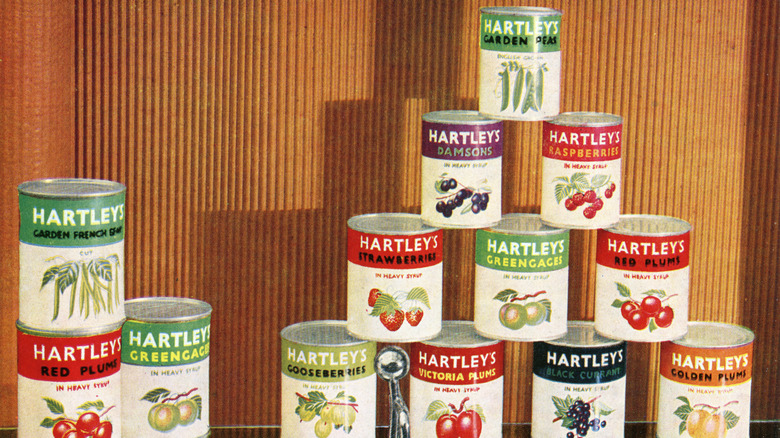
Fruit is one of the main characters of our breakfast tables. Whether that's as avocado smashed on our sourdough toast with eggs, strawberries chopped up in our granola yogurt bowls, or freshly squeezed in our orange juice accompanying our coffee — incidentally, how Elvis Presley liked to start his day — it's an unmistakable part of your typical well-rounded, complete meal after waking up. This was also true back in the 1930s, but interestingly, it was one canned form that commanded people's attention: specifically, canned grapefruit.
Citrus had already been widely promoted as having health benefits before the 20th century, so turning it into a canned good for commercial use helped cement its place within the 1930s pantry. There was no need for fiddling around, slicing it open with a knife or cutting around the membranes, as consumers could easily open a can of peeled "grapefruit hearts" and instantly serve the segments, at times sweetened with sugar or chilled.
Part of the origins of canned grapefruit were as a practical — and profitable — solution to dealing with waste issues. In Florida, where the fruit was widely cultivated, grapefruit that was unsuitable for the market — often through being misshapen, odd in appearance, or irregularly sized — could be processed and sold in a can rather than thrown out. In the early to mid 1920s, around 50,000 grapefruit crates were dumped by one packinghouse; five years later, 1.3 million canned grapefruit heart cases were sold by producers. It's still an issue today — people often throw out fruits and vegetables merely because they "look odd." By the 1930s, canned grapefruit and grapefruit juice came to be valued at over $5 million per season, making the product a major marketing success.
Advertising turned canned grapefruit into an early-century breakfast staple
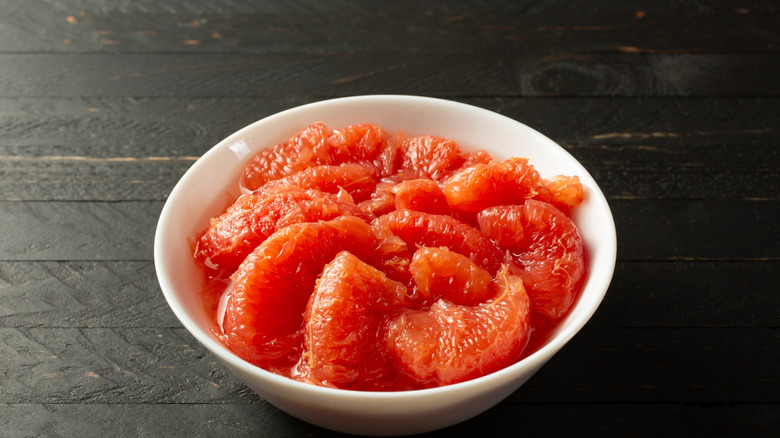
While canning the pink-hued, bitter-tart citrus fruit may have been a conveniently smart manufacturing hack, it did not create the craze alone — clever branding was the machinery behind this. Grapefruit farmers aggressively promoted it as a refreshing, vibrant, and nutritious way to kick off the day, with the Sunkist citrus co-op launching a mammoth campaign in 1930 that hit radio waves, newspapers, and streetcar ads, helping consolidate grapefruit's status within the culturally familiar breakfast line-up: elegantly halved and displayed alongside buttered toast, eggs, and a cup of coffee.
By the 1930s, the grapefruit craze came to be known as the "Hollywood diet," as it was touted for its nutritional properties. The marketing campaign reached such heights that it even made its way across the pond. At the 1936 Olympics in Berlin, Germany, grapefruit was reportedly provided as part of the U.S. team's breakfast, leading to athletes from other countries asking for it as well. Canned grapefruit made the fruit all the more accessible, as it was less perishable and could stay "fresh" for so much longer.
Today, other fruits have taken grapefruit's crown as breakfast staples — bananas, oranges, apples, and berries being arguably more popular — especially as the sharply sour note of the citrus fruit has fallen out of favor. But while it may no longer be the breakfast essential it was 90 years ago, it can still be easily incorporated in your daily diet: salting it, for instance, tricks your taste buds by easing the bitterness. And if canned products are your thing, you can also borrow from Food Republic's list of 15 delicious ways to upgrade your canned fruit, from grilling to adding a dollop of cream.