

Why Restaurants Serve Water With Lemon Slices In It
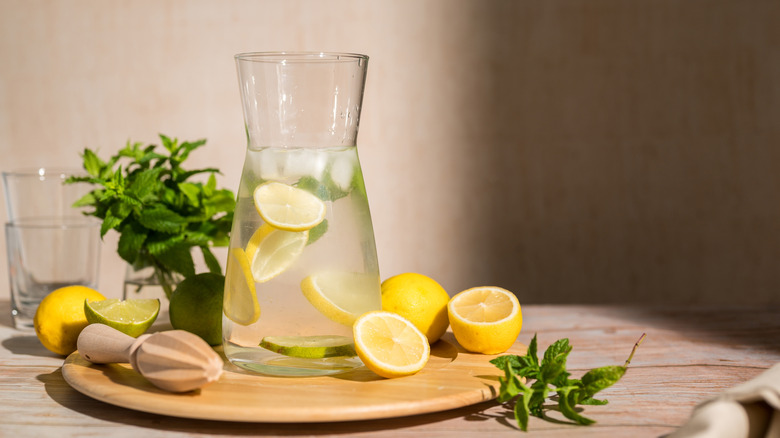
Water and lemon are one of those pairings most people don't give a second thought. No one is complaining about it, either; it gives the water a bit more panache and makes it taste noticeably brighter. But if you spot that lemon wedge floating around your glass at a restaurant, it might not be there purely for show. Sometimes, it's doing a bit of undercover work, and could be masking the taste of subpar tap water.
Let's clear one thing up. Tap water in the United States is strictly regulated by the U.S. Environmental Protection Agency (EPA), making it perfectly safe to drink. But various factors, like aging pipes, the disinfectants used, and even the geological makeup of the water's source, can all subtly affect its final taste. One of the most common culprits is hard water, caused by high levels of natural minerals like calcium or magnesium in the source water, which can leave behind a slightly chalky or metallic taste. This is far more common than most people realize, affecting over 90% of U.S. homes (via ABC17 News).
That's where a squeeze of lemon comes in handy at restaurants. Its bright citrus flavor easily cuts through the mineral edge and smooths out the overall taste to get the meal started on a positive note. The water is also commonly served ice cold, which helps dull your taste buds just enough to mask any residual flavors. Of course, not all restaurant tap water carries that mineral edge. Plenty of spots run their taps through carbon block filters, which are essentially built-in sponges that pull minerals and disinfectants out of the water. Even so, no matter how hard or soft your water is, we'd always welcome a dash of lemon to liven things up.
How else can you boost the flavor of your tap water?
Aside from making it taste better, there are plenty of reasons why we love a splash of lemon in our water. It's a solid source of vitamin C, as well as containing smaller amounts of vitamins and antioxidants. Its acidity can also help stimulate stomach acid production, which some people find eases digestion and bloating after a meal. However, make sure you don't drink too much, as the citric acid can — in extreme cases – wear down your tooth enamel. If lemons aren't your thing, other citrus fruits like lime, orange, or even grapefruit work just as well while bringing their own delicious flavor twist.
If you're eating out on a particularly hot day, it's always worth asking your server if they've got any mint they can add to your tap water. For those unfamiliar with the wonders of this herb, it literally tricks your brain into feeling cooler. See, your tongue and mouth are lined with microscopic sensors called TRPM8 receptors — nerves that are specifically wired to detect cold (per "TRPM8: The Cold and Menthol Receptor"). When you drink water infused with mint, its primary compound, menthol, binds to these receptors and forces them open. This sends a false signal to your brain that the water is far colder than it actually is, making each sip feel extra refreshing.
If the restaurant doesn't have any mint on hand, cucumber is a great alternative that pairs perfectly with lemons. The phrase "cool as a cucumber" is quite literal. They're made up of 96% water, which keeps the vegetable much cooler than its surroundings, making for a crisp, refreshing addition to your water.