

5 Common Problems With Yeti Water Bottles
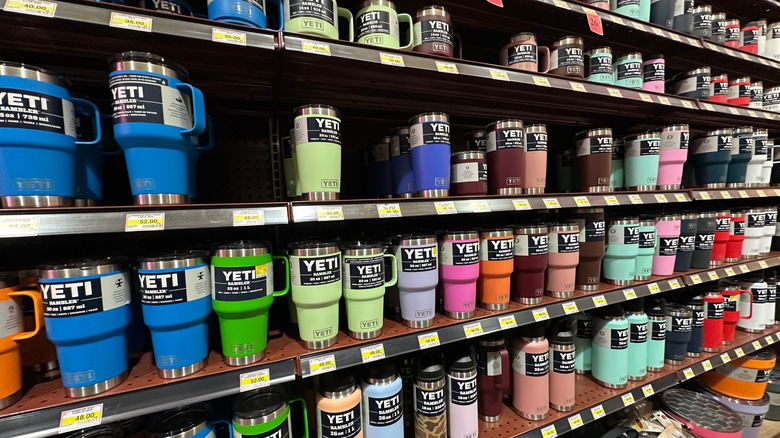
When it comes to the choice of water bottles, the market is positively saturated with options, but many people tend to choose from among the most easily recognizable brand names, like colorful Owalas, the trendy Stanley cups, sizable Hydro Flasks (which require frequent washing), and yes, the reliable and heavy-duty Yeti bottles. Founded in 2006 by Roy and Ryan Seiders, the Yeti company, which sells a variety of outdoor lifestyle products in addition to water bottles, has quickly claimed the top (or near-top) of many "best-of" lists when it comes to its drinkware. However, even the best products on the market aren't perfect 100% of the time, and Yeti bottles do fall victim to some common issues.
Happily, each problem listed below does tend to have a quick fix, so if you're experiencing any of them, we've got your back and will share how to rid yourself of the issue at hand, so you can get back to drinking your earth-flavored water. For any troubles that cannot be resolved in a few minutes, remember that Yeti has a robust customer support program and has been known to send out replacement parts, in some cases completely free of charge.
Stuck in the middle with you
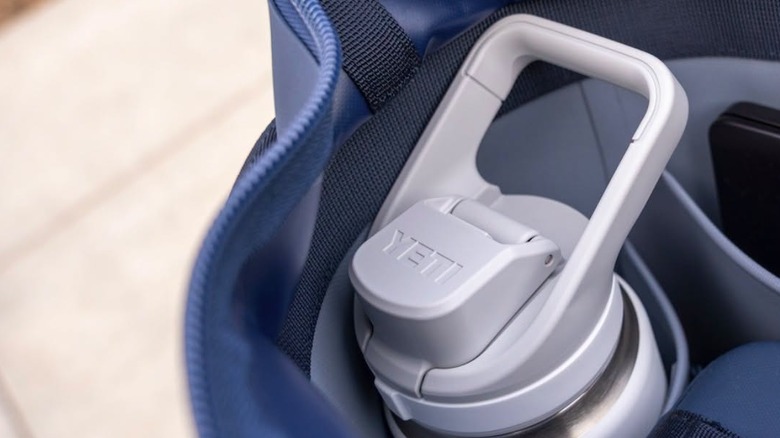
Have you ever gone to open your Yeti water bottle for a refill, only to find that the lid seems to be fixed on so tightly that no amount of arm power could remove it? You're not alone, though the issue seems to occur mainly with the Rambler bottles. The cause is likely that you're keeping a liquid inside the bottle that shouldn't be there, like a soda or orange juice (we know, we know — it's tempting to keep them in the Yetis because they stay so cold) or even a perishable food, like soup.
However, these types of beverages can cause a pressure build-up that makes the lid stick for dear life. To unstick it, try emptying the bottle through the flip-cap, and then put it in the freezer for just a few minutes (set a timer!). And in the future, stick to non-carbonated, non-perishable liquids, like homemade hydration-boosting electrolyte water.
Look deeper into the lid
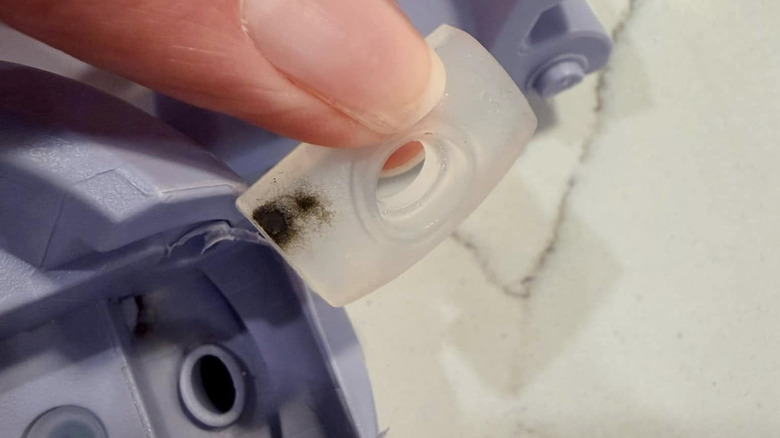
Perhaps the most widely touted issue on this list, even Yeti water bottles aren't immune to mold growth in the nooks and crannies. While it's true the stainless steel bodies are mold-resistant, unfortunately the lids aren't always quite so hygienic, and people have found the toxic black stuff in surprising — and hidden — places, like under the silicone tab for the straw hole, or under the flip-up sipper for the bottle straw cap.
Technically, these parts are not removable, but with some careful pressure, you can pop them in and out to get a fuller picture of what might be lurking within. The plus is that, once detached to reveal whatever grodiness is hiding, everything can go into the dishwasher for sanitizing. If you're not ready to run a cycle, though, you can also boil the parts in water for up to 10 seconds.
This is the last straw
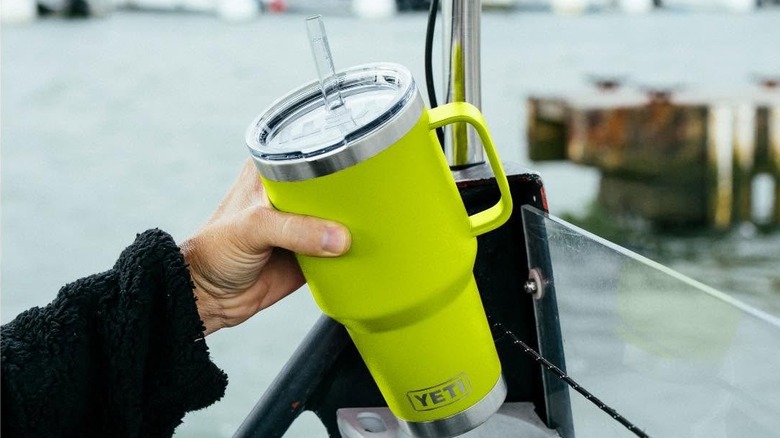
One of the big pluses with Yeti drinkware is the choice of sipping options, including a wide-mouth gulp, as well as through a straw. However, some people have reported difficulty with the latter; the straw seems closed up and won't allow any, or hardly any, liquid through. If this is a problem that has persisted for you as well, leading you to perhaps abandon your preferred choice of lid, listen up.
The Yeti straws are actually meant to be manually trimmed, and sometimes, you'll have to trim just a little bit more than you might think so that the bottom of the straw isn't as blocked off by the bottom of the bottle. If that doesn't work, however, you might try trimming the straw from the top as well.
Beware of loose threads
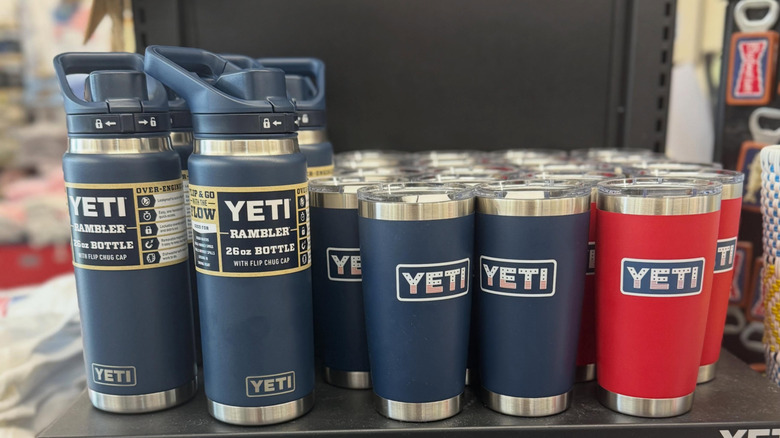
Yeti's Chug Cap is one of its most popular lid options, thanks to its wide — but not too wide — mouth, easy-twist open, and leakproof capabilities. But for all that, the threading on the upper lid part can damage fairly easily, especially if the threads aren't perfectly lined up when placing the lid over the sipper part, leading to an insecure connection that can cause leaking — a disaster if you've tossed the bottle in your backpack with important papers or documents.
If you're just starting to notice a bit of wear on the threads, start taking more care when replacing the lid; don't jam it on at weird angles. If you've already noticed leaking, you can reach out to Yeti's customer service, and it should replace it at no cost to you, under the company's warranty.
If whiffs could kill
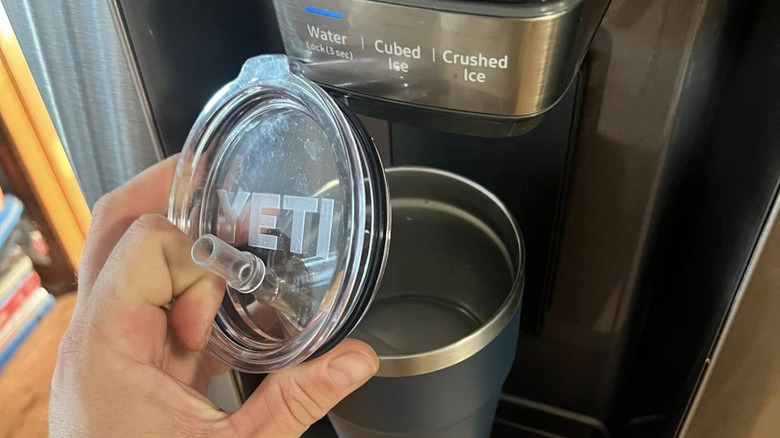
It happens to the best of us — one day, we're happily sipping from our Yeti water bottles without a care in the world, and the next, there is a definite odor coming from the direction of the tumbler in your hand. The cause is any number of factors, including mold hidden under lid parts, residue left in the straw, or perhaps the bottle wasn't allowed to dry properly after running through the dishwasher. Whatever the case, a good, thorough cleaning is the answer, taking apart as much of the lid as you can, including the rubber gaskets.
If the smell persists despite running everything through the dishwasher, you might also try bottle cleaning tablets for the body, and a soak in vinegar or vinegar and baking soda for the lid components. Then make sure everything is bone dry before reassembling, and be sure to wash your Yeti bottle every day to avoid future odors.