

The Canned Pantry Staple Gordon Ramsay Uses For Extra Tender Meatballs

Gordon Ramsay isn't known for being shy about telling chefs and home cooks alike what they're doing wrong, but the guy does hold eight Michelin stars across his restaurant portfolio, so it's worth listening to his advice. One dish he holds particularly strong opinions on is meatballs, and he swears by a single canned pantry staple to get that melt-in-your-mouth texture: coconut milk, which Ramsay simmers the meatballs in (via YouTube).
So what exactly makes coconut milk such a game-changer here? For starters, it's the liquid pressed from grated coconut meat. This stuff is liquid gold. It's noticeably fattier than regular dairy milk, giving it a richer, silkier texture. While heavy cream is the usual go-to for adding body to a sauce, swapping in coconut milk still thickens things up while also keeping the dish noticeably lighter, making it a great alternative for hot days when a rich, creamy sauce feels like too much.
Dry, tough meat is among the most common issues home cooks encounter when making meatballs. Using coconut milk helps counteract this by providing an extra source of fat as the meat cooks, helping to lock in moisture for a soft, tender texture. Flavor-wise, expect a subtle sweetness and a gentle tropical note that works especially well alongside savory meatballs. This combination is particularly well-suited to Indian, Caribbean, or Southeast Asian-inspired dishes, where ingredients like ginger, turmeric, cumin, and cilantro naturally complement its coconut flavor. From Thai red curry meatballs to a fragrant Indian-style kofta curry, there are countless ways to put this delicious pairing to good use.
How to get the juiciest, most tender meatballs
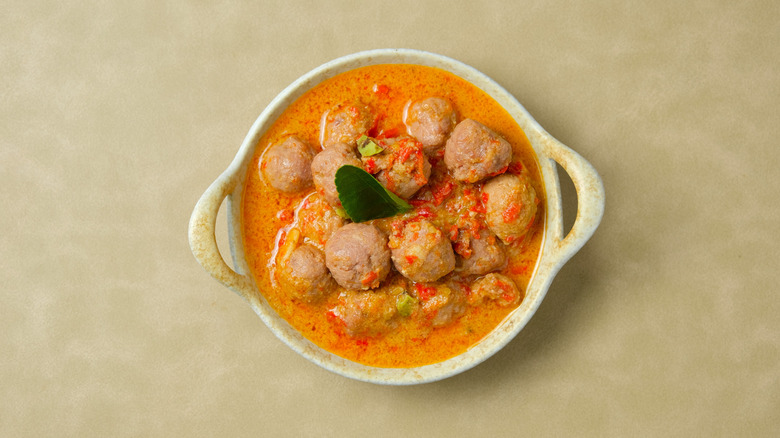
As helpful as coconut milk is, nothing beats fat from the meat itself when it comes to tenderness. Lean meat alone dries out quickly once it hits the heat, no matter what liquid you're simmering it in. That's why many chefs, Gordon Ramsay included, reach for a blend of meats rather than sticking to just one. Combining beef with pork, for instance, brings extra fat into the mix, and that fat renders as the meatballs cook, basting the meat from the inside out and infusing it with flavor. Aim for something in the 80% lean to 20% fat range, or even a touch fattier, and you'll notice a striking difference immediately.
Soaking your breadcrumbs in milk (or, in this case, coconut milk) before adding them to the mixture is another simple move that pays off. This creates what chefs call a panade. As the meat cooks, its proteins naturally tighten up and squeeze out moisture, but the starch in a panade acts as a sponge, swelling with liquid and getting in the way of the proteins as they contract. The result is moisture that stays locked into the mixture rather than being squeezed out, keeping your meatballs juicy and tender.
When it comes to mixing your panade, seasonings, and meat together, resist the urge to overmix, tempting though it may be. Overworking the mixture toughens the proteins, leaving your meatballs dense and chewy. Another, perhaps slightly controversial, tip for avoiding that same chewy texture is skipping eggs, especially if you're already using a panade to bind everything together. Too many binders can hold the mixture together a little too well, resulting in overly heavy meatballs.