

St. Louis Vs Chicago-Style Baby Back Ribs: Here's The Actual Difference
We may receive a commission on purchases made from links.
Baby back ribs are a part of the pig's rib cage that is closer to the spine and is cut off from the spare ribs, which are closer to the belly. Baby back ribs are curved and shorter than the flatter spare ribs, and they're also leaner, meatier, and more tender, which makes them quicker to prepare but also more expensive. They're actually a more modern cut of pork in American gastronomy, having appeared on menus in the mid-20th century and taking off in popularity when Chili's began advertising them with a catchy jingle in the mid-1990s. Barbecue, on the other hand, has been around much longer than that and can trace its origins back to the Taíno people of the Caribbean well before the arrival of Europeans on the continent. As such, very few of the numerous barbecue styles found throughout the U.S. traditionally use baby back ribs, including those from St. Louis and Chicago.
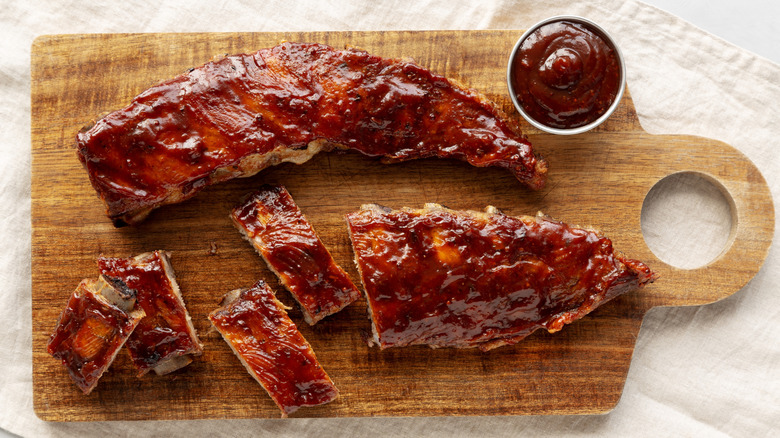
St. Louis-style ribs are made with the St. Louis-style cut of spare ribs, which have been trimmed of excess cartilage, breastbone, and connective tissue, and the style typically calls for smoking the ribs low and slow before brushing them with a sweet and tangy sauce. Chicago has a couple of barbecue styles that use ribs, but perhaps the most distinctive cut of barbecue meat in the Windy City is the rib tip, which contains small pieces of bone and cartilage. Chicago-style barbecue often employs a dry rub and is finished with a sweet, spicy, tomato-based sauce that frequently features celery salt. But there is a lot more to these two distinct styles that can inspire how you season, cook, and sauce your barbecue.
St. Louis has its own cut of ribs named after it
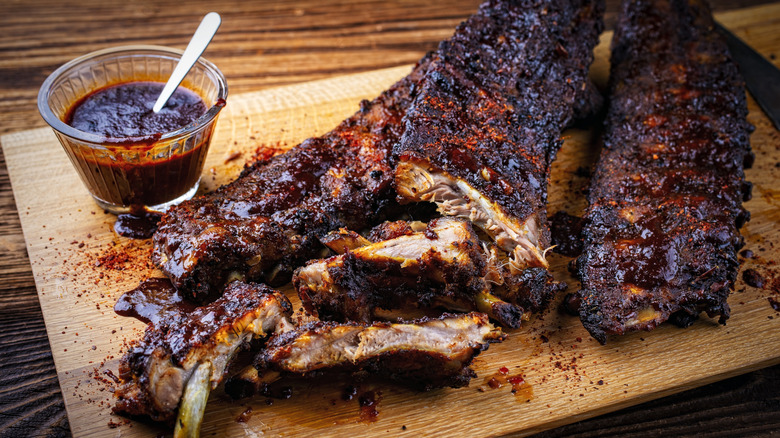
Missouri has two distinct styles of barbecue: Kansas City, which is better known nationally, and St. Louis. While backyard grillers often cook ribs quickly over charcoal, traditional St. Louis barbecue restaurants typically smoke ribs over wood and season them with a dry rub before basting them generously with sauce during the final stages of cooking. As for the sauce, it's typically tomato-based with plenty of vinegar and brown sugar, making it tangier, less smoky, and generally thinner than the sweeter, molasses-forward sauces associated with Kansas City barbecue. This style of ribs relies heavily on sauce, and the locally made Maull's — available on Amazon — is widely considered one of the first commercially bottled barbecue sauces in the United States. It remains a popular brand in the Gateway to the West.
You may have come across St. Louis-style ribs in the meat section of your local supermarket, and this local invention works well for the city's unique barbecue method. It's essentially a cleaned-up rack of spare ribs with the cartilage, tips, and any extra meat that extends beyond the bones removed to create a neat rectangle. They cook more evenly when grilled, which uses a higher temperature and is a little less forgiving than low-and-slow smoking, and they're a great alternative to baby back ribs. The tips never went to waste, though, and became an integral part of one of Chicago's iconic barbecue styles. But St. Louis-style barbecue isn't just about ribs, and other regionally unique meats are also found at many establishments, including pork steaks, butts, and snoots, or pigs' noses.
Chicago is home to two different barbecue styles
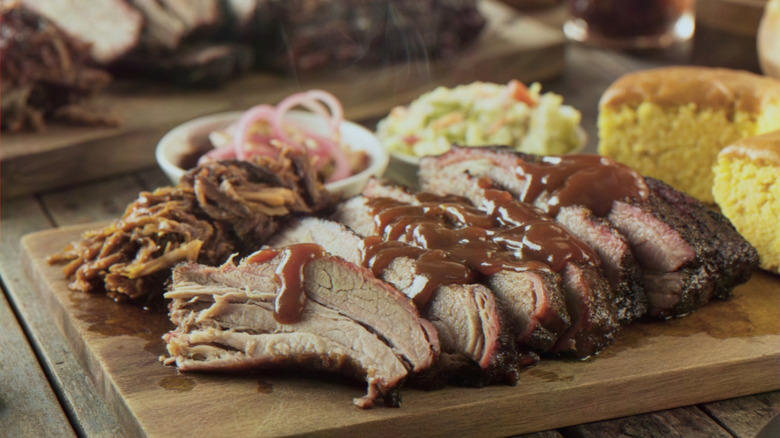
Chicago has two major barbecue styles that are divided geographically and culturally. The style found on the South Side is largely a Black American specialty that made its way north during the Great Migration between 1910 and 1970, when many members of this community fled Southern states to escape racial segregation and find better employment and educational opportunities. This hyperlocal style was based on Southern culinary traditions but gradually developed its own identity. For starters, while you can get ribs at South Side barbecue joints, the meat of choice is rib tips, which were the discarded end pieces from St. Louis-style ribs. The smoking technique is also distinctive and employs a device known as an aquarium-style smoker, consisting of a tempered glass box with the heat source and smoke housed in a lower compartment.
On the North Side of Chicago, barbecue is cooked in rotisserie smokers and features more premium cuts of meat, eschewing inexpensive options like rib tips in favor of full racks of ribs and brisket. North Side barbecue traditions were also influenced by Eastern European immigrants, and the Windy City's second style of barbecue is typically boiled before being smoked, reflecting Slavic cooking techniques.
Brown sugar is occasionally — but not always — used in dry rubs for both styles of barbecue, but each also features a sweet, tomato-based sauce with a blend of spices that pitmasters closely guard. While celery salt is sometimes used — a nod to Chicago's famous hot dog culture — traditional South Side barbecue often highlights allspice in both the rub and the sauce, along with a generous amount of cayenne pepper for a kick.