

Smoking Vs Braising Brisket: Which Cooking Method Is Easier?
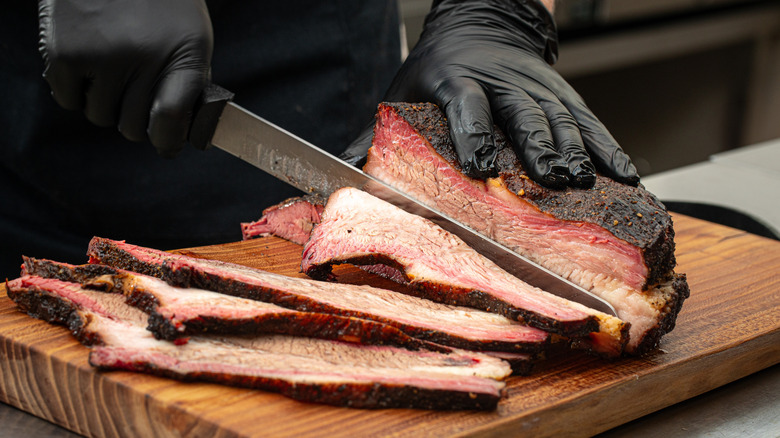
You may have had brisket during a holiday dinner, or perhaps you're better acquainted with it at a Texas barbecue joint. Alternatively, you may have tucked into a deli sandwich not realizing that brisket is related to corned beef. The point is that brisket doesn't refer to a single dish or even a style of cooking but rather a specific cut of meat. It comes from the chest area of the cow, just above its front legs. It's one of the muscles that supports the entire weight of this animal and helps it move, and cuts of meat containing these kinds of muscle tend to be tougher than those off the ground and towards the center of the animal, like the loin. These cuts also have a lot of connective tissues, like tendons and cartilage, which can be chewy or gristly
As such, a beef brisket won't be as melt-in-your-mouth tender as a filet mignon if you try to cook it the same way. That's why almost all brisket preparations tend to be cooked slowly, which helps break down the tough muscle fibers, fat, and connective tissues to render the succulent pieces of meat you may be accustomed to eating. The connective tissues, especially, contain collagen, which breaks down into gelatin and gives the finished dish an unctuous mouthfeel. There are two popular cooking techniques that help you achieve this texture: smoking and braising. Braising is much easier to do for the average home cook, but there can be a few advantages to smoking if you have the right setup.
Braising a brisket is an easier option for almost any cook
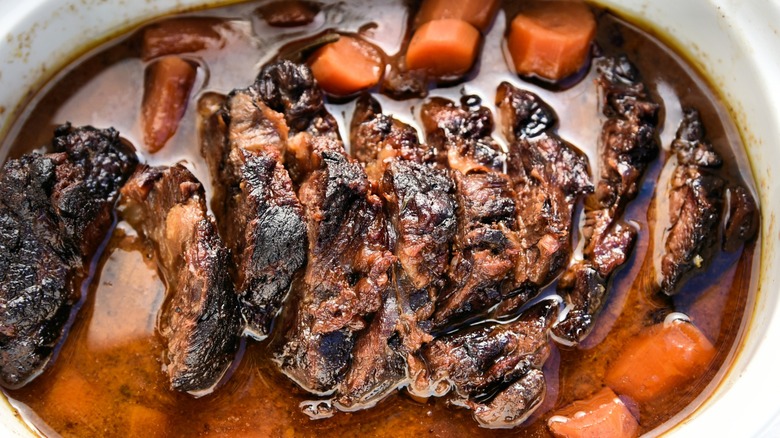
Braising combines two different steps: searing and simmering. Searing the meat over high heat intensifies the umami flavors in a braised dish while also giving it a deeper color. It technically is optional, but it will yield mouthwatering results. The simmering portion of a braise is different from when you make a stew because you're using less liquid. You're also cooking a large piece of meat rather than smaller chunks. Typically, the liquid in your braise should not cover the meat, and at least a third of the protein should be uncovered, which will render a more flavorful and concentrated sauce.
This technique is much easier than smoking a brisket primarily because you can use equipment you may already have at home, like a pot or baking dish. It's also a very versatile technique, and you can choose to braise your beef brisket on the stovetop or in the oven. It will still take several hours to cook, but you don't have to stand over the pot and can occupy yourself with other tasks in the meantime. You can also use a slow cooker, leave home all day, and return to have dinner ready. If you're pressed for time, a pressure cooker can cut the cooking time significantly. Part of the joy of braising beef brisket, though, is that you can customize the aromatics, spices, and even make a wine-braised brisket.
Smoked brisket requires special equipment but fewer ingredients
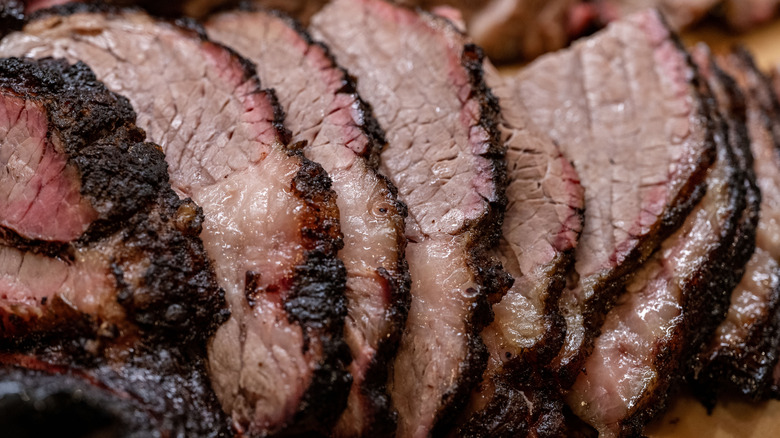
Smoking is the process by which meats are cooked over indirect heat with smoke, which tenderizes the muscle fibers and gives the finished dish that signature barbecue flavor. You do need specialized equipment, though, like a dedicated smoker, which isolates the smoke-producing wood while maintaining the low temperature required to safely cook this type of meat — somewhere between 200 and 250 degrees Fahrenheit. You can get the same effect by adding wood chips to a charcoal or gas grill and placing your meat in the coldest part of the barbecue. Post oak is the best type of wood for brisket in Central Texas, but you may want something with a smokier flavor, like hickory.
Smoked brisket takes between seven to 10 hours to cook, and there aren't really any shortcuts when it comes to time. However, you cannot just set it and forget it like you do with a braise and will need to keep an eye on the temperature of your smoker or grill, flip the meat every 30 minutes, and replenish the wood chips and charcoal (if using) about every 45 minutes. Even if you're using a gas grill, such a long, continuous cooking process can deplete your propane tank. However, preparing smoked brisket requires fewer ingredients than a braise — just the meat and a dry rub, which can live in your pantry until you're ready to cook your beef. As such, there's no chopping, searing, or deglazing required. If you have the equipment and don't mind tending to your smoker or grill, it's a pretty simple dish to assemble.