

Midwest Vs West Coast Beer: How The Regional Beverages Differ
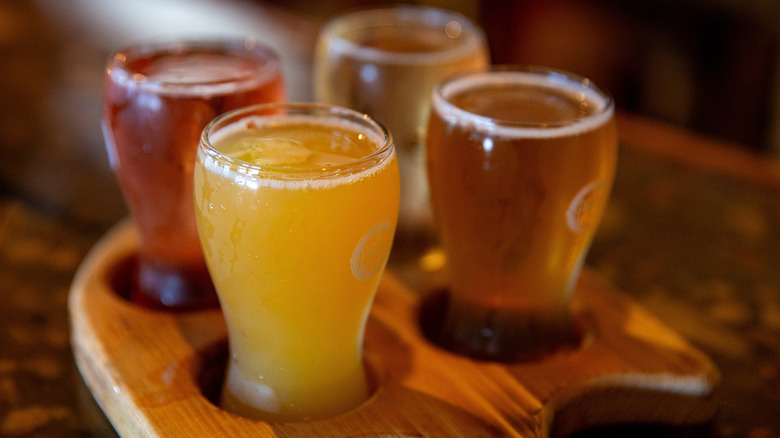
Walk into a craft brewery in the U.S., and the offerings are typically divided into numerous styles. Yet while such categorizations are certainly convenient for picking out your next pint, the U.S. is also home to abundant regional brewing traditions. Factors like the climate, local agriculture, taste preferences, and heritage all add up to unique beer-making methods, which translate to perceptible flavors in each glass.
Take the Midwest and West Coast, for example. The two regions offer rich brewery cultures, home to both tried-and-true beer options and cutting-edge innovation. In either, you'll find many delicious brews; nevertheless, each harbors a unique approach to beer-making. For example, the West Coast, with its bountiful hop farms, expectedly creates brews that showcase the ingredient. Such an approach gave rise to the bold West Coast IPA substyle.
Meanwhile, Midwestern beer specialties are harder to pin down. The region is home to subtle tweaks on the IPA, as well as a fondness for the classics, such as wheat ales and lagers. Both are influenced by local ingredients, not only hops, as well as seasonality. So visit a taproom in either area, and make sure to ask for something local.
The Midwest blends rich brewing history with distinct craft styles
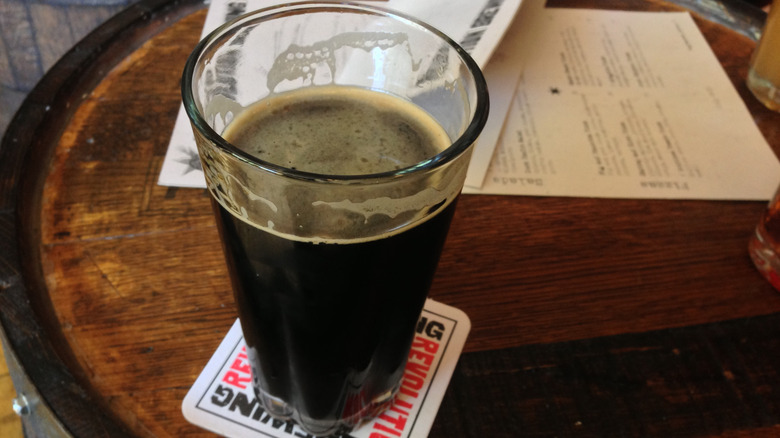
Midwesterners know their beer. Upheld by German heritage, the region's beer-making roots trace back centuries, establishing giants like Pabst, as well as the classic Schlitz brand. In fact, several of America's beloved regional lagers took off in the area. Undoubtedly, cheap, drinkable beer is popular there, but that's not to say the Midwest's beer scene is exclusively defined by such brews.
Like the West Coast, a broad selection of artisanal brewers also operates in the region. While the Midwest didn't give rise to a famed style like the West Coast IPA, beer-makers nevertheless created smaller-scale stylistic interpretations. Examples include the Midwest IPA, which riffs on classic IPA-making traditions. Such a brew incorporates more malt and makes use of mineral-heavy local water, thereby creating a beer with more body. Yet unlike hazy IPAs, the drink isn't too sweet, establishing a distinct bitter-malty character.
Furthermore, Midwestern beers often feature local ingredients reinterpreted through classic styles, a notable distinction from West Coast experimentation. Wheat beers, such as the famed Bell's Oberon, are widely enjoyed. And in line with the area's heritage, large breweries release a variety of craft lagers. Often enjoyed in no-frills surroundings, such factors make enjoying a Midwestern beer a distinct experience.
The West Coast gave rise to innovative beer styles
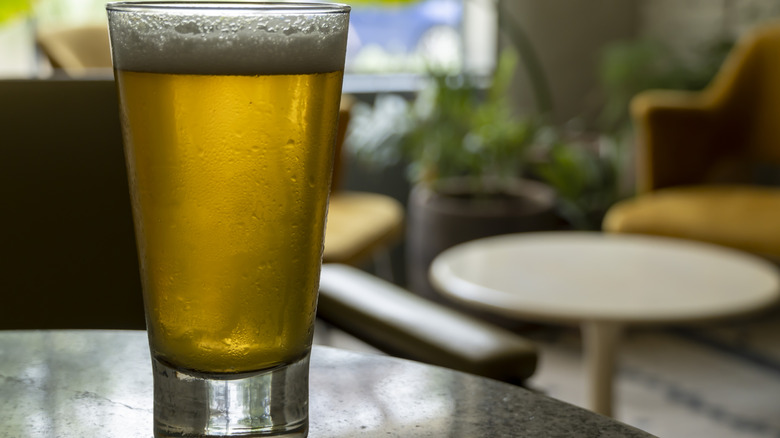
West Coast brews are famed nationwide — and for good reason. After all, the region gave birth to a whole new beer category: the West Coast IPA, now replicated globally. Pioneered in the 1970s by innovators like Anchor Brewing, such a style makes use of regional hops. First came the Cascade hop, featured in Anchor's Liberty Ale, as well as the famed 1980 Sierra Nevada Pale Ale. Through the decades, subsequent beer releases pushed the boundaries of bitterness with additional ingredients, all while retaining a light body with limited malt character. By the early 2000s, West Coast IPAs had become a massively popular beer style, reproduced ubiquitously, including in the Midwest.
In parallel, the West Coast developed a handful of other distinct regional styles, too. There's Cascadian ale, a black-colored IPA full of local Cascade or Chinook hops, but supplemented with a toasted malt character. The area is also home to several prominent wild ale producers, which employ foraged yeasts and ingredients from the verdant biomes of the Pacific Northwest. Also noteworthy is California's steam beer, rejuvenated by Anchor Brewing, which blends ale and lager production techniques. Many unique beers got their start on the West Coast, cultivating a brewing scene unlike the rest of the United States.