

The Simple Mistake To Avoid When Storing Rotisserie Chicken In Your Fridge
We may receive a commission on purchases made from links.
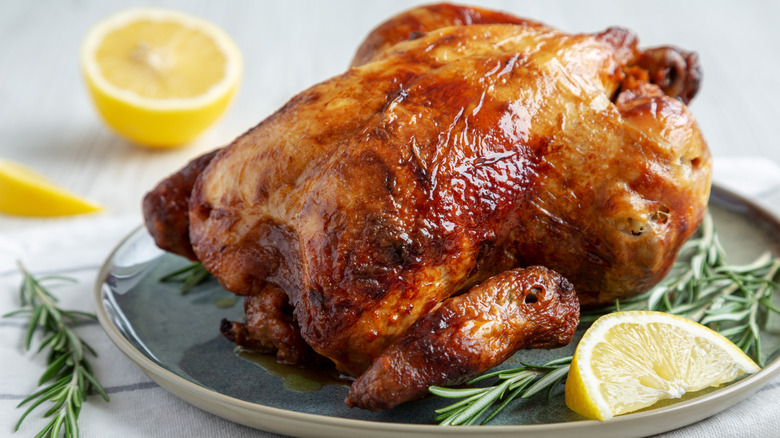
Rotisserie chicken can be a simple weeknight staple. Just pick it up at the store, and it's ready to serve when you get home. But if you're not finishing the whole bird at the dinner table, you might want to rethink how you're storing it. In an exclusive interview with Tasting Table, Lacey Baier, author of "Cleanish Meal Prep," explained the best way to keep that extra meat fresh.
Baier says that cooked chicken shouldn't be stored in the front of the fridge. "The temperature at the back ... is the most consistent," she said. "The door and front fluctuate every time you open it, which isn't ideal for cooked protein."
According to USDA guidelines, cooked chicken should be kept at 40 degrees Fahrenheit or below, and the back of the fridge is the best place to ensure a stable temperature. Additionally, whether it's half-finished or going directly into the fridge after purchase, you're better off not storing your cooked rotisserie chicken in the package it came in.
"Transfer the chicken to an airtight container rather than leaving it in the store packaging," Baier said. This is true for rotisserie chicken, Chinese takeout, leftover burger patties, or anything else you want to keep away from harmful bacteria. Whether plastic, glass, or stainless steel, airtight containers will keep your chicken away from circulating air in the fridge so it stays nice and moist.
More storage tips for your leftover rotisserie chicken
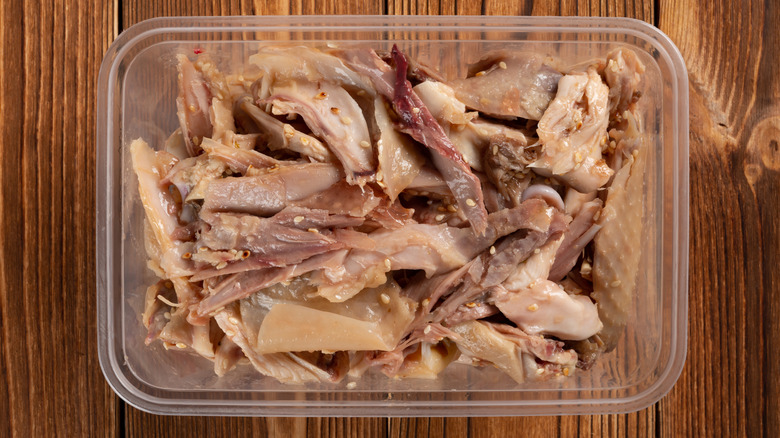
A rotisserie chicken will last about four days in the fridge. While keeping it at 40 degrees Fahrenheit will significantly slow bacterial growth, you can't fight off germs forever, so you're always better off checking for signs that it's still safe to eat. If there's any weird smell, especially something sour or sulfurous, just throw it out. If it's slimy or the color seems off, you're better off not eating it.
If you don't have plans to consume your chicken within a few days, you can always freeze it, and it will keep for up to six months. When you're ready to use it, avoid common meat-defrosting mistakes by thawing it overnight tucked in the back of the bottom shelf of the refrigerator — rather than on the counter — to keep it out of the bacterial danger zone.
Food Republic and Tasting Table are both owned by Static Media.