

How Much Meat One Pig Produces
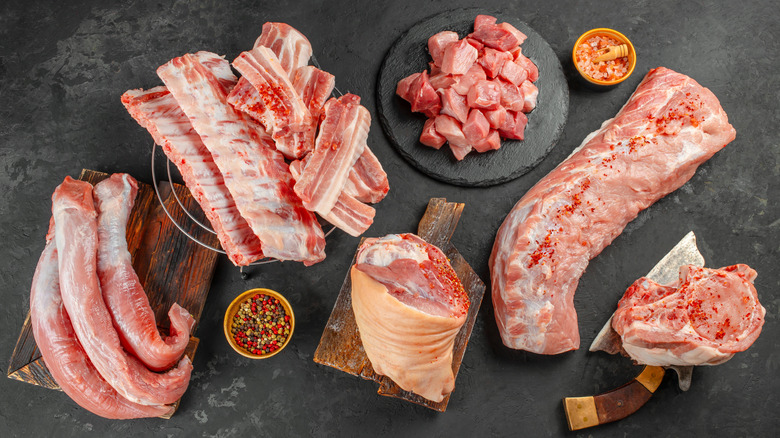
Shop for pork at the grocery store, and it's easy to feel detached from the butchering process. Familiar cuts like chops, ribs, and loins come deconstructed and laid out for sale, ready to transform into palate-pleasing pork recipes. Yet such culinary convenience requires a slaughtering process — an aspect of the experience that can be uncomfortable to think about.
From live, intact animals to grocery store shelves, there's abundant deconstruction, naturally raising the question: How much meat does one pig produce? Well, according to the Oklahoma Department of Agriculture, Food, and Forestry, about 28% of a pig's live mass is removed right at slaughter — organs, blood, hair, and the like. This leaves the dressed carcass weight, which generally averages around 72% of the animal's live weight.
As of June 2026, the average pig in the U.S. weighs just shy of 289 pounds, according to the USDA. Once the carcass is chilled and cut into retail pieces, another 20% of the weight is lost to bone dust, fat trimming, boning, grinding, and moisture loss. This brings the final take-home retail yield to approximately 57% of the live animal. Ultimately, that adds up to approximately 165 pounds of retail cuts per animal. From there, the pig is either broken down into cuts for sale or the hams and bacon are typically cured and smoked, then prepped into the processed forms familiar to consumers.
Pork yields break down into several distinct culinary cuts
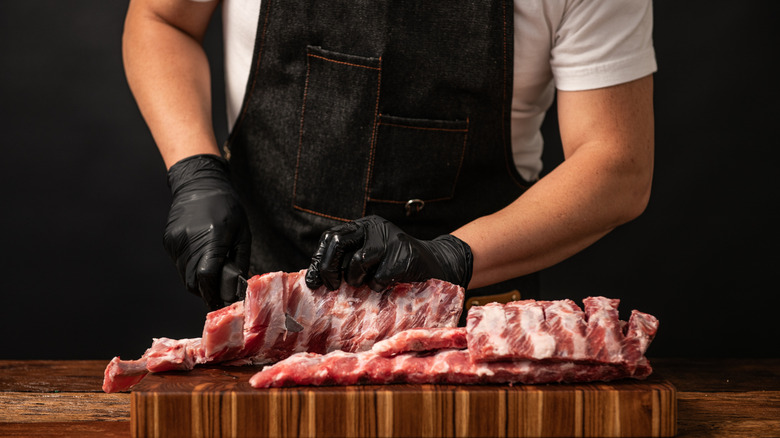
Around 165 pounds of pork is a lot of meat. One could picture the animal yielding several racks of ribs and some chops — but how do the cuts actually break down? Well, a few familiar names constitute a sizable portion of the animal.
Dependably the highest-yielding segment is the ham, which comes from the hind leg. Turned into everything from ham hocks to ham steak and cured cuts, this area represents around 11% of the pig's initial weight, according to Oklahoma's agriculture department.
Not far behind, at around 9% of the original 289 pounds, is the pork loin. Sourced from the top back of the animal, the pork loin region yields popular cuts like famed pork chops, tenderloins, as well as country-style and baby back ribs. Bacon — called fresh side prior to curing — constitutes a similar portion of the animal. A third product that comes in at 9% is lard, meaning that a pig generates quite a substantial amount of edible fat.
From there, the remaining regions yield far lower pork quantities per pig. The fresh picnic, which includes pork shoulder cuts like smoked picnic and smoked hocks, accounts for just under 5% of the pig's weight. Meanwhile, the Boston butt, great for smoking, sits at 3.6%. Like that, much of the pig is broken down, ready for a breadth of culinary applications.