

How Much Protein An Entire Watermelon Has
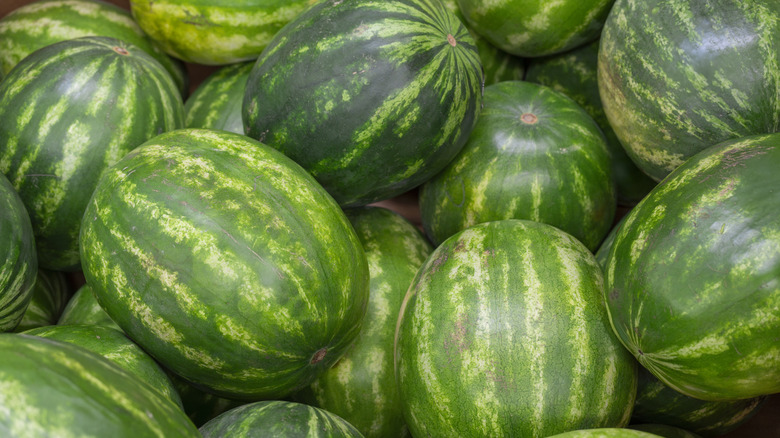
There are plenty of protein-packed fruits out there, such as guava and passion fruit, but watermelon is no slouch either. The flesh itself may contain less than a gram of the nutrient per 100-gram serving, but an entire 10-pound melon — rind and seeds included — yields a surprising total of roughly 30 to 40 grams of protein, depending on the variety.
You may not be used to it, but eating watermelon seeds is a top-tier way to secure a source of meatless protein. A 100-gram serving of dried watermelon seeds has about 28 grams of the macronutrient, coming out to roughly 1,400 seeds. The exact number of seeds per fruit varies wildly, between about 200 and 800, but the amount of protein they contribute depends on the size and weight of the seeds, making it difficult to estimate for an individual melon (though it will typically amount to a few extra grams). Usually, a whole fruit is about 30% rind, and while you'll only get around 8 grams of protein from a 10-pound melon's rind, that's still a good amount you may be throwing in the trash.
While watermelon has a relatively low amount of protein by volume, don't forget that the edible flesh comprises about 70% of the fruit. Depending on the variety you pick, that flesh alone will yield anywhere from 19 grams (for standard seeded melons) up to nearly 28 grams of protein if you choose a modern seedless variety — not too shabby for something many folks can easily eat throughout a week. Some fruits can weigh more than 20 pounds, but eating the whole thing is a perfectly viable way to sprinkle in a little extra protein while also securing plenty of other vital nutrients.
How to eat watermelon seeds and rinds
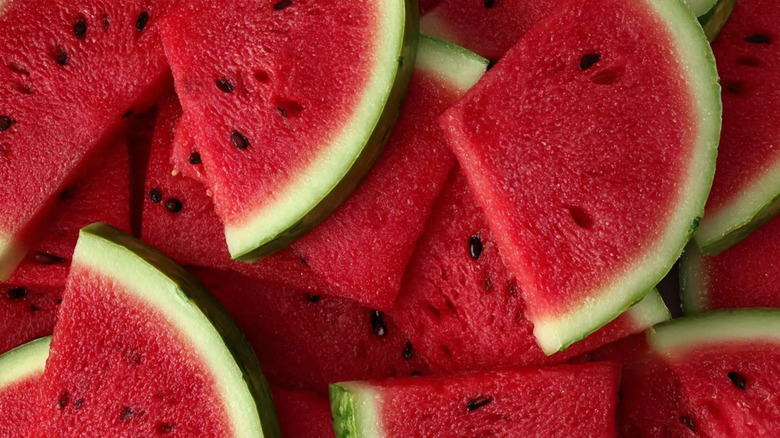
Most people relegate rinds to the compost heap and use seeds to see who can spit the farthest, but there was a time when people had to find a way to use every last scrap of food. While the methods may not be as popular as they once were, seeds and rinds can be used to replicate many modern staples, from cracker spreads to pickles.
Watermelon seeds are possibly the most versatile part of the fruit. You can roast your seeds for something as crunchy as any chip in less than 20 minutes, plus their neutral flavor means you can dust them with just about any seasoning. If you have the patience to shell or sprout them, they also make an incredibly nutty tahini-esque butter and even a protein-packed powder you can repurpose as a thickening agent or as a substitute for wheat flour in baked goods. Keep in mind that their lack of gluten means they won't develop the same texture, but watermelon seed flour is truly excellent for some DIY crackers.
The rind is basically a firmer cucumber that's packed with fiber and is begging for the chance to absorb new flavors. Whether you're craving sweet or salty, there's no wrong way to eat your watermelon rind, and you can pickle, boil, candy, or mash it to your heart's content. Even when raw, slivers of watermelon rind can become the star of your stir-fry, and chunks make for a truly unique salad topper.