

The Best Time To Sprinkle Parmesan Cheese Into Tomato Soup
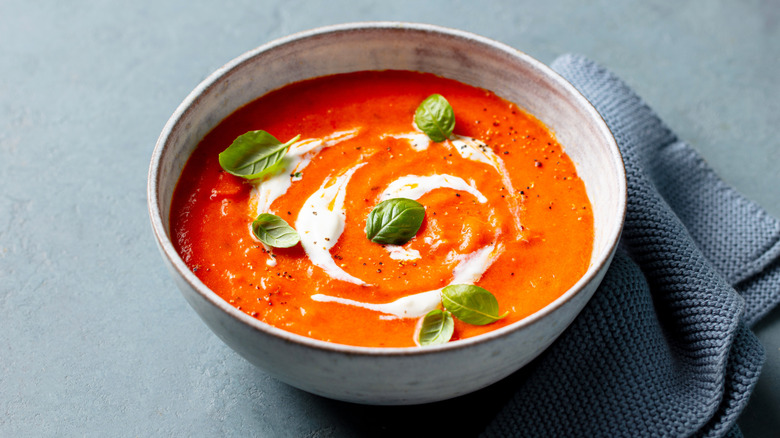
Tomato soup is all about sharp yet homey flavors, and there's no better way to achieve that balance than by sprinkling in some parmesan cheese. However, it's important to do so only at the very end to preserve a smooth texture and avoid any unsightly, grainy clumps.
Parmesan's earthy, salty taste comes from its long aging process, one that evaporates a significant amount of moisture until you're left with a dense, hard wheel. This has the side effect of making it quite difficult to melt, though not impossible when you factor in all the water in tomato soup. Whether you're making it from scratch or just looking to upgrade canned soup, all parmesan cheese needs is that final bit of residual heat after you've turned off the stove. It's enough to diffuse it throughout the pot, but not so much that it rapidly contracts the proteins and leaves you with little beads that ruin your soup's texture.
For best results, aim for a very fine grate. This gives each individual speck of cheese maximum surface-area contact with the soup, helping it absorb moisture, melt, and disperse quickly without relying on high heat. You can even use the cheese as a topping for individual bowls, and there shouldn't be any major difference between freshly grated parmesan and cheese that's been sitting in the fridge for a couple of days.
More parmesan tips for tomato soup
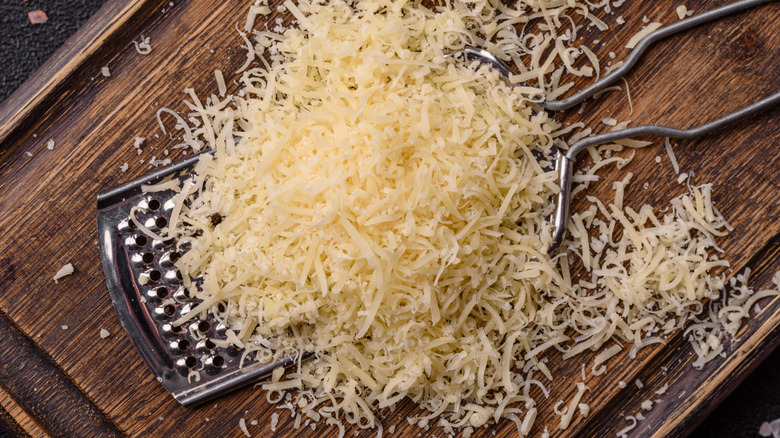
Parmesan is a pretty complex cheese, with plenty of versatility and variation in price, flavor, and meltability. Using it perfectly may be a bit challenging at first, but, with a little knowledge, you should soon be able to find the perfect pieces at the store and use every last bit to maximum effect.
Not all parmesan is the same, and, in fact, even different parts of the same wheel can taste radically different. If you're lucky enough to shop at a store that offers chunks of Parmigiano Reggiano instead of generic parm, always look for a piece with rind on two sides. The best pieces come from the edge of the wheel, where tyrosine crystals concentrate and the depth of flavor has had the most time to develop. Since these are so flavorful, you'll need to add only a small amount to your soup, reducing the risk of creating clumps.
If you're still worried about messing up your soup's texture and don't want to risk it at all, toss in a rind or two while it simmers. Just as parmesan rinds are key to super-creamy sauces, they preserve your soup's smoothness, impart plenty of umami, and even become delightful mouthfuls after soaking, similar to chewy croutons. Keeping rinds in the freezer is the best way to preserve them, but always give them a good scrub on the outside to remove any potential mold spores that may cling to the surface.