

Starbucks Once Used This Controversial Ingredient In Its Strawberry Crème Frappuccino
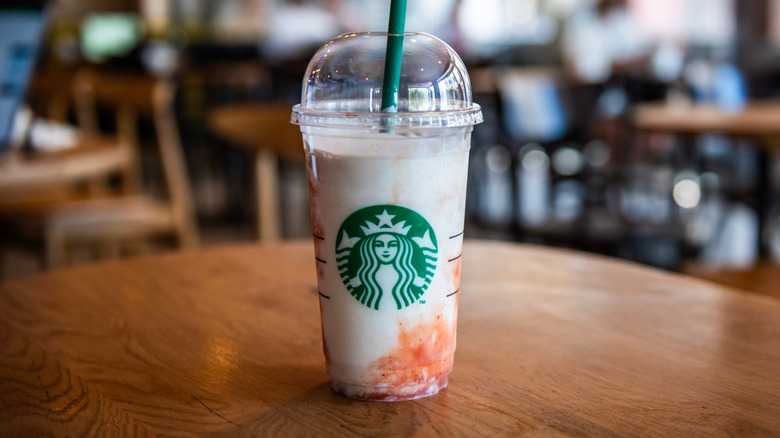
Starbucks is known for experimenting with bold flavors and eye-catching ingredients, and few menu items showcase that better than its Frappuccinos. While the frozen drinks are among the chain's biggest sellers, they've also attracted their fair share of criticism for certain tendencies, like prioritizing social media appeal over taste.
The Strawberry Crème Frappuccino, in particular, found itself at the center of a heated controversy in 2012. At the time, Starbucks used cochineal extract, also known as carmine, to give the drink's strawberry base its signature pinkish hue. The issue for many customers, however, was the source of the coloring. Carmine is made from cochineal insects, tiny scale insects whose dried bodies are crushed and processed to create a natural red dye. Its use became public knowledge when a vegan barista leaked the strawberry base's ingredient list to a vegetarian website.
When word spread, customers raised several concerns about the ingredient, even launching a petition demanding that Starbucks stop using it. Much of the criticism came from vegetarians and vegans, who objected to unknowingly consuming a coloring derived from insects. Even among nonvegetarians, many customers were simply put off by the idea that the drink's pink color came from processed insects rather than fruit- or plant-based ingredients. In response to the backlash, Starbucks President Cliff Burrows publicly announced that the company would replace cochineal extract with lycopene, a naturally occurring pigment found in tomatoes and other red fruits and vegetables.
What's the deal with cochineal extract?
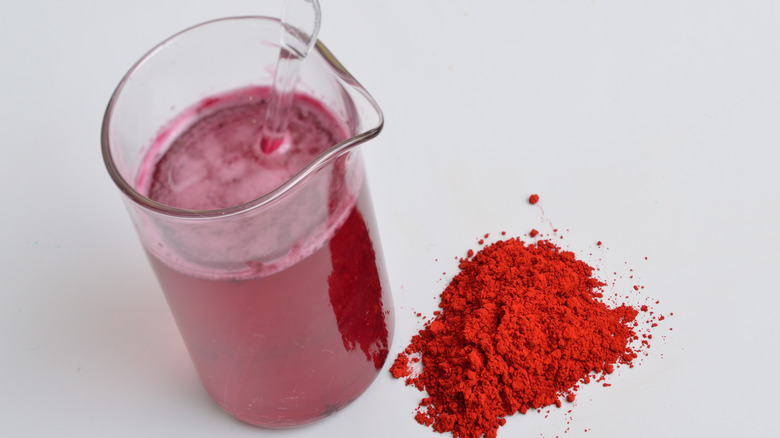
While the Strawberry Crème Frappuccino became the face of the controversy, customers soon learned that the coloring was also used in several other Starbucks products, including favorites like the birthday cake-flavored Cake Pops and Mini Donuts. That said, it's important to note that there was nothing inherently unsafe about cochineal extract. The main concern for many customers was transparency, and the FDA continues to consider cochineal extract safe for use in foods, drugs, and cosmetics.
However, in 2011, just a year before the controversy erupted, the FDA began requiring manufacturers to specifically list cochineal extract or carmine on ingredient labels rather than grouping it under generic terms such as "artificial colors." The change was introduced in part because the ingredient can trigger severe allergic reactions in a small number of individuals. That labeling change also helps explain why the ingredient flew under the radar for so long. Although the Strawberry Crème Frappuccino had been on menus since 2002, customers didn't realize cochineal extract was being used until the disclosure made it far easier to identify.
It seems Starbucks took its promise to phase out cochineal extract seriously. As of 2026, the ingredient list for the Strawberry Crème Frappuccino's strawberry puree sauce simply lists "fruit and vegetable juice for color," which is a far cry from the ingredients used in chemical-based artificial colorings. Exactly which fruits and vegetables are used isn't required to be publicly disclosed. This change represents part of a broader shift across the food industry, and the FDA has been strongly encouraging manufacturers to move toward plant-based colorings derived from natural ingredients such as tomatoes, beets, and carrots.