

How To Grow Spicier Peppers With This Simple Habit
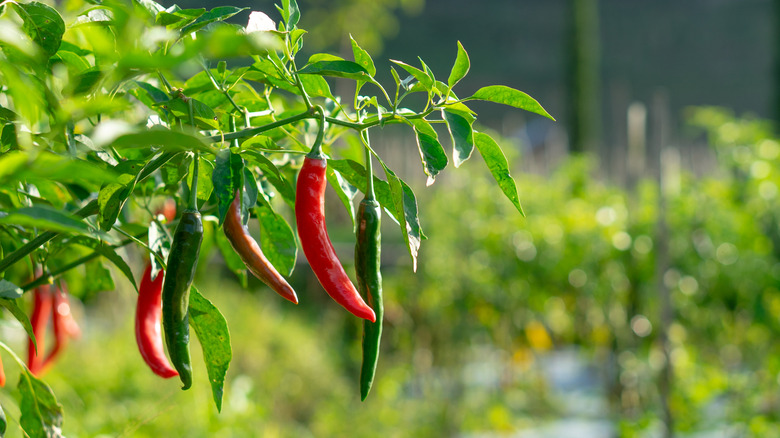
Even if you grow the hottest peppers in the world, they won't achieve their peak capsaicin content without proper care. If you want more heat in your garden, the key is to avoid overwatering them, which tends to dilute the spice and is largely unnecessary for such hardy plants.
All peppers thrive in the heat, and while it might look dramatic to see them wilting slightly on especially sunny days, they usually pop right back up overnight. They're also shallow-rooted plants, so they tend to require more frequent, rather than deep, watering. However, this also means they're prone to absorbing everything they can, and light afternoon sprinkles may provide all they need for a couple of days. This makes the plant itself flourish and produce plentiful, fat fruit, but it also makes the peppers far less spicy.
To get hot peppers, you want them to experience the right amount of water stress during the fruiting stage, where the plant feels it doesn't receive enough moisture to thrive. Too much, and you'll kill it, but even something as simple as skipping your peppers during every other watering can work wonders. A good rule of thumb is that if you walk outside in the morning and notice your plants are still wilted from the previous day's heat, then they need water.
Peppers require holistic garden management
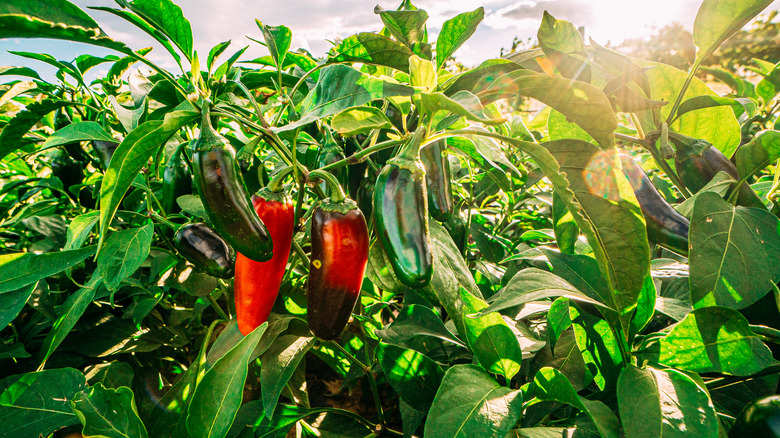
Getting spicier fruit is a tricky thing, and while you can give peppers less water than they strictly want, that doesn't mean you should neglect other best practices. Balanced nutrition helps them survive water stress, but proper spacing and sunlight are vital for producing larger, healthier-looking peppers.
There are many food scraps you shouldn't throw out, but the most important ones for peppers contain nitrogen, which is vital for plants that need to cultivate healthy stems and leaves, and phosphorus, which is important for just about anything that produces fruit, from cucumbers to Carolina Reapers. Fortunately, both are abundant in organic matter, so tilling plenty of compost into your garden soil should do the trick. If you don't have time to make your own, store-bought manure or even Costco garden compost are both great options in large quantities.
Companion plants, from marigolds to basil, can make a world of difference in a vegetable garden, but some crops don't play well together. Other nightshades, like tomatoes and eggplant, can spread diseases to your peppers, but only if they're already infected. Brassicas, however, are heavy feeders that can compete aggressively for nutrients, so they should be spaced well away from nightshades to avoid stunting them. Avoid anything with especially large roots, like potatoes and carrots, as they tend to crowd a garden and may compete with your peppers' delicate root systems.