

Grow This Companion Plant Next To Potatoes For A Bigger Harvest
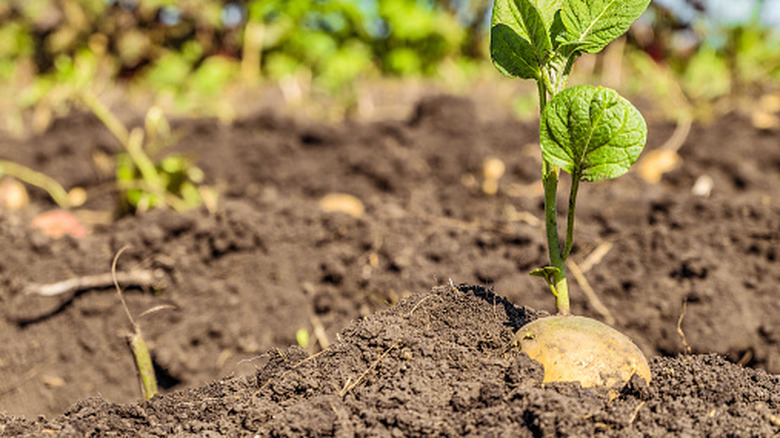
If there's one vegetable you should be planting this fall, it's potatoes. But while they're cheap, easy to grow, and economical with their use of space, finding the right companion plant can be difficult since they're a cool-weather crop. That's why you need chives.
Depending on your hardiness zone, early fall planting lets you capture the last warm days of the year while still having plenty of time before the first frost. This is great for potatoes, as cooler temps also mean fewer pests, quicker root formation, and less watering. Chives thrive under the same conditions, and if winters aren't too harsh in your garden, they can even return as a perennial in the spring. Planting them as a border crop is especially beneficial because they repel pests quite well and grow densely, essentially creating an anti-bug wall.
Like any flowering plant, mature chives also attract important pollinators. Species like bees and hummingbirds are unimportant to potatoes because they self-pollinate, but chive flowers can still attract solitary wasps, which are great predators of garden pests. You can even eat the flowers from this herb after you've harvested your potatoes. You get all of these benefits, plus a shallow-rooted plant that won't compete for space with your potatoes.
How to plant chives and potatoes together
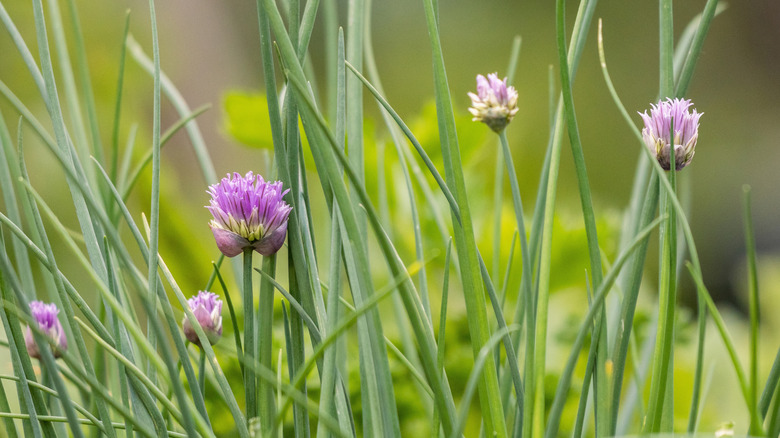
Companion planting with chives is fairly easy, and provided you don't put them in the ground right up against your potatoes, you shouldn't have to worry about spacing issues. Still, while chives are fairly hardy, they do their best work when they get the chance to thrive, so be sure to give them enough water, sun, and the right type of soil.
Both chives and potatoes like soil that's around 6.5 on the pH scale, making it slightly acidic. If you're going to grow them as a fall crop after your spring garden, plan on planting acid-loving plants, like tomatoes and peppers, during the warm season to help maintain suitable soil conditions for both crops. Just remember that chives are different from green onions because they're much more delicate. If you grow your potatoes in the spring, be sure to give your chives plenty of water, as drought can drastically reduce their growth.
Full sun isn't just important for ensuring your potatoes grow large; it's also vital to helping your chives do their job. Without full sun, they'll end up stunted and won't bloom, drastically reducing their pest-repelling and pollinator-attracting qualities. Fortunately, this is how chives get most of their energy, and they have low fertilizer requirements. This makes them an especially good companion plant for potatoes, which are voracious feeders that soak up all the nutrients they can get.