

14 Condiments That Don't Need To Go In The Fridge Once You Open Them
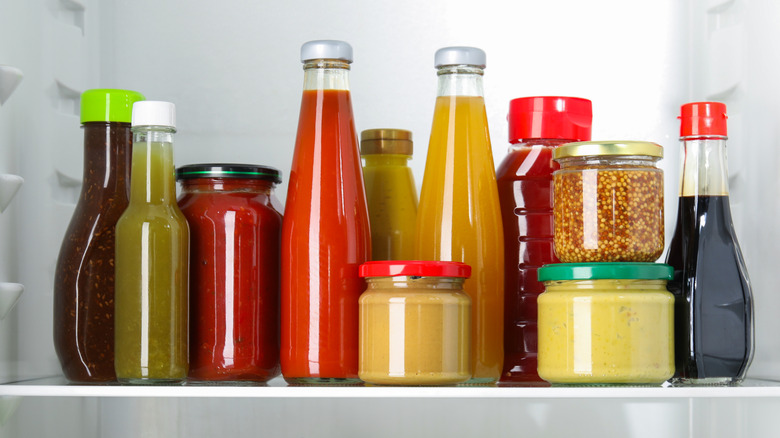
The average person takes their refrigerator for granted day to day. Opening the door and reaching for a cold drink or last night's leftovers hardly warrants a second thought. But once your fridge reaches critical mass, you may start to wonder if refrigeration is strictly necessary for everything in there.
Bottles and jars are a common culprit for an overcrowded fridge, but if you're still wading through condiments even after throwing out everything that has expired (like those lingering fast food sauce packets that are well past their shelf life), we have some good news for you. Not all condiments need to be refrigerated after they're opened.
There's no denying that refrigeration helps foods, including condiments, last longer and retain their flavor and appealing color by slowing down oxidation. That's why it's rare to read a label that doesn't say "refrigerate after opening." Food will almost always look and taste better if you keep it in the fridge once it's opened. But if you're really strapped for space, the following condiments can survive in the pantry — at least long enough for you to eat your way through those leftovers and make more room.
Soy sauce
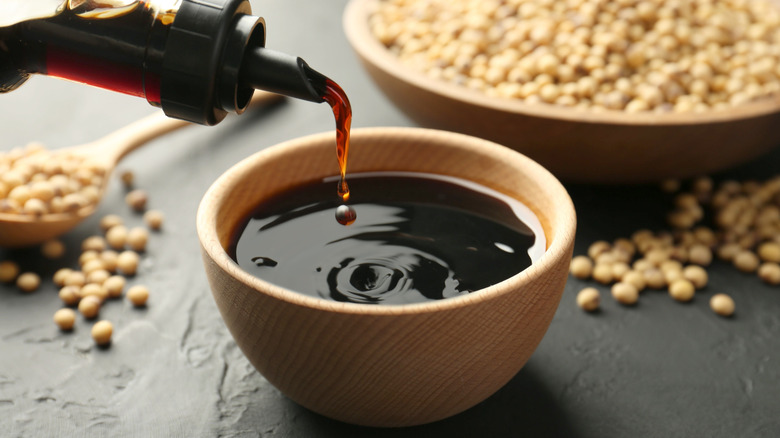
Before home refrigeration became mainstream in the late 1920s and 1930s, many different techniques were used to preserve food. One such technique was salt curing, which helped remove moisture from food and slow bacterial growth. The same principles apply to the saltiest condiment on the shelf: soy sauce.
While there are many different types of soy sauce, virtually all of them share three things in common: fermented soybeans, water, and salt. The amount of salt in soy sauce not only makes it a great substitute for salt in your cooking, but also acts as a preservative so that it doesn't need to be refrigerated once it's opened. Just keep in mind that while it's perfectly safe to keep store-bought soy sauce in the pantry after it's opened, the labels on soy sauce typically suggest refrigeration because the quality of the flavor can diminish more quickly at room temperature.
Hot sauce
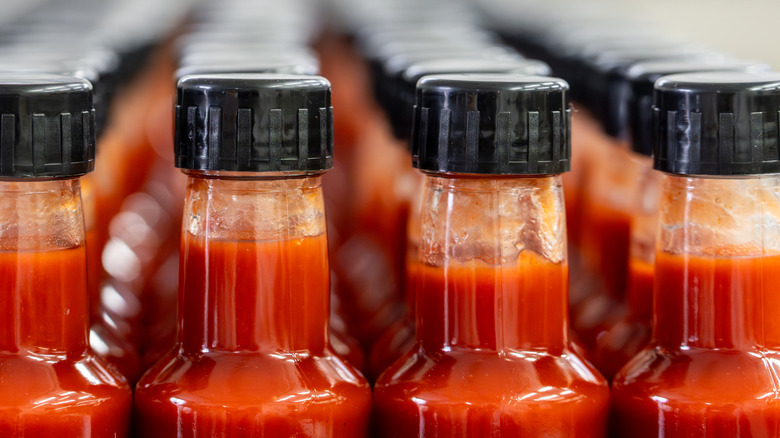
Along with salt, another method for preserving food without refrigeration is achieved through acidity, which is measured by pH, or potentia hydrogenii. Anything below a pH of 7.0 is considered acidic, but that doesn't mean it's acidic enough to stay safe in your pantry. According to the United States Food and Drug Administration (FDA), for a food to be shelf-stable and not require refrigeration, it needs a pH of at or below 4.6.
To figure out if your hot sauce is safe at room temperature without testing its pH, look for vinegar to be the first or second ingredient. Thin hot sauces are also more likely to be higher in vinegar content than thicker hot sauces.
But don't keep the hot sauce on the counter in front of your south facing window. Even though it's safe without refrigeration, sunlight can cause it to become discolored or cause changes in flavor or texture. Of course, refrigeration won't hurt your vinegar-based hot sauces and they will stay fresh even longer if you do decide to keep them in the fridge.
Mustard
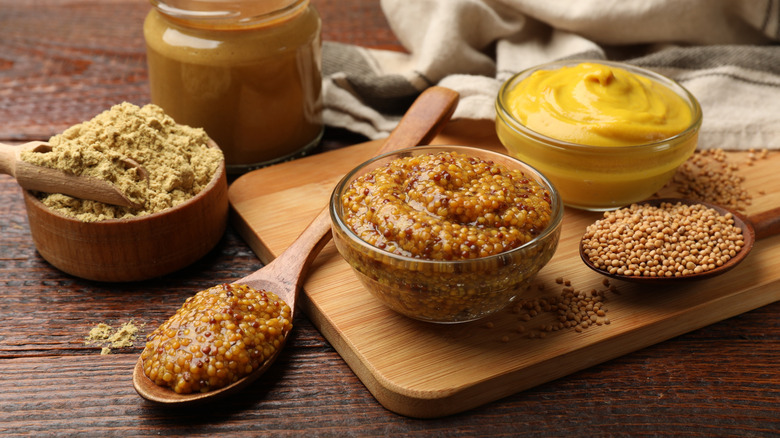
Whether your go-to is a snappy yellow mustard on a hot dog, a spicy brown mustard in a vinaigrette, or even super pungent English mustard, there's no need to worry about refrigeration. Mustard offers a one-two punch of both salt and vinegar in abundance, allowing it to stay shelf-stable even after it's opened. It'll be a bit thinner at room temperature, so just be careful as you spoon or squirt it out.
The exception to this rule is hot Chinese mustard. When made traditionally, hot Chinese mustard is produced by mixing pure ground brown mustard seeds (which are not acidic on their own) with water. The mustard seed powder does have some antibacterial properties, but the flavor quickly becomes bitter if it isn't refrigerated.
Now that you know you can keep (most of) your mustard on the counter, you may as well check out all the different kinds of mustard and add a few more to your condiment arsenal. Just be wary of not refrigerating mustard mixtures that prioritize other ingredients over acidity and salt. Those may need to be refrigerated to avoid spoiling.
Fish sauce
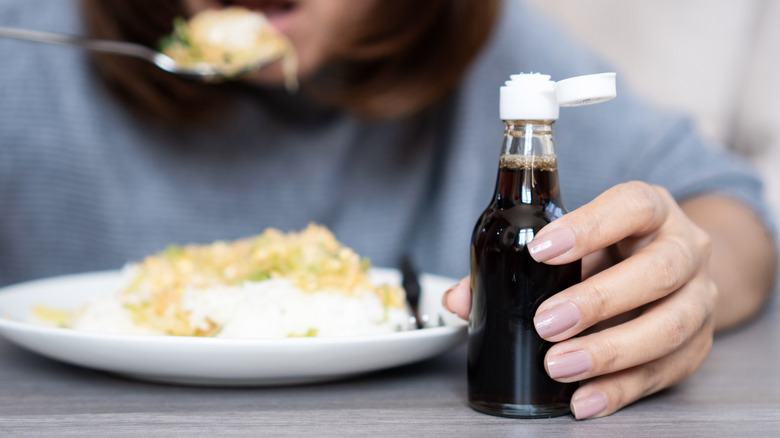
If you don't do much Southeast Asian cooking, you may have only used fish sauce once or twice for something like a pad Thai recipe and then shoved it into the back of your fridge. But don't throw it out to make space!
Fish sauce is incredibly common in Vietnamese, Thai, and Indonesian dishes, adding a punch of umami deliciousness to things like soups, stews, marinades, and dressings, but it's also a delicious way to add savory flavor to everything from fried rice to beer and cocktails. Plus, you don't even need to refrigerate fish sauce.
Like soy sauce, fish sauce is fermented with a large amount of salt, which helps keep it safe to eat even without refrigeration. Most of its water is chemically bonded to all that salt, which means there isn't much water content that's needed for bacteria to thrive. So feel free to keep it on your table and add a little to a variety of foods to see what all the fuss is about.
Honey

While most condiments can still benefit from some time in the refrigerator to slow down any changes in appearance, taste, or texture, honey is the rare condiment that should actually never be refrigerated. If you put pure honey in the fridge, it will start to crystallize rather than remaining a thick, smooth liquid. Your best bet is to store it in the pantry, away from sunlight.
Although honey is acidic, that property alone isn't what gives the sweet condiment its staying power. Honey's ability to be safely eaten without refrigeration comes down to the combination of its acidic nature with very low water content and an enzyme that bees add to honey while it's being made that creates a natural preservative. Archaeologists have found honey that is thousands of years old and still edible, so it will certainly be fine in your pantry.
If you have already made the mistake of refrigerating it, you can save your crystallized honey by gently warming its jar in a pot of warm water until it melts back into liquid (just be careful not to get any water inside the honey or you can disrupt its perfect balance and cause it to go bad).
Ghee
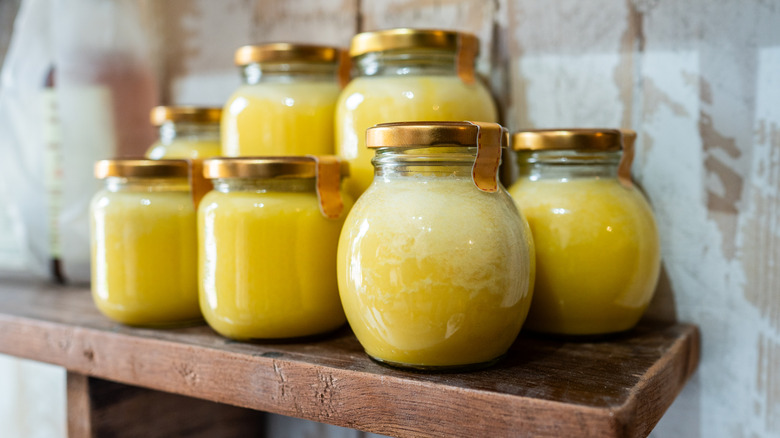
Dairy products are known for being temperature sensitive, so you may be surprised to learn that ghee, a type of clarified butter, is fine in the pantry. While it's true that even regular butter doesn't immediately spoil if it's left unrefrigerated, you'll only safely get a few days out of room temperature salted butter, less if it's unsalted.
Ghee, on the other hand, is fine for six months or more at room temperature, as long as it is sealed in an airtight container. The difference is, again, in the water content, or lack thereof. Ghee is a specific kind of clarified butter, which is made when butter is heated so that the water evaporates and the clarified butter can be separated from the milk solids.
Ghee is heated for even longer, giving it a deeper flavor than standard clarified butter. That makes it perfect as a rich dip for crab legs or a decadent drizzle over popcorn. Since you don't need to refrigerate it, you can even make a big batch of ghee at home to save money.
Olive oil
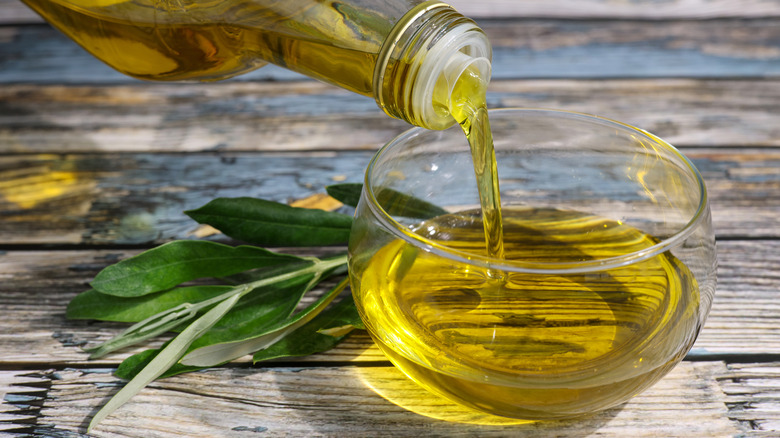
If you've been storing your olive oil in the refrigerator to extend its shelf life, you've just been taking up unnecessary space. In fact, you might have even been reducing its shelf life. Although olive oil is neither salty nor acidic, which might make you suspicious of its shelf life, it doesn't need to be refrigerated because it contains very little water, making it resistant to spoiling.
Storing olive oil in the fridge will cause it to start solidifying. This results in a cloudy appearance and also means you'll have to bring it back up to room temperature to use it for things like salad dressings, marinades, and drizzling over perfectly toasted ciabatta.
If you do decide to refrigerate your olive oil, be sure you don't remove the entire container to bring it up to temperature each time you want to use some. The frequent shifts in temperature can actually cause the olive oil to begin to break down, destroying its delicious flavor and health benefits.
Vinegar
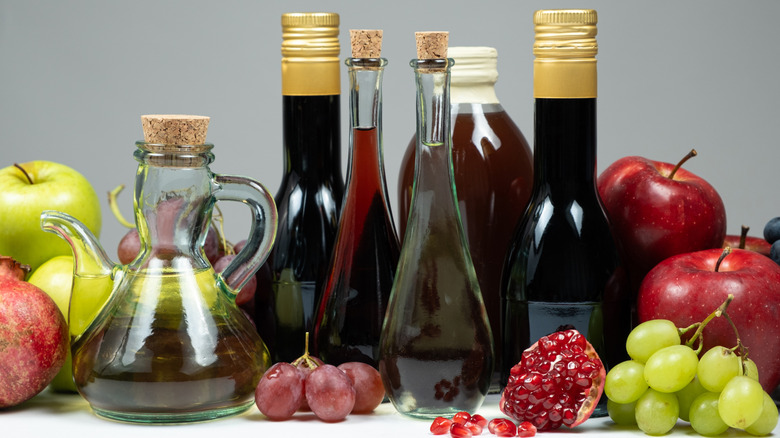
If you've been paying attention, this one is probably a no-brainer. We already know that high acidity helps keep certain condiments from spoiling without refrigeration and that's often accomplished through their high vinegar content. That also means that vinegar itself doesn't need to be refrigerated.
If you're worried this only applies to distilled vinegar and that you'll need to refrigerate all of your other delicious and versatile vinegars, don't worry. Virtually all types of vinegar are below the FDA threshold of a 4.6 pH to be considered shelf-stable.
Distilled vinegar has a pH of around 2.4 but can range up to around 2.7; apple cider vinegar , sherry vinegar, and balsamic vinegar all typically have a pH between 2.8 and 3.2; rice vinegar has a pH ranging between 3.0 and 3.5; red wine vinegar and white wine vinegar have a pH between 2.6 and 2.8; and malt vinegar generally has a pH between 2.5 and 2.8.
Ketchup
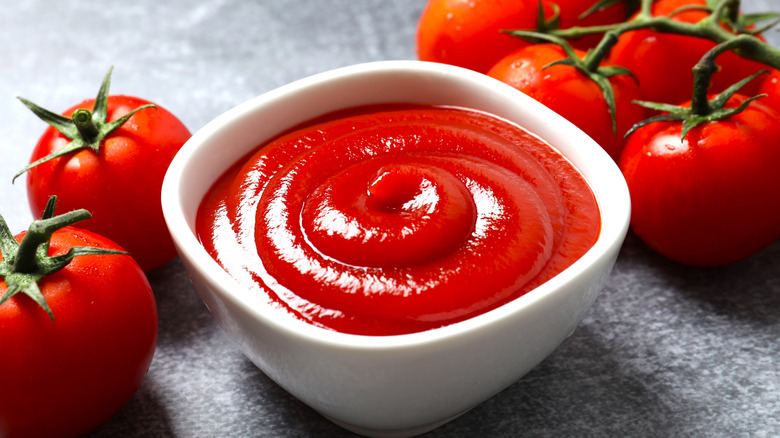
If you've ever eaten at a diner or just about any casual restaurant in the U.S., chances are that you've seen ketchup out on all the tables. Still, the debate about whether or not ketchup should be refrigerated rages on, with many people over the years saying they opt to refrigerate the popular condiment.
The definitive answer comes down to how quickly you go through a bottle of ketchup. If you, like the average restaurant, go through a bottle of ketchup in less than a month, there's no need to refrigerate it. The salt content and acidity mean that it can last about that long out on the table or in the pantry. Yes, storing it in the refrigerator will keep ketchup fresh for longer, but if you're the type to use ketchup on everything from eggs to potato chips, it's probably a waste of valuable fridge space.
Pancake syrup

Nothing compares to a stack of fresh, hot pancakes on a lazy weekend morning, but you're doing the fluffy stack a disservice if you top it with cold pancake syrup. Thankfully, you don't need to heat up your pancake syrup every time you use it if you're using maple-flavored syrup rather than pure maple syrup.
Pure maple syrup is made by boiling the sap from maple trees until part of the water has evaporated and the concentrated syrup is approximately ⅓ water and ⅔ sugar. Unfortunately, that's still a high enough water content, even despite the natural preserving effect of sugar, that pure maple syrup is still susceptible to issues like mold growth when left at room temperature.
Processed pancake syrups on the other hand (Mrs. Butterworth's, Log Cabin, and Pearl Milling Company, to name a few) are made with a combination of cane sugar, other syrups (often corn syrup), artificial flavors, and preservatives. These are very shelf stable in your pantry even after they're opened thanks to the high sugar content and those aforementioned preservatives.
Mirin
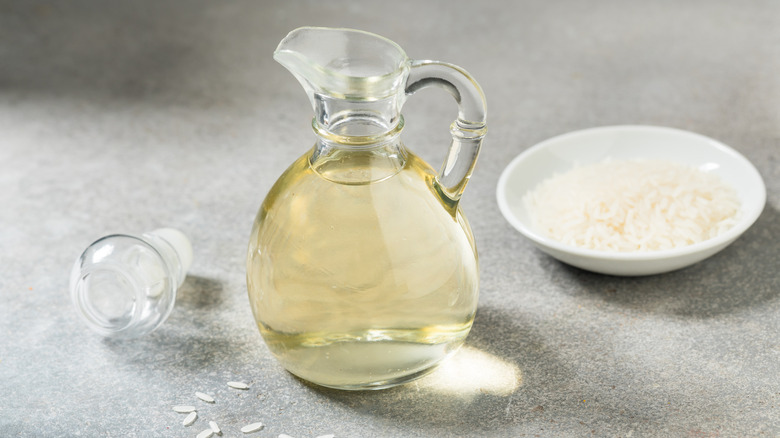
Mirin is another of those condiments that you may have bought for a specific recipe, but then totally forgot about in the back of your fridge. Similar to sake but with less alcohol and more sugar, mirin is often thought of as a Japanese sweet rice wine, but it is also used to bring extra umami and sweetness to dressings, marinades, and perhaps most famously, teriyaki sauce. On its own, mirin has an almost syrup-like consistency and can even be used for a splash of flavor on top of dishes like fried rice and stir fries.
Although you can find bottles labeled mirin with a significantly reduced alcohol concentration, these have added sugar and other ingredients that prevent them from being true mirin (and that also prevent them from being shelf stable). You'll want to look for bottles labeled "hon mirin" for what is considered pure mirin.
Because of its alcohol content, hon mirin can be stored at room temperature once it is opened. That said, the alcohol content also means it should not be served to anyone who cannot or should not have alcohol unless it is simmered for at least 30 seconds for the alcohol to evaporate.
Tahini
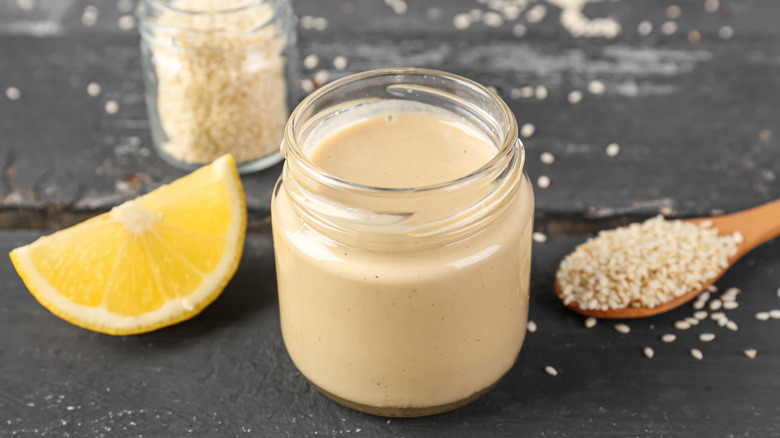
Tahini is a creamy paste made from roasted and hulled sesame seeds that may be living in a large jar in your fridge as we speak. Luckily, you can take it out of the refrigerator and store it in your pantry just like you would with peanut butter. Not only will you save precious space in your fridge, unrefrigerated tahini is less stiff, making it easier to work with, but you may need to stir it if the oils start to separate. Tahini's naturally occurring oils and low water content keep it safe in the pantry for up to a year after it's opened. Just be sure it isn't exposed to heat or moisture and you should be good to go.
While you're likely familiar with it as a star ingredient in hummus, there are many sweet and savory uses for tahini, including in brownies, pasta sauce, baba ganoush, and several versions of Dubai chocolate. It can also be added as-is to dishes like ramen or mashed sweet potatoes for a nutty flavor boost, or made into a super simple tahini sauce for dipping fruits and vegetables that you might ordinarily dip in peanut butter.
Chili oil
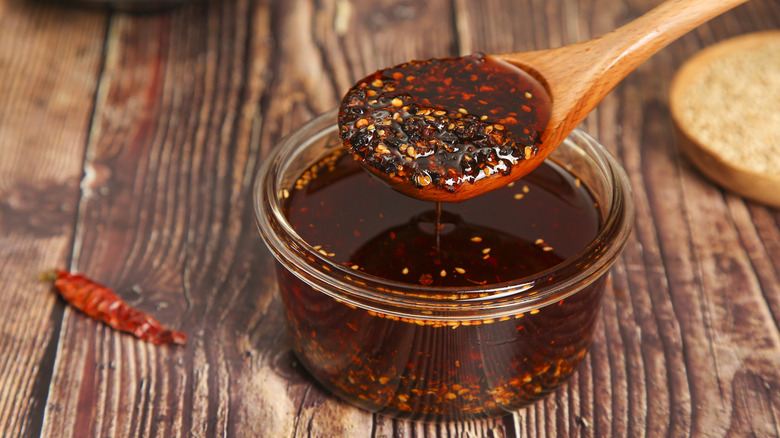
Whether it's Mexican salsa macha or Chinese chili crisp, chili oil is an absurdly delicious condiment made by infusing oil with dried or fried chiles and other ingredients. You can use chili oil as a marinade, but it's equally fantastic as a dip, drizzle, or topping on everything from soup and pasta to eggs and sandwiches. But arguably the best part is that as long as your favorite chili oil doesn't include any fresh or animal-derived ingredients, it doesn't need to be refrigerated.
Similar to the way the water in fish sauce and soy sauce is chemically bonded to the salt, making it inhospitable to bacterial growth, most chili oil has very little unbonded water, making it relatively shelf stable. It is, however, important to check the label on your chili oil to make sure that any ingredients like garlic and onion are listed as dried rather than fresh. Fresh ingredients mean additional water, which will mean the oil must be refrigerated to avoid dangerous bacteria growth.
Worcestershire sauce
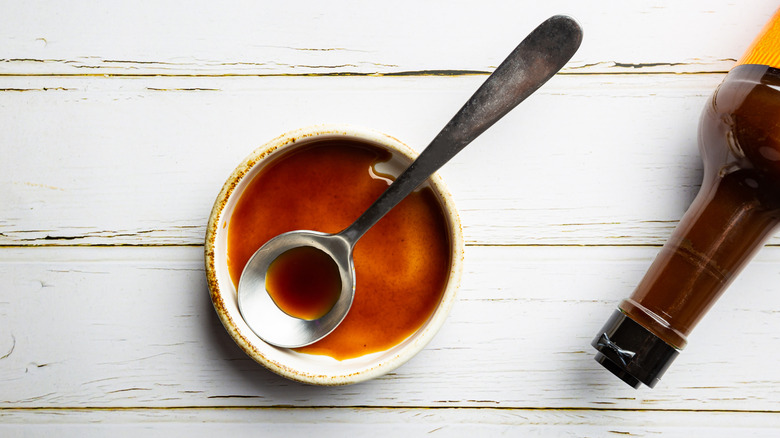
Whether you're able to pronounce it or not, there's no denying that Worcestershire sauce is deeply flavorful and a staple in almost any refrigerator. But you don't need to keep it in the refrigerator if you don't want to. As long as your pantry is dark and relatively cool, you can keep Worcestershire sauce in there for several years after it's been opened thanks to its high vinegar and salt content. It will go bad eventually, but so does everything else (except honey, of course).
If you're worried you might not use it quickly enough to keep it in the pantry, there are a lot of delicious ways to deploy Worcestershire sauce that you probably haven't considered. Sure, it's great with meat, but it's also a great way to add depth and umami to a michelada or bloody mary. Or store it right next to your olive oil and vinegar for easy access to make a savory and delicious vinaigrette.