

Why Rinsing Ribs Before Cooking Them Is A Kitchen Nightmare
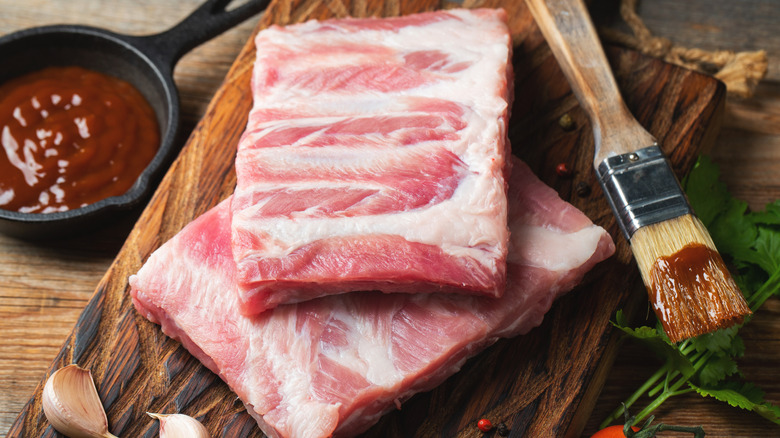
Many of the ways to elevate your ribs focus on prep rather than cooking because the various cuts should be nearly perfect already. However, rinsing your ribs is a mistake many people make with raw meat because, while it seems sensible, all it really does is contaminate your kitchen sink.
According to a 2019 report, rinsing meat is one of the most effective ways to spread harmful germs and bacteria. It does very little to extract myoglobin and other aspects of meat you may find distasteful, and it does nothing to sanitize the surface. Since you're using water, the liquid carries harmful contaminants quite well, whether by splashing them onto the counter or dripping them down the sides of the sink. This is especially dangerous for pork, which can carry pathogens that cause human illness and may lead to more serious foodborne diseases than many people realize.
Aside from possibly spreading pathogens around your workspace, excess moisture also works directly against developing a meat's flavor potential. Water lowers surface temperatures and creates steam, which prevents proteins from developing flavorful crusts. Since ribs are full of nooks and crannies, you'll likely have to let them air-dry for at least a little while, increasing the odds of further cross-contamination. Even if you thoroughly pat your ribs dry, all you're really doing is introducing new vectors of contamination to get back to where you started when they were fresh and unwashed.
Use simple methods to clean and prep ribs
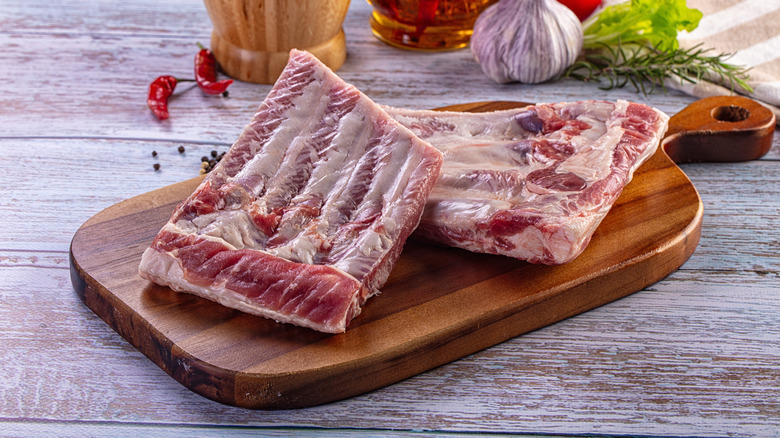
Among all the cuts you can harvest from an animal, ribs are reliably straightforward and require only separation from the spine and sternum. Usually, this leaves fairly clean cuts that don't produce much debris. However, if you find some sloppily butchered ribs, there are plenty of more hygienic ways to "clean" them before cooking.
If you find yourself with a rack that needs a bit of cleanup, utilize a water-blanching step, a method akin to how meats are often prepped in Asian slow-braised recipes. The blanching process removes blood, loosens small bone particulates, and preps the meat for clean cooking. Ribs, whether pork or beef, usually have long cooking times to tenderize the meat, so giving them a bit of a jump-start in hot water helps to ensure a clean, clear final product. Simply blanch the ribs for a couple of minutes, remove them, and let them cool, then give them a final once-over to see whether any particulates remain.
If you really don't want to start cooking your ribs yet, soaking them in a brine inside the refrigerator for a couple of hours can also draw out some of the same impurities and loosen bits of bone while infusing deep flavor. This process is far safer because it keeps the meat at a safe temperature and confines water that touches raw meat to a single pot, which is much easier to clean than an entire sink.