

What Is The Shelf Life Of A Bottle Of Scotch?
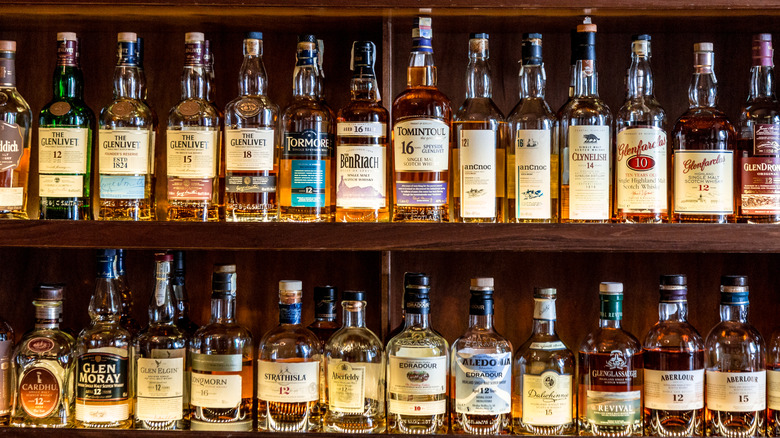
Few whiskies carry the same prestige as Scotch. Produced exclusively in Scotland's famous whisky regions, this iconic tipple must adhere to some of the strictest regulations in the spirits world. To earn the Scotch name, it must be made from water and malted barley (with some categories allowing other grains), matured in oak casks in Scotland for at least three years, and meet rigorous production and labeling requirements to uphold its quality. Another reason to purchase a bottle is its impressive shelf life: An unopened bottle can last indefinitely when stored properly.
It's not uncommon for the flavor of alcohol to change over time. Take certain types of wine, for example, some of which are renowned for improving over decades. However, the same can't be said for Scotch, but that actually works in its favor. It has no expiration date, and its flavor is extremely shelf-stable. Once bottled, Scotch immediately stops aging, meaning that a highly sought-after, rare bottle will taste exactly the same 50 years down the line, making it an excellent long-term investment for collectors.
Things get a bit more complicated once the bottle is opened. Oxygen can subtly change the chemical makeup of certain alcohols over time and ruin their taste. But the good news is that Scotch is much hardier than your average spirit. Because it has a high alcohol content of at least 40% ABV, the liquid is incredibly resilient and well-preserved. This high proof makes it much less susceptible to the effects of oxidation than wine, whose flavor can change overnight. In contrast, an opened bottle of Scotch can still be good after several years. That said, it's by no means invulnerable, and if left open too long with too much air in the bottle, its flavor and aroma will inevitably fade.
The best ways to store unopened Scotch
While Scotch is prized for its long shelf life, how you store it can make all the difference. For starters, it's essential to keep Scotch bottles upright. If you're a wine aficionado, you might be thinking: If it's corked, shouldn't it be stored on its side? This rule is super important for vino, but Scotch is a different story.
By law, Scotch must be bottled at a minimum of 40% alcohol by volume (ABV), giving it a much higher alcohol content than wine. Over time, that high-proof spirit can gradually break down the cork if it's left in constant contact with it. The result can be disastrous, including deteriorating seals, cork residue in the whisky, and even allowing oxygen to seep into the bottle. To prevent the cork from drying out, just give the bottle a tilt once in a while.
To keep your Scotch in top condition, store it upright in a cool, dark place away from direct sunlight and dramatic temperature swings. Light — especially direct sunlight, but even strong artificial light over time — can trigger photochemical reactions that break down flavor compounds, leaving the whisky tasting noticeably flatter and less complex. Consistent temperature is another concern. Excessive fluctuations can cause the liquid to expand and contract, creating pressure changes inside the bottle. Over time, this can force small amounts of air in and out, accelerating oxidation and gradually dulling the whisky's character. For that reason, serious collectors often store their bottles in a dedicated cellar, dark closet, or a temperature-controlled drinks cabinet.