

How Much A 6-Pack Of Beer Cost In The '60s Vs Today
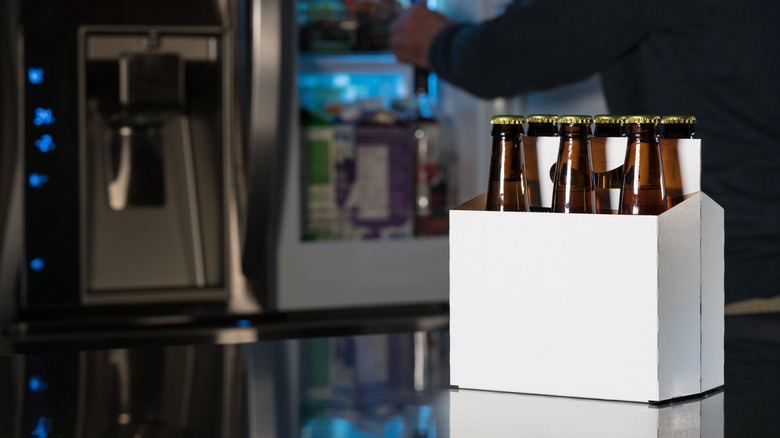
It's no secret that food and drink items came with lower price tags in the 1960s. A prime rib dinner cost around $4 during the decade, while the majority of groceries were priced well under $1 per pound. Accordingly, a six-pack of brewskis apparently didn't break the bank either; the item started the decade at $1.70 and gradually increased to a decade-high $1.92 in 1969.
The ability to purchase a six-pack for less than the cost of a single Budweiser tall boy in 2026 is easy to romanticize. However, it's critical to adjust those values for inflation, as the nominal dollar amounts don't accurately reflect past purchasing power. When 1960s prices are adjusted to modern values, the costs turn out to be higher than today's averages. A price of $1.70 in 1960 translates to roughly $19.19 in buying power in 2026, while the 1969 price of $1.92 equates to approximately $17.61.
In 2025, an average six-pack of beer in the U.S. cost between $10 to $13, meaning the price of beer has actually declined since the 1960s. In fact, across all the decades since the 1960s, beer costs are at an all-time low. Combined with a far more expansive brand selection, the golden era of beer shopping may be the 2020s rather than decades past.
Affordable lagers and early craft roots defined 1960s beer
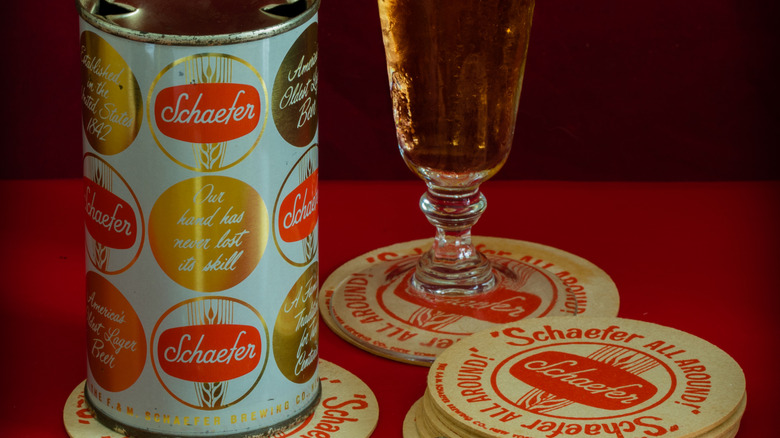
Back in the 1960s, buying beer looked different in more ways than just price. The American craft beer industry was in its infancy, with the scene essentially limited to the West Coast. Subsequently, easy-drinking lagers comprised the majority of options on the market. A few of the larger players are still around today — Anheuser-Busch already led the industry in sales, with Pabst and Miller also in production. Many brands, such as the no-longer-popular Schaefer beer, had strong regional ties.
Following World War II, marketing drove beer consumption, and throughout the 1960s and '70s, brands increasingly consolidated. The beverage was made intentionally affordable, with less variety on both shelves and in bars. Even imports weren't as prominent; Heineken served as the primary imported brew. As a result, there was less opportunity to spend money on interesting, limited-release beers.
Nevertheless, there was some localized variation. San Francisco-based Anchor Brewing, America's oldest craft brewery, had only recently started bottling its beer during the decade. Known for its steam beer, a uniquely fermented lager variation, the brand garnered its own fan base on the West Coast. While the pioneer would cease operations in 2023, its 1960s run was foundational. Genesee Cream Ale — a smooth, soft lager variation — also debuted in Rochester, New York, in 1960. During the decade, the craft beer movement was just getting started, setting the stage for a new era of brewing.