

Why You Should Add A Second Trash Can In Your Kitchen
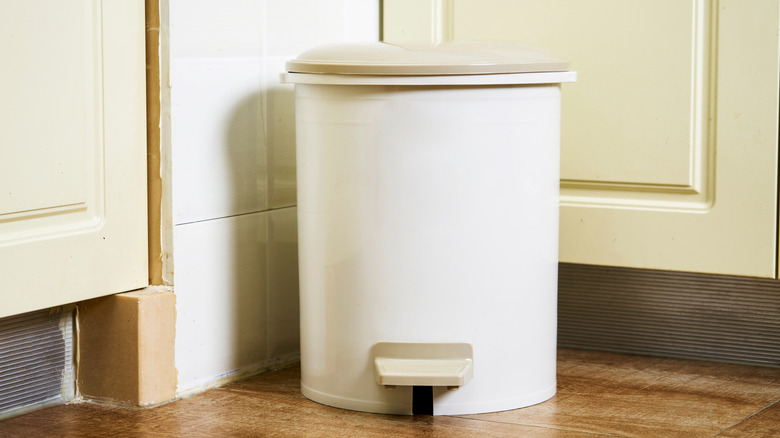
A good kitchen is all about organization and making the most of your space, so while adding a second trash can can seem like a waste, it actually adds a very specific kind of functionality. By adding a smaller one for compost, you can potentially save yourself both money and time, making the process far more convenient.
Rachel Ray's easy kitchen clean-up tip makes gathering your compostable ingredients simple, but you probably don't want to lug a bowl out to your yard every time you cook. A bathroom-sized trash takes up very little room on the floor, so you can stow it away in any unused corner. Since it's so small, it should also fill up before your scraps have the chance to break down and start to smell. Still, some scraps, like onions, are stinkier than others, so little tricks like reusing coffee grounds in your compost can help cover up any odors that may start to creep in before they permeate your kitchen.
Over time, a streamlined, at-home composting system saves you from dropping tons of cash on fertilizer, store-bought compost, and soil amendments that may make gardening prohibitively expensive. Aside from the cost of the can itself, the process should be free, especially if you just use plastic grocery bags as liners rather than buying small-sized bags. If you have a lot of paper bags lying around, you can even toss the whole thing in your compost pile.
What to compost in your new kitchen trash can
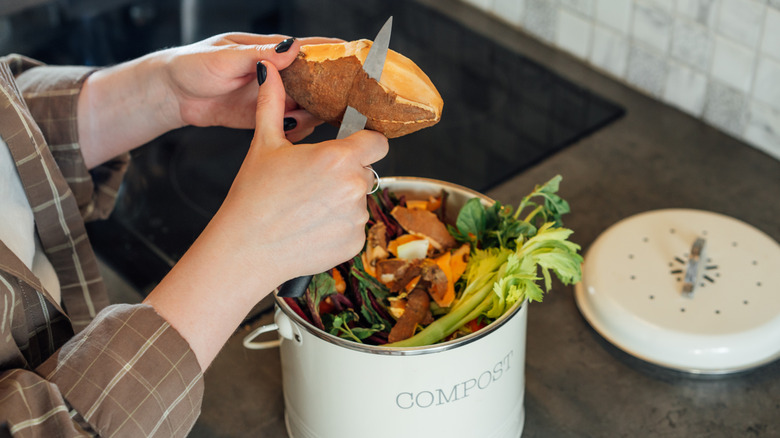
While just about any natural food waste can decompose in the wild, that isn't necessarily true of your at-home compost pile. Composting the wrong things can attract pests, create horrible smells, and even end up poisoning your plants later on, so don't be afraid to play it safe and toss some things in your larger trash can.
Veggie scraps from the kitchen are the best things to add to your second trash can. These are rich in nitrogen, an important building block for any plant that encourages flourishing leaves and strong stems. While you'll need to add at least two parts "brown" scraps, such as wood, paper, or dead leaves, there's no need to waste a free source of vital nutrients when it's as easy as putting them in a small bin, then taking it outside once or twice a week. Just be sure to rinse off any chemical residues and peel off any stickers, and you should be good to add everything from avocado pits to carrot peelings.
Steer clear of any and all animal products, as these take a long time to break down. While they do, they'll attract all sorts of mammalian and insect pests and possibly even become a disease vector for your yard and garden. The only exception to this is eggshells, a great source of calcium that you should always crush into smaller pieces, so they break down faster.