

The Ingredient Brewers Used In Beer Before Hops Was King

While you may want to prevent ground ivy from ruining your garden, it used to be one of the most sought-after ingredients in European brewing culture. Before hops became popular around the 14th century, ground ivy fulfilled many of the same functions, but required next to no cultivation.
Most people know that hops provide powerful flavors in beer — most notably in IPAs and other potent brews. However, hops also help extend beer's shelf life, especially before modern refrigeration helped stave off oxidation. Ground ivy replicated both of these functions, albeit less effectively, thanks to its naturally bitter taste, as well as its antimicrobial and antioxidant properties. Plus, the plant not only required little cultivation, but the whole thing, from stem to flower, is perfectly edible. It was so commonly used for brewing that the Old English word for it was "alehoof," literally meaning "ale herb."
People at the time also believed that ground ivy had slight medicinal benefits, particularly back when humorism was still in vogue. It was often used in "gruit ale," or ale brewed with herbs, including yarrow and rosemary, rather than hops. While there has been some resurgence of this drink in the 21st century, hops remain the king of beer for a reason, especially after widespread efforts to breed different varieties with unique, more potent flavors.
Ancient beer history is full of innovative recipes
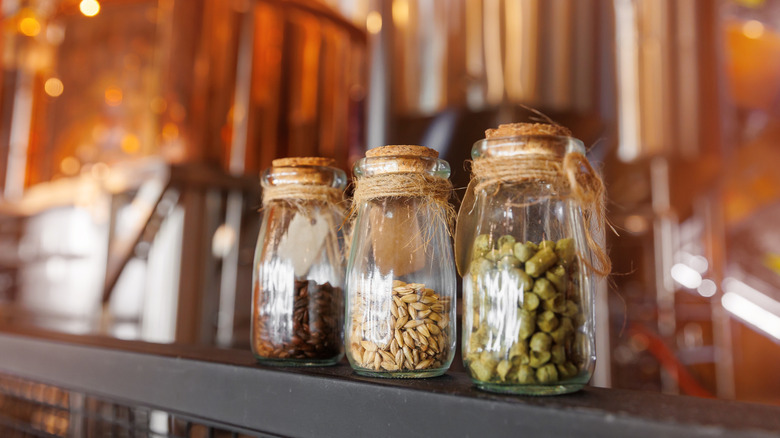
As one of the most historically important developments in food history, just about every civilization to ever exist had its own beer recipes. This has led to some truly innovative creations, from recycling unused food to even employing a bit of human saliva.
Thousands of years ago, in what is now southern Iraq, the Sumerians were brewing the oldest known beer recipe. While they didn't yet have a proper understanding of cultivating and employing brewing sugars, they did know that baking a special loaf of barley bread twice brought out what they needed to make booze. Thick, cloudy, and frothy, it wouldn't be recognizable compared to most brews today. However, just like gruit ale, this style is seeing some modern experimentation, with Toast Brewing in the U.K. repurposing discarded supermarket bread.
If you're a fan of Dogfish Head, you may have heard about one of the more controversial, but still quite old, beer recipes: chicha de jora. Widespread in South America, especially Peru, indigenous tribes found a unique way to access the starch in corn to brew a low-alcohol drink. They chewed it, spat it out, and let the natural enzymes in their saliva do the heavy lifting. While not all chicha de jora is still made this way, it was once a vital part of Incan culture, fulfilling both ceremonial and day-to-day social functions.