

The Michelin Guide Played A Unique Role On D-Day
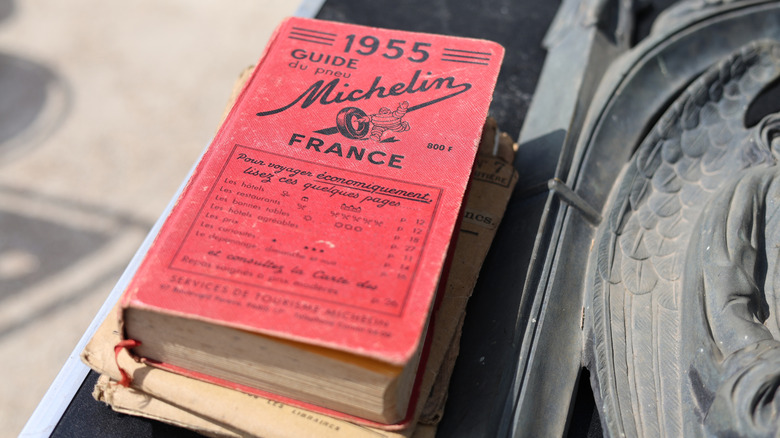
The Michelin Guide has more than cemented itself as a part of food history, but what you might not know is the important role it played in world history, too. Today, it's a useful tool for foodies traveling the world, looking to get the most out of a city's culinary scene. Back in World War II, it was used by Allied soldiers to navigate through France after D-Day.
The Michelin Guide was around long before World War II, having been established in 1900. While traveling to find the best eats wasn't a priority in wartime Europe, the Michelin Guide became a valuable asset during the war because accurate, up-to-date maps were extremely difficult to obtain. To make navigation harder for the invading forces, the Germans had removed and altered many road signs and street markers across the country. Allied troops preparing for the D-Day invasion, therefore, relied on the Michelin Guide's detailed maps and road information to move soldiers, vehicles, and supplies through unfamiliar territory.
In 1944, the United States government requested permission to reprint the 1939 guide (the last edition published before the war). The War Department printed a secret edition specifically for military use, labeled "For Official Use Only." To avoid the guide looking too conspicuous, its signature red color was replaced with a plain sand color, and the guide contained over 500 detailed maps of different cities. Following the war, these special editions have become important historical artefacts and can be found in museums as well as auction houses where they're known to fetch high prices.
The Michelin Guide has gone through many transformations in its time
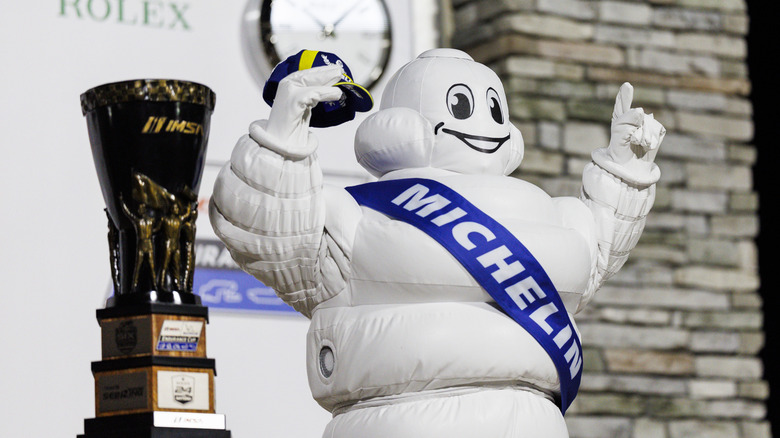
Before the Michelin Guide became a wartime hero or foodie bible, it once had a very different purpose. Established by French brothers André and Édouard Michelin, it's a surprise to learn that the duo initially had very little to do with the culinary world. They were actually the founders of the Michelin tire company, which sold (surprise!) tires. They wrote the guide to encourage readers to travel to restaurants and hotels in an era where automobiles weren't hugely popular. They hoped this would increase demand for cars and, in turn, tires. That's why Michelin's mascot — Bibendum, better known as the Michelin Man — doesn't just look like he's made of tires; he actually is!
The Michelin Guide is most famous for its elusive stars, and these were introduced 26 years after the guide was created. Initially, exceptional restaurants were awarded a single star, which later developed into the one, two, and three-star hierarchy — with three stars being the rarest and most prestigious. The guide also became famous for its grading system, with anonymous inspectors judging the restaurants. This is still standard practice today and continues to remain shrouded in secrecy.
While the guide served a unique navigational purpose during World War II, it still remains a helpful tool for visitors to get around a new destination. Many people visit cities and countries purely based on the density of Michelin stars, which can range from major metropolises like Tokyo to much more low-key towns and villages. On the restaurant level, earning even a single converted star can significantly increase the number of guests an establishment attracts, often making it a career-defining accolade for chefs looking to make a name for themselves in the industry.