
5 Of The Most Expensive Beers In The World
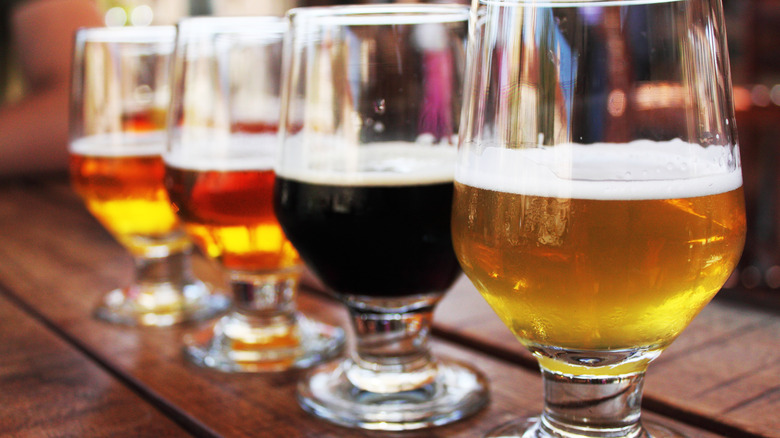
Unlike the large array of fine wines or the collectible world of rare allocated bourbons, beer doesn't typically draw associations with high prices. For starters, there's the culture of standardized and ubiquitous macro beers: affordable brands you'll find everywhere from convenience stores to restaurants nationwide. Artisanal and smaller-batch craft beer comes more expensive — with prices steadily rising — but still seldom crosses the $10 mark for a pour.
Still, even though a day-to-day beer won't often break the bank, there's a coveted world of brews to explore. After all, the beverage can utilize pricey delicacies, spend years aging in expensive barrels, and come in small batches — all factors that make prices climb. Even in a standard liquor store, you might find a four-pack that nears the $40 mark.
Not to mention, there's the realm of highly limited collector's beers. Some include one-of-a-kind ingredients ranging from space-grown components to brews made using truffle, saffron, and gold. Others offer historic appeal, like Allsopp's Arctic Ale, a 19th-century beer recovered from the Arctic and auctioned for thousands. The sky's the limit, with the most expensive beers in the world commanding lofty prices.
Sapporo Space Barley contains ingredients sourced from outer space
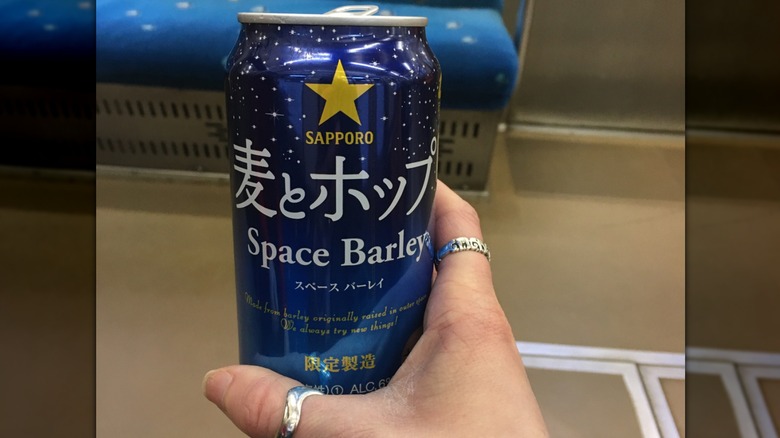
As Japan's oldest brewery, Sapporo is best known for a steel-can-contained lager found worldwide. Yet the company — which also bought out America's oldest craft brewery, Anchor — made another mark on history with the release of Space Barley in 2009. The cosmic beer uniquely employs malts derived from barley propagated in space, specifically on the International Space Station. What started as scientific research transformed into a one-of-a-kind drinking experience.
The beer is an amber style, brewed to a balanced 6% ABV. Expectedly, Sapporo brewers chose to highlight the cosmic malts, crafting a flavor profile that tastes primarily of toasted barley. The first 100-liter batch was surrendered to science, alongside select sampling in the brewery. Then, a subsequent release comprised 250 six-packs, priced at 10,000 yen per package — around $115 at the time. Sapporo Space Barley sold through an online lottery system exclusively to Japanese customers. All money from sales then went to science-focused charities, evincing the brewery's academic intentions. It's a remarkable backstory for a beer, with no other brews in the same orbit.
Extreme potency and barrel-aging define the legendary Utopias
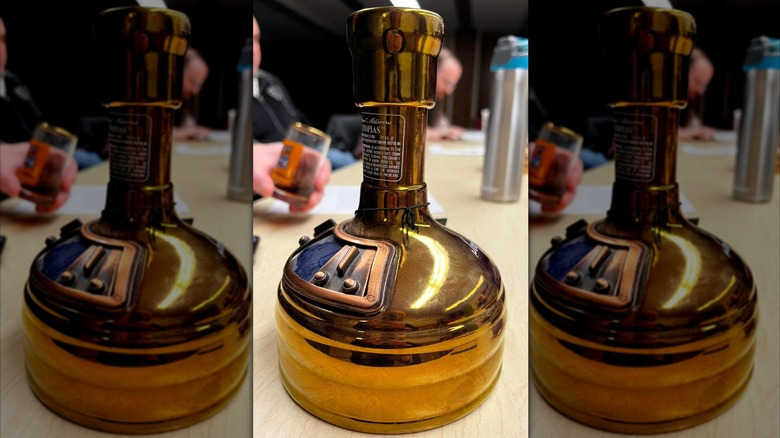
Much like Sapporo, Sam Adams is another cherished city brewery predominantly crafting an easy-drinking lager. Yet also part of the company's lineup is Utopias, a coveted, boozy, barrel-aged brew typically released every two years. The beer retails for hundreds of dollars; the 2025 release commanded around $300 per 25.4-ounce bottle. In resale, special anniversary editions can even sell for price tags nearing $4,000. The brew is also distributed to all Sam Adams employees, with every worker receiving a numbered bottle. So what's all the fuss about?
The beer melds innovation with legacy. First introduced in 2001, Utopias beers strive to push the alcohol content of beer — the 2025 release packed some 30% ABV — all while imbuing remarkable complexity. No distillation is employed, but each rendition uses a distinct mix of barrels. The 2019 Utopias used cognac and Madeira barrels, while the 2025 release employed some seven barrels, including various types of Port and whiskey. A pour comes without carbonation and, per Sam Adams' recommendation, is best enjoyed in a small, 1-ounce serving, preferably out of a snifter glass. It's a wholly unique brew that receives abundant intrigue, even earning a ban in more than a dozen states because of its stiff composition. For many beer fans, it's a unique drinking experience worth the steep price tag.
Carlsberg's Jacobsen line remains a top-tier global beer collectible
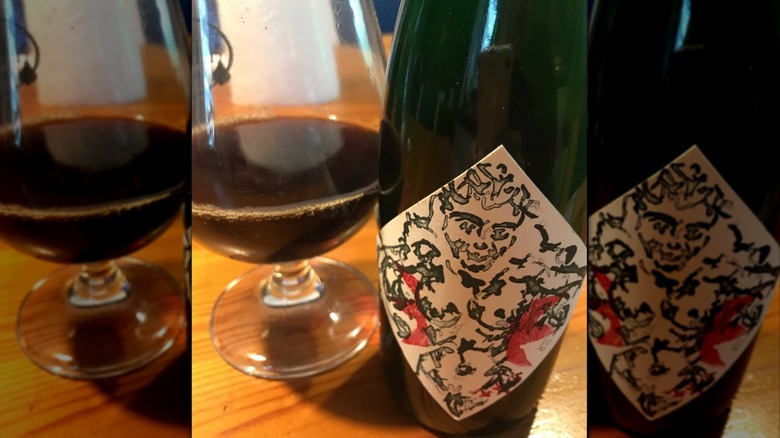
Large breweries love to drop a pricey release — a pattern also reaffirmed by Denmark's Carlsberg. Best known for a reliable lager tapped at pubs worldwide, the brewer also released three versions of Carlsberg's Jacobsen Vintage, which land among the most expensive beers of all time. These limited releases dropped from 2008 to 2010, costing anywhere from $300 to $400 per 375-milliliter bottle. Distributed primarily throughout Copenhagen's restaurant scene, including at famed Noma, the beer was marketed as an exclusive akin to a fine wine.
Each of the three iterations came barrel-aged, but comprised distinct ingredients. Carlsberg's Jacobsen first vintage is a six-month oak-aged barley wine noted for a complex caramel-vanilla palate. The second vintage debuted as a darker brew: a 100-day-aged Baltic porter crafted with peated Scottish malt. The third was an oaky barley wine boozier than the first, defined by its barrel-aged flavors. The initial two vintages dropped in quantities of 6000 bottles apiece, while the third came in at 1,000. To cement the elegant composition, each bottle also adorns eye-catching art, furthering its collectible status. The limited release still occasionally surfaces at auction, establishing the Jacobsen Vintage line among the most coveted beers of all time.
Limited-edition barrels make Dark Lord a top-tier resale item
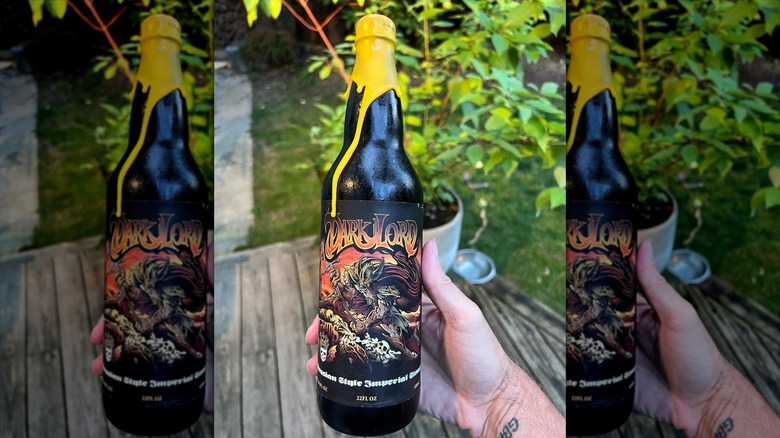
Craft beer intersects with many subcultures, metal music included. For instance, getting a hold of Three Floyds' Dark Lord Imperial Stout — among the most sought-after beers on the market — entails buying tickets to an annual metal music festival. Organized by the Indiana-based brewery, a ticket frequently priced at around $200 grants both admission and a guaranteed allotment of the coveted imperial stout. The beer is exclusively released on this day, with several variants offered each year. While the base brew is unaged, each variant of the brew is typically aged in a different barrel, sometimes with unique flavor additions. Some debut exclusively on draft, but the variants come in bottles limited to only a few thousand per year.
The unique distribution system has generated a cult following. Fans congregate from all around, not only to enjoy the music and annual stout releases, but also to share rare bottles of their own. The communal atmosphere creates a beer coveted not just for its price, but also for the occasion. Afterwards, beer resale can fetch a steep price, with some barrel-aged variants in more demand than others. Even an empty bottle can go for around $20 online, while a 750-milliliter variant can sell for well over $175 in resale. Fans compare releases from one year to the next, with the beer consistently held in high regard, making it among the world's most legendary — and expensive — collectibles.
Belgian monks craft the world-renowned Westvleteren 12
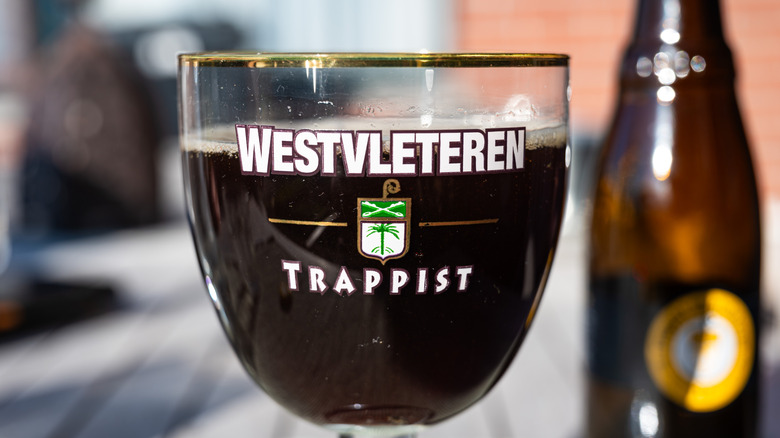
While many American craft beer brands no longer draw the queues of times past, Belgium's Westvleteren continues to form buzzing lines of anticipation. The Trappist brewery run by monks is best known for Westvleteren 12, a 10.2% ABV Belgian Dark Strong Ale. Often called the world's rarest as well as best-rated beer, it's a release that has drawn attention — as well as high prices — for decades.
Purchasing the beer in the U.S. entails paying upwards of $50 for a single 12-ounce bottle and well over $1,000 for a case, making it among the priciest brews in continuous circulation. Travel to Belgium, and getting a hold of a Westvleteren 12 is cheaper, but it entails making an online appointment, then driving to the town of Vleteren, all while following a limited release schedule. Technically, the monks prohibit reselling the beer, although the rule is not often adhered to. In times past, customers have even hacked the distribution system to exceed the two-case-per-person rule, employing an intricate system of varied phone numbers and license plates.
So why all the intrigue? There's lots of demand for sampling a brew with such a high reputation. Westvleteren 12 is only produced a few days a week, with no intention of scaling — sales are used exclusively to cover brewery costs. The beer has long occupied the spotlight for its unique composition and production. All the while, Westvleteren's monks remain dedicated to a methodical brewing process, yielding a complex brew that lives up to most drinkers' expectations. It's a combination of factors that adds up to one of the rarest beers around.