

Why Some Watermelon Seeds Are White (And Are They Safe To Eat?)
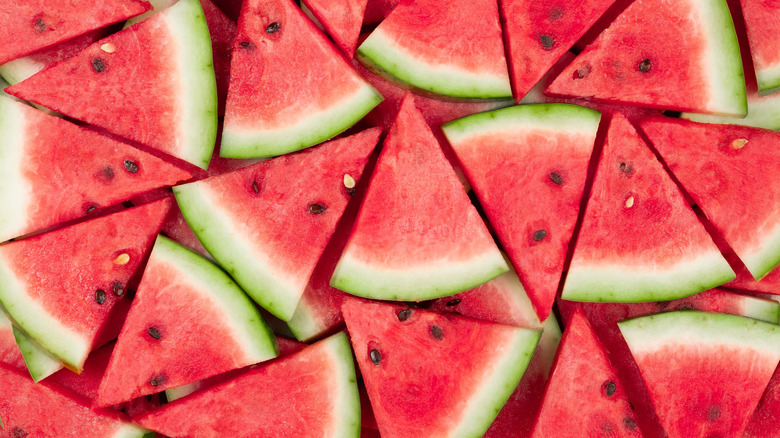
Among the many questions people have about watermelon, a lot end up being about the seeds. If you've ever bitten into one and noticed white, rather than black seeds, there's no need to worry. They're just a bit immature and are perfectly safe to eat.
All watermelon seeds start as white, translucent, slightly soft little pellets within the flesh. In an American full-seed variety, they gradually harden and grow black, signifying that they're fertile and ready for planting. Still, even in seedless watermelons, it's common to find a few small white seeds. But don't worry, this doesn't mean you didn't pick a good one at the store. Even the most fully ripe fruit is bound to have a few immature seeds in it, and you shouldn't take them as an indictment against your purchase's growing conditions, age, or flavor.
In seedless watermelons, these seeds are essentially husks, like a sunflower seed without the kernel. Cross-pollination creates a variety that is unable to produce fertile offspring and instead makes sterile little seeds that never mature past their initial stages. While this does make the "seedless" label a bit misleading, most people don't even notice them when they bite into a fruit's flesh, and you shouldn't notice any adverse effects, no matter how many you eat.
How to cook white watermelon seeds
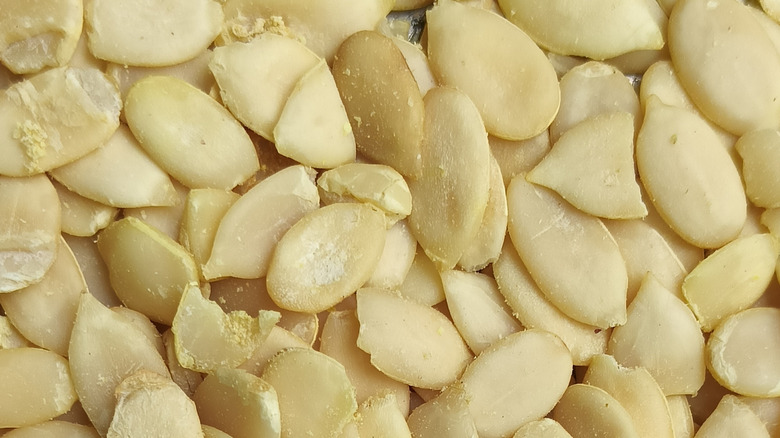
Fully developed watermelon seeds are a great snack that you can prepare similarly to pumpkin seeds — roasted, pureed, or pan-fried. The white seeds, however, lack much texture and flavor. Instead of roasting them for a textured, nutrient-dense snack, you're probably better off grinding them up.
Watermelon seed butter is an underrated condiment with a pretty neutral taste but an extra creamy texture. You can up the flavor by including black seeds, but if you only use white ones, you get a blank canvas with fantastic mouthfeel. With the right seasoning, you should be able to use it for just about anything. If you add garlic and herbs, you can use it like an aioli for burgers. Toss in honey and brown sugar instead, and you get a nutritiously sweet dipping sauce for sliced fruit — after all, watermelon seeds are high in magnesium, zinc, and iron. All you have to do is blend the seeds with a tiny bit of neutral oil until the mix is just thick enough to coat the blades.
If you're a baker or in need of a smoothie thickener, you can actually convert watermelon seeds into flour with less than an hour of effort. By laying them out on a sheet and letting them dry, either in a sunny patch or in the oven at a low setting, you end up with flat, crisp little pellets that pulverise perfectly. You'll get with a gluten-free, high-protein ingredient (the kernels have about 30 grams per cup) with a distinctly nutty taste.