

How To Protect Your Vegetable Garden From An Overnight Freeze
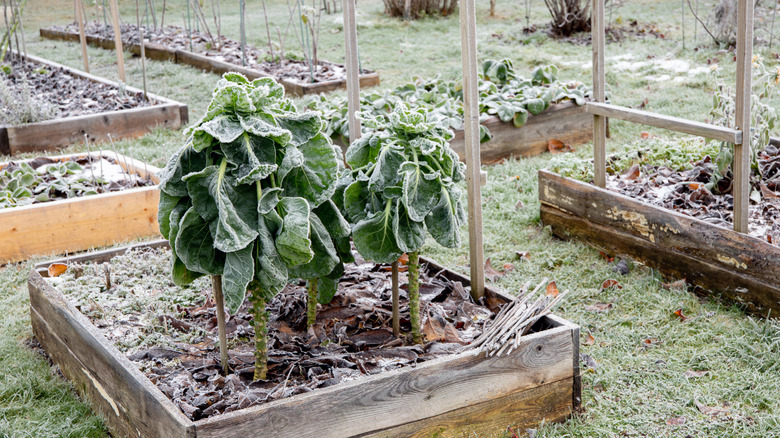
Whether you're planting vegetables in the fall or just experiencing some unseasonal cold weather, an overnight freeze can decimate all your hard work in less than 12 hours. Fortunately, a quick freeze is as easy to protect against as it is to suffer from, and you can use anything from a plastic tarp to a bucket.
Frost occurs when water vapor from the air condenses into ice crystals on the surface of plants. This direct contact freezes water in a plant's cells, rupturing them and killing the whole thing. The best way to prevent this is to provide just enough ambient heat that frost can't form, but you don't need to stoke a fire all night or set up an array of electric heaters. Instead, you can capture the radiant heat stored in soil and create bubbles of higher temperatures by completely covering plants.
During the day, soil absorbs tons of heat from the sun. By placing a bucket, hoop-supported plastic tarp, or just plain old blankets over your garden, you hold in that escaping heat from the soil. This works well enough for temporary overnight freezes, but only if there's enough sun and high enough temperatures during the day to build heat in the dirt. It won't work if temperatures stay below freezing day after day, but it's great to avoid mistakes that can ruin your garden, like planting too early.
Tips for protecting plants from an overnight freeze
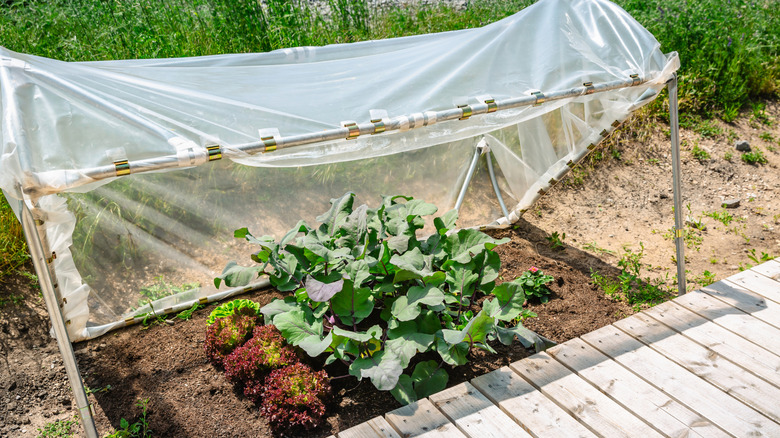
Air is a great insulator, provided it isn't able to move to colder pockets when warm. Since the goal is to prevent outside cold from developing frost crystals on the surface of your vegetables, you'll need a bit of support for your chosen cover and to ensure it's affixed tightly to the ground.
If you have long rows of plants, your best bet might be to construct an impromptu hoop tunnel. Bend long pieces of flexible metal wire into U shapes, evenly space them along your row, and lay your tarp over the top. This is especially important when using anything plastic, as direct contact with a plant can transfer enough cold to freeze it a bit. However, if you only have a few small plants, an upturned bucket settled into the soil can work just as well. You can even repurpose a beginner tomato gardening tip by installing a short-term tomato cage and laying a tarp over that.
If you use any sort of tarp, blanket, or fabric, you'll want to preserve your heated air pocket by preventing leakage from the bottom. You don't need to make it 100% airtight, but even a few rocks holding the sides down can make a tremendous difference. If you really want to be extra careful, shovel some mulch or dirt where the excess lies against the ground. Not only should this provide enough weight to keep it from blowing away, but it also helps create a stronger seal that traps more warm air.