

How Miami Cuban-Style Pizza Is Different From Other Pies
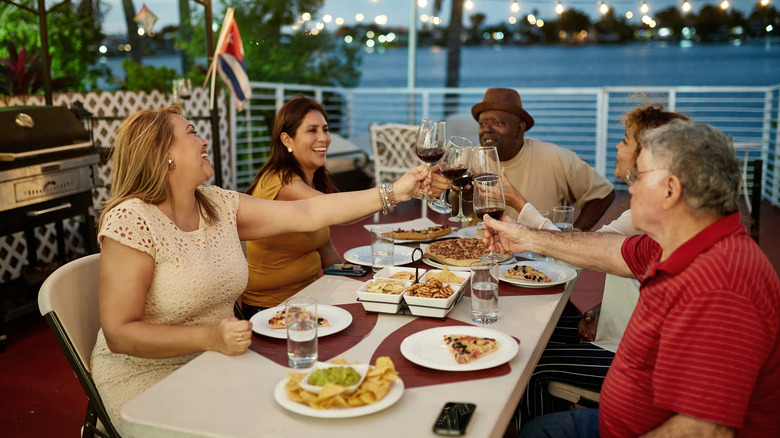
If you were flying to Miami for the weekend and wanted to have some real Cuban food, there are some things you'd be expected to do — like go to the most famous spot in Florida to grab a Cuban sandwich that's in the city, and have a bracing cafecito after your meal. However, getting pizza probably wouldn't be on your list. Although there are many different types of pizza in the U.S., and everyone's heard of some of them, like New York's and Chicago's, Miami's Cuban-style isn't really known much outside the area and the community.
The pizza has several characteristics that define it. Starting with the base, it's a pan pizza, and the dough is puffier and higher than others, like New York's thinner version. It's also a smaller personal-size instead of a bigger traditional pie. The tomato sauce is a little sweet as well, which contributes to the whole pizza's characteristic touch of sweetness. While mozzarella alone is the classic cheese, and processed is actually the better choice over fresh, Cuban pizza is made with both mozzarella and Gouda, so the blend is extra creamy. It's actually less surprising than it might seem, as Gouda is (or was originally) in different dishes in Cuba, like the Cubano.
You may see some unique toppings, too. Some of them include bananas, seasoned ground beef called picadillo, chorizo, shrimp, and sweet plantains. One well-known Miami spot for Cuban pizza, Polo Norte, even uses guava, cheese, and bacon.
Changes in assembly and how to eat Cuban pizza, whose origin is disputed
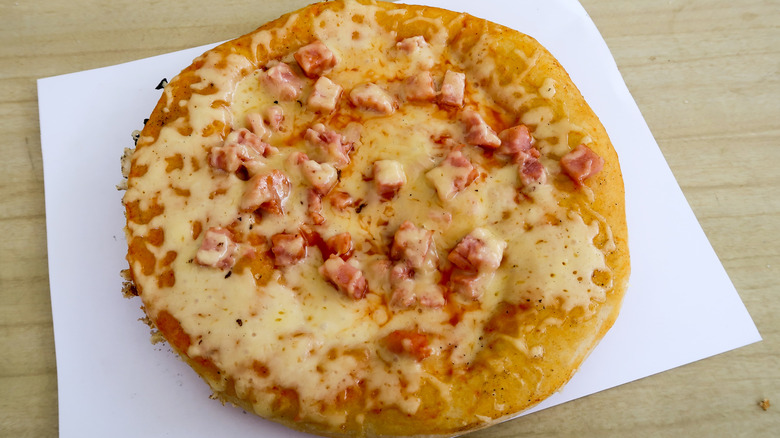
The method of assembling the pizza is also different from what Americans are used to. Instead of being added over the cheese, the toppings go under all of it, sealing them in. Additionally, the cheese is generously arranged over the edges, which forms a crispy, savory edge around the top of the dough.
Once the pizza is done, Cubans usually fold these small personal-sized pies in half and eat them that way, rather than slicing them into triangles. Since the toppings are safely ensconced under the melted cheese, there's no risk that they'll fall out.
As with many foods, there is a dispute over this style's origins. One story is that the founder of a well-known Miami Cuban pizza place, Montes de Oca, was selling it in a Cuban beach town and continued when he came to the Florida city. But the way another famous Miami shop, Rey's Pizza, tells it, its founder was running restaurants in Cuba and learned how to make pizza from a man from Argentina, and he pioneered the style when he came to the States. Whoever was first, there are now many restaurants, like Polo Norte, making it too.