

Cowboys Ate This Preserved Meat In The Old West
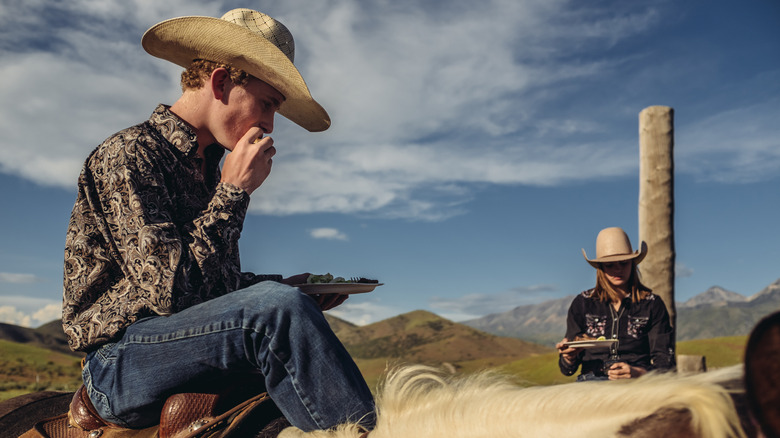
Cowboys are the ultimate embodiment of old-school Americana. They conjure up images of the Lone Ranger, freedom, and the trials and tribulations of frontier life. What's less discussed, however, is what they ate. Out in the Wild West, food was hard to come by. Cowboys spent long periods alone, which meant their food had to be functional, long-lasting, and calorie-dense. Fortunately for them, one delicious meat that met all these requirements was salt pork.
Salt pork — commonly known as sowbelly — was a staple survival food among cowboys in the Old West. Not too dissimilar from bacon, it's typically made using fatty meat from the back or side of hogs, which is then cured in salt. Curing is what made it suitable for frontier life. This ancient preservation method sees the meat coated in salt, which draws out moisture to create a hostile environment where bacteria cannot grow and spoil the meat. This made it perfect for long journeys where refrigeration simply wasn't an option. While raw pork will only last a day or two unrefrigerated, salt pork can easily last for several months when stored in a cool, dry place.
Beyond being a reliable source of long-term food, salt pork provided many other benefits to cowboys. It's very high in fat and calories, which gave cowboys long-lasting energy for the rigorous demands of cattle drives. It's also multi-functional. The fat could be rendered down and used to fry the pork and other foods. But before eating it, salt pork had to be soaked in water to draw out the salt. It was then eaten boiled or fried, and was often diced up and combined with other ingredients as part of a cowboy stew (often called son-of-a-gun stew in polite company, and son-of-a-b***h stew otherwise).
What other foods did cowboys rely on?
Many foods that cowboys relied on remain popular today and are even eaten in similar ways. Take salt pork, which is still enjoyed in stew format in classic New England chowders. You'll also find it used as a flavor booster in Boston baked beans or Southern-style greens. Beyond salt pork, plenty of other cowboy staples are familiar dishes today.
One of the most iconic cowboy foods was beans, which were considered to be a staple of 19th-century cattle drives. There are many reasons why beans met the tough demands of cowboy life. Dried beans have an extremely long shelf-life and can last upwards of three years. They're also considered superfoods and are packed with nutrients, protein, and fiber, which makes them extremely energy dense. From a historical perspective, they're also interesting as they reflect the influence of Mexico on cowboy cuisine. The vaqueros of Northern Mexico were the original trailblazers. They introduced beans as a staple of long-trails, creating dishes like frijoles charros – a broth of pinto beans boiled with other ingredients. Undoubtedly, this method of cooking influenced the classic bean-based stews and soups eaten by American cowboys.
Coffee might not have been needed for survival (debatably), but life in the open wilderness didn't stop cowboys from getting their morning brew. But instead of fancy espresso machines or cafetieres, they made no-frills cowboy coffee. This rustic method brewed coffee grounds in boiling water over fire, and after a few minutes of steeping, a splash of cold water (or eggshells) was added to make the floating coffee grounds sink to the bottom. Surprisingly, this old-school method is known to deliver a pretty solid cup of java.