

Make Store-Bought BBQ Sauce Better When You Add This Easy Ingredient
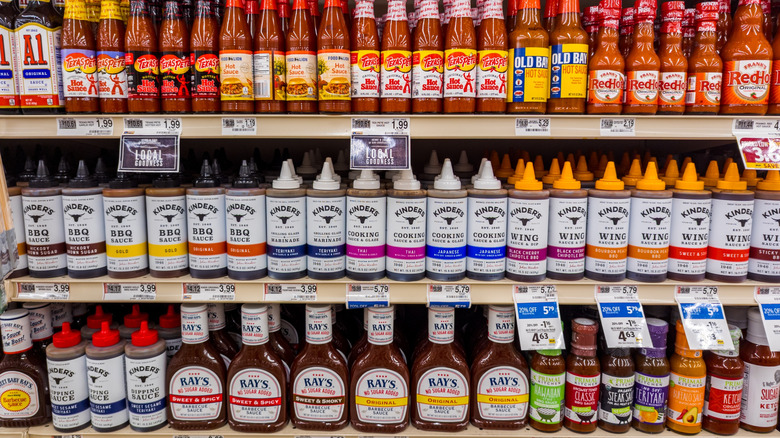
Since the commercial production of barbecue sauce began in 1909, when the Georgia Barbecue Company advertised its product as the "finest dressing known to culinary science," the condiment has become a mainstay of American food culture. Chances are, you will never run out of choices with barbecue sauce (not every barbecue sauce is tomato-based), regional flavor variations, and innovative flavors (like chocolate or booze-infused). Although barbecue sauce already seems to be the epitome of flavor in a bottle, there is always room to take it to yet another level, and one of the options is to add miso.
Miso, a fermented Japanese paste made of soybeans, adds a complex combination of savory, salty, and earthy flavors. A common way of describing how miso tastes is that it has plenty of umami. One of the most common styles of store-bought barbecue sauces is inherently sweet — from brown sugar, honey, or maple syrup; it may also have a tangy taste from vinegar. They often also have ketchup, which scores in all five basic tastes — sweet, sour, salty, bitter, and umami — but miso does a great job in bringing out that umami flavor.
Try adding white miso for a milder, slightly sweet taste that won't overwhelm the sauce. Want something bolder? Opt for more potent, saltier, and more savory red miso instead. If the idea of tweaking a store-bought barbecue sauce appeals to you and you love miso, try both and see which you like better. You can also add miso when you make your own barbecue sauce with just three easy ingredients to give it a deeper, more complex taste. Start with a few tablespoons per bottle and add more if you need more oomph.
Other ways to upgrade store-bought barbecue sauce
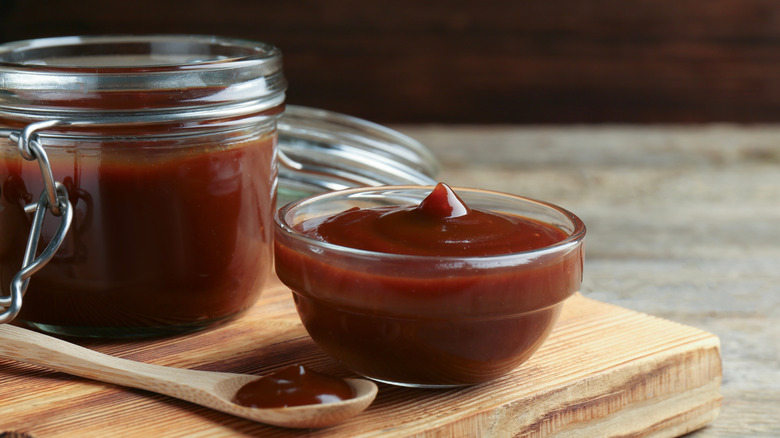
Besides adding miso, there are other ways to tinker with bottled barbecue sauce to customize it to your palate. Want some zip? Add spiciness: The heat level depends on the chilies, ranging from mildly to moderately spicy chipotle and ancho chilies to super spicy habaneros, Carolina reapers, and ghost peppers. To up the heat, add your favorite hot sauce, but do it in increments, a teaspoon at a time, to make sure you don't overdo it.
To give the sauce more tang, add more vinegar, either apple cider or rice vinegar. Increasing the acidity is also a good way to restore balance if the barbecue sauce is too sweet. For more smokiness, add liquid smoke or smoked paprika powder, which adds a smoky flavor as well as mild heat. You can use liquid smoke, but it is very potent; a single teaspoon is sufficient to flavor 5 pounds of meat, so start with a few drops and taste before adding more.
Most bottled barbecue sauces have a thick consistency, which works well for dipping chicken nuggets and glazing chicken wings, but if you want to use it as a marinade that is meant to penetrate the meat, a thinner sauce works better. Add a little water, oil, or beer until the consistency is to your liking.
To give the sauce more texture and add flavor at the same time, add finely chopped fresh herbs (rosemary, thyme, sage, Mexican oregano) or bacon bits (yes, some bacon bits are real bacon). Keep in mind that these additions spoil faster than the bottled sauce (in the fridge, bacon bits last up to six weeks), so only mix up the amount you are going to consume promptly, and, just like any opened barbecue sauce, keep it in the fridge.