

Bake Your Pie Crust Upside Down For The Best Results
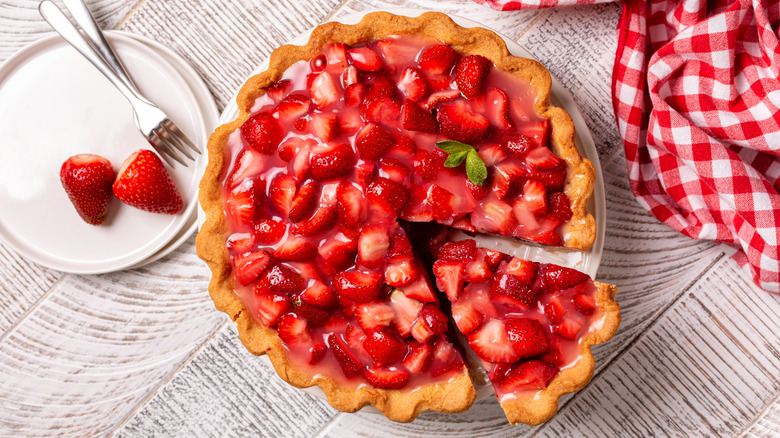
Pies are a dessert staple, ranging from sweet summer favorites like peach and blueberry, to silky holiday pumpkin and spiced apple, to savory quiches — but they can be tricky to make from scratch. While double-crust pies are arguably the most work, single-crust ones may require cooking the shell separately, either partially (par-baking), or fully (blind baking), before the filling goes in. This step can be simplified by baking the dough upside down on the exterior of the pan.
Dough for either type of shell is traditionally fitted in a pie plate and covered with aluminum foil or parchment paper filled with pie weights, dried beans, or rice. They help keep the bottom from puffing and the sides from sliding down. It's cooked until it has a little color, then the weights and paper or foil are removed. It goes back in the oven until it's done, or for less time if par-baked.
The hack eliminates the need to fit the dough inside the pie plate and deal with the foil or weights. You no longer have to worry about the sides of the crust sagging; instead, gravity and the physical barrier of the pan hold the dough in place as it is draped over the upside-down plate. However, as Facebook commenters noted, the crust will be slightly larger than the interior of the plate once it's done, so it's best to use this method for fully blind-baked shells that will be transferred to a different serving dish. Some also said it should be on a parchment-covered sheet pan to catch butter that drips down. The outside of the pie plate needs to be thoroughly cleaned first as well.
Smart techniques and proper materials ensure consistent pie crusts
There's another method of baking the crust upside down that allows it to fit perfectly inside the pie plate, a key benefit for par-baked shells that will be cooked again with their filling. The dough is fitted into the pan, and another, ideally identical, pie plate is placed on top of it, sandwiching the dough. The exterior of the top pan should be coated with nonstick spray, or a round piece of parchment paper should be placed between them to prevent sticking. The layered two plates and dough are flipped over and go into the oven on a sheet pan.
A few other tips will also help produce consistent crusts, no matter which of the two methods you use. Once you've arranged the dough on or between the pie pan(s), let it get cold in the refrigerator before putting it in the oven. This helps prevent shrinking and creates a flakier pastry (which can also be aided by adding vodka to the dough). Additionally, choose an aluminum or tempered glass pie plate instead of ceramic, as ceramic won't produce the same crisp texture because it doesn't conduct heat as well.
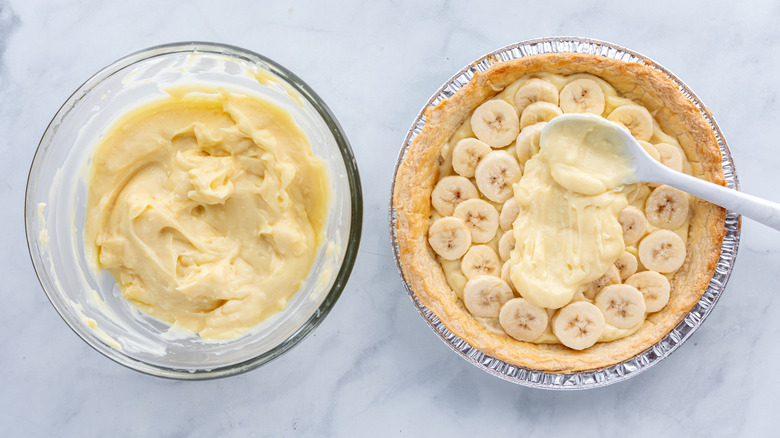
Par-baked crusts are generally used for custard-based pies like sweet potato, chess, pumpkin, and buttermilk, as well as quiches. Since these fillings have a high moisture content, partially cooking the shell ahead of time helps prevent a damp or mushy bottom. Pies with blind-baked crusts are usually cream pies or fruit tarts with fillings that do not require further baking, like banana or chocolate cream.