

8 Foods That Were Vintage Lumberjack Staples
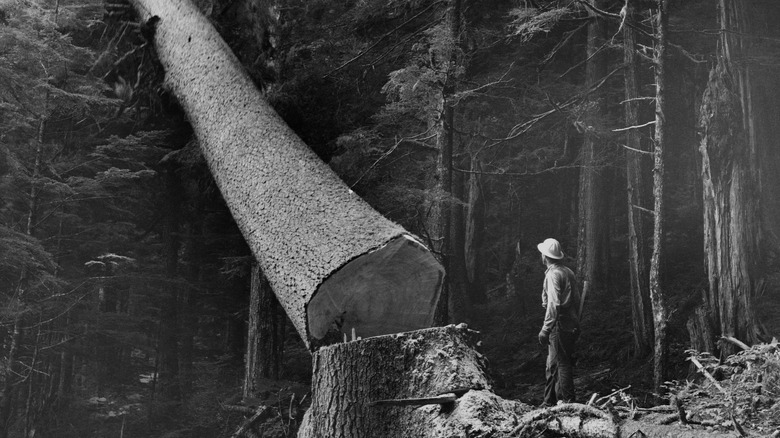
In the 19th and early-20th centuries, rugged individualism (or possible antisocial tendencies) drew hundreds of men (and several women, called lumberjills) to the forests of North America. There, as lumberjacks, they worked extremely long hours and burned a truly impressive amount of calories; reports vary, but some estimates put the work of chopping down trees with actual axes at 4,000-6,000 calories a day. And that's a conservative estimate.
Naturally, that meant keeping the lumberjacks fed was paramount to a camp's success; lumberjacks were known to walk off on the job if the camp's cook was not up to snuff. They demanded good, hearty, protein- and carb-heavy meals that could be eaten quickly and keep them going from dawn to dusk. So a cook had to know how to make their diners' favorite staples while dealing with limited supplies and the obvious absence of electricity. While several of the resulting meals might feel vintage today, they get the job done when it came to fueling a punishing physical occupation.
Pancakes and syrup

When people think of the lumberjack life, one of the first meals that springs to mind is a gigantic pancake breakfast. It's a key feature of what as become known as the "lumberjack special" featuring stacks of fluffy flapjacks with mounds of eggs and breakfast meats. While the eggs and the breakfast meats are a bit ahistorical, flapjacks do have roots in the vintage lumber camps.
Pancakes are an ideal food for feeding a large team of hard laborers — they're heavy carbs that can be made quickly and serve a big group with little effort. They keep people filled for a long time and even have portability if the lumberjacks wanted to head out to the clearing site faster. Syrup adds not only a delicious topping but also brings necessary sugars for a quick energy boost to get the axe-wielders moving. Plus, everyone loves pancakes.
Cookies and donuts

This might be a little surprising given modernity's gendered perceptions of sweet foods but lumberjacks, icons of vintage masculinity, were all about pastries of all sorts. In fact, they literally had them with every meal.
If you look at this suggested logging camp breakfast menu from 1917, you'll notice that cookies appear and reappear constantly. They were frequently served when laborers broke for lunch, which occurred on-site since it would take too long to come back to camp in the middle of the day. The same is true of donuts, which were just as welcome and just as much a staple in the lumberjack diet. The reason for both is the same: Cookies and donuts are very portable carbs with lots of sugar that could sustain lumberjacks in the short and long term and can be made in large batches. On that front, it helps that the cookies were reportedly as large as dinner plates.
Stewed prunes and prune pies
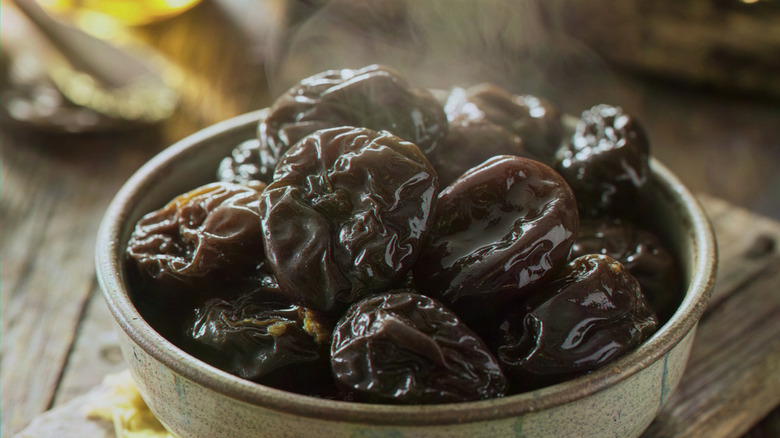
Prunes were one of the staples of the logging camp that metaphorically killed several birds with one stone. Being a dried fruit ensured that they were easy to store over the long months between resupplies. They were tasty and popular, making them easy to serve with multiple meals throughout the day. And they are a good source of fiber, which was vital to keeping the workers, ahem, regular.
Stewed prunes was the most common form these dried plums could take, which fit with several other stewed fruit recipes camp cooks would break out; stewed fruit was (and is) sweet and easy to make for large teams. But sometimes, cooks would embrace lumberjacks' love of baked goods and incorporate the prunes into prune pies. But prune pie was only one of the many now-vintage pies available to lumberjacks; vinegar pies and the pineapple pies made possible with the advent of modern canning were both huge hits as well. The fiber content of those pies however is negligible at best.
Bean hole beans
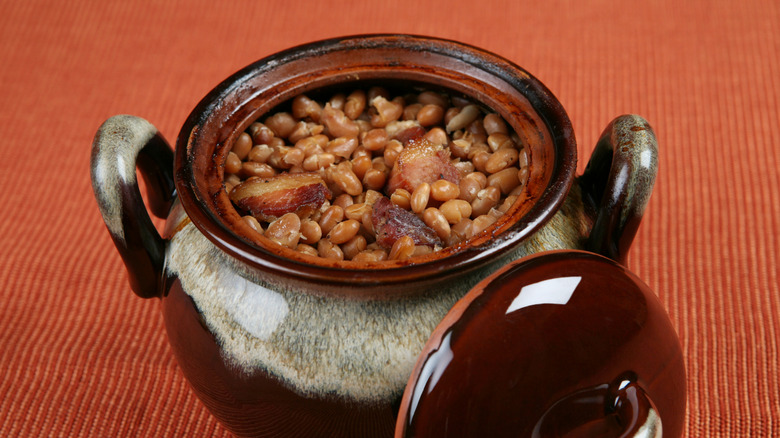
Baked beans have a long history, stretching back to the indigenous peoples of North America. Their longstanding and widespread popularity is easy to explain: Beans are filling, nutritious, and extremely inexpensive. And before the advent of modern canning, logging camp cooks had a novel way to make their own version of baked beans ... a way that feels like a vintage slow-cooker before the advent of electronic appliances.
Bean hole beans begin with a hole in the ground, oftentimes under a lean-to, in which a fire is built. When a good bed of coal has formed, a cast-iron, tightly-lidded pot full of parboiled or soaked beans with salt pork and a touch of molasses was lowered in. Then it was buried and left there, either overnight or up to a full day. When the beans are dug back out, they are sticky and sweet and savory, ready to provide powerful protein to equally powerful lumberjacks. This dish was such a popular staple in some camps that this was a daily task for the cook's assistants.
Salt pork
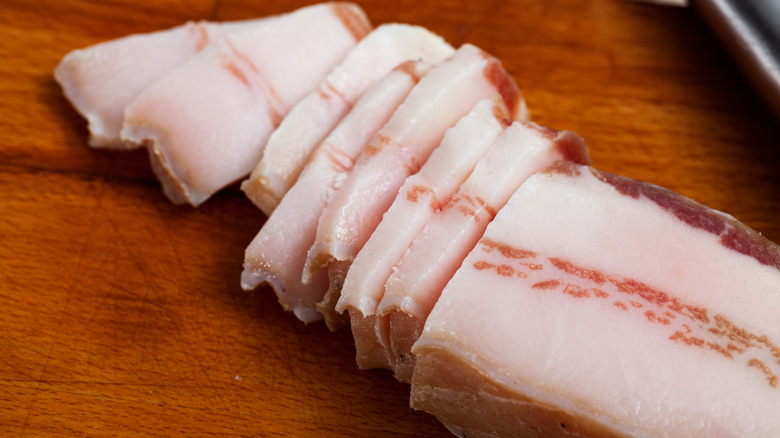
People tend to associate lumberjacks with bacon and other salty, hearty meats; it fits with the vintage, burly aesthetic and the legacy of the lumberjack breakfast. While those folks are on the right track, bacon wasn't actually that common of a dish at the logging camp. Instead, the cook would break out bacon's close cousin, salt pork.
Both bacon and salt pork are cured cuts of fatty pork, but the difference is in curing intensity. Bacon usually gets a much gentler curing, whereas salt pork is subjected to a salt bath and a salt rub. This made salt pork the perfect meat for long-term storage in the days before refrigeration, and thus the ideal choice for a lumberjack staple. The staggeringly high fat content of the meat also provided the lumberjacks with plenty of essential calories, which is why it often appeared as a breakfast dish or alongside other high-protein meals like beans.
Beef stew and cream soups
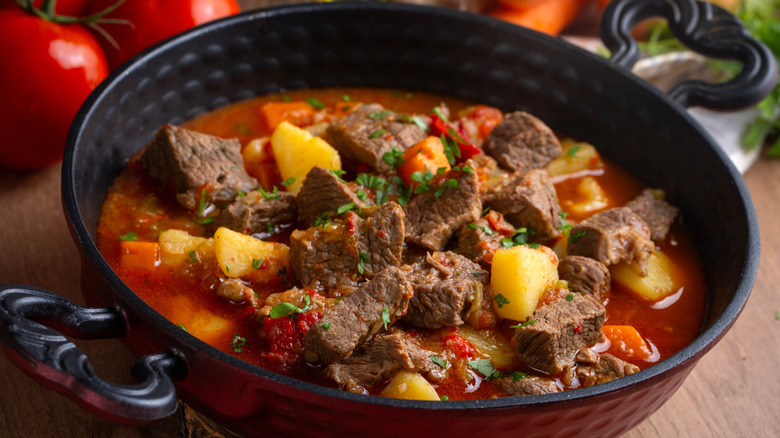
Looking over a 1917 logging camp menu, the presence of soups is both abundant and unsurprising. Soup-making may be one of the oldest cooking activities, and one that is relatively easy to do and can, one again, feed large groups. The real question is what kinds of soups and stews made lumberjacks happy after, or during, a day of clearing forests.
The answer is a bit difficult to pin down, because lumberjacks tended to eat a lot of different soups with their meals. Pea, bean, vegetable, or corn would deliver solid portions of vegetables and calories into the workers, which worked well for them. But perhaps the two most iconic and most vintage lumberjack soups were cream soups and beef stews. Some camp cooks served cream soups only on special occasions, since access to fresh cream was limited in the remote wilderness, but in other camps they appeared fairly regularly as a delicious source of calories. Beef stew is fantastically hearty and filling, although fresh beef in camps was rarer than salted beef.
Cornmeal mush
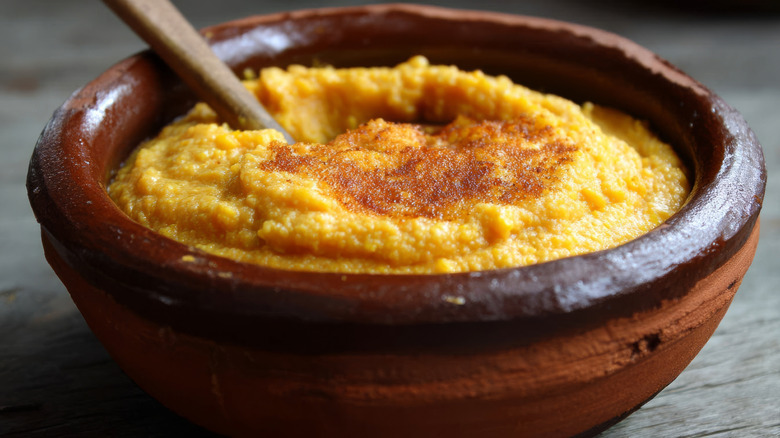
For the uninitiated, cornmeal mush is similar to grits or porridge but is distinct from both. As the name suggests, it's made from cornmeal rather than grits' dent corn. Cornmeal mush is also often served with sweet toppings rather than savory ones, which would be quite appealing in occupations that require quite a lot of sugar consumption.
Cornmeal mush has a lot of upsides that made it a staple in logging camp life. For one, cornmeal has a very, very long shelf life without refrigeration, perfect for the wilderness. Additionally, cornmeal mush can be fried and then served again at dinner as slices similar to polenta, so none of the leftovers would go to waste. Moreover, cornmeal mush is incredibly simple to make. It only takes cornmeal, water, and a little salt to make a simple but effective dish. Plenty of people think of oatmeal when they think of lumberjack meals, but cornmeal mush definitely belongs in the conversation.
Hash browns and other potatoes
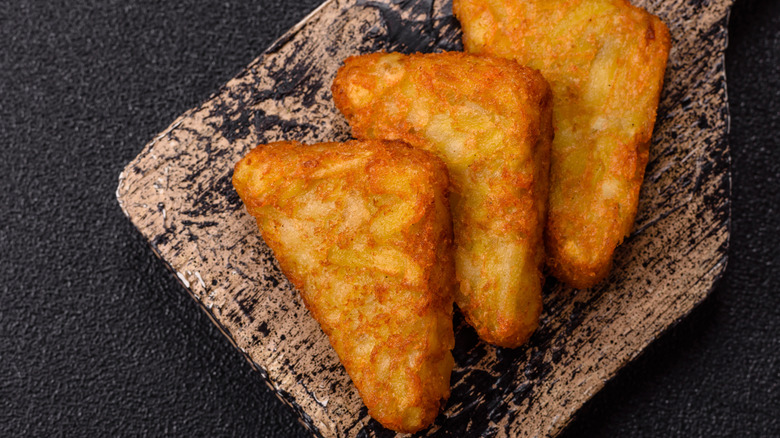
Potatoes are one of the great staples of history, beloved by pretty much everyone for their versatility, nutritional value, and heartiness (as well as being just so tasty). Plus, potatoes have historically been inexpensive and easy to store and ship, and of course are a good pairing with other calorie rich foods (particularly butter). With all that in mind, of course lumberjacks and lumber camp cooks were all about potatoes, too. In a 1979 paper published for the Forest History Society, Joseph R. Conlin mentions one 19th century logging company that would provide their workforce of more than 2,100 men with 20 tons of spuds per year.
Hash browns (which may or may not be oven-baked or fried), creamed potatoes, and other forms of fried potatoes would be served to the laborers at breakfast, and at dinner the lumberjacks would enjoy all sort of potato-based meals, including potato salad, potato soups, mashed potatoes, and baked potatoes. Potatoes had the ability to keep the lumberjacks filled and happy, and those were the foods that mattered the most in the wild woods of the past.