

The Retro Breakfast Pudding Your Grandparents Likely Ate

For many people, cornmeal is just one of the ingredients in boxed cornbread, which can be upgraded in many different ways. For older generations who lived through the Great Depression or World War II, however, cornmeal was much more than an accompaniment to a classic beef chili. Cornmeal took center stage as it was turned into cornmeal mush, a filling retro breakfast. During the Great Depression, cornmeal was very affordable. Due to overproduction, the price dropped so much that some farming families used corn instead of coal to heat their homes. During the war, when other foods like meat, dairy, and sugar were rationed, cornmeal was widely available and heavily promoted as a substitute for flour.
Taking their cues from Native Americans, cornmeal mush had been adopted early by British settlers, who started using widely available corn instead of wheat flour or oatmeal to make their beloved porridge, calling it hasty pudding or Indian pudding. The recipe is very basic; all it takes is to simmer cornmeal with water and a pinch of salt until the mixture thickens. The Navajo add juniper ash to blue corn mush, which adds a subtle smoky flavor. The standard corn mush made of yellow or white cornmeal can taste a bit bland, so people sweetened it with whatever they had — sugar, molasses, or honey.
For your grandparents, nutrient-dense, high-carb cornmeal mush was not only a nourishing breakfast food. It actually becomes a thick, jelly-like loaf that is easy to slice, making it easy to stretch when you have to feed hungry mouths.
What distinguishes cornmeal mush from grits
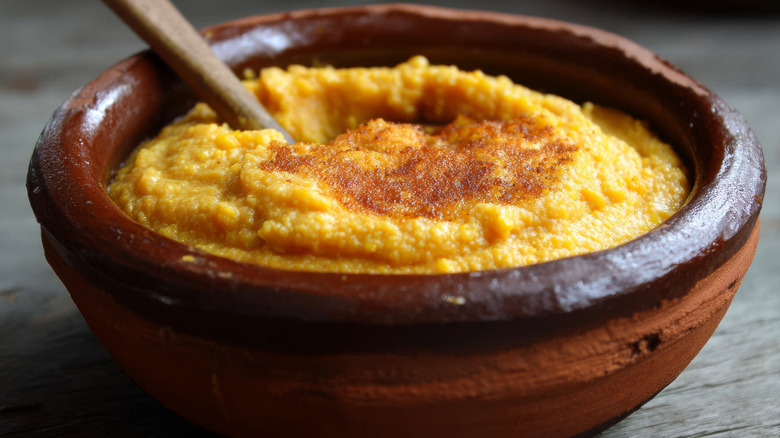
When cooked, cornmeal mush may look very similar to polenta ot the southern staple, grits, found in the grits belt, but although they are both porridge-like and made of corn products, they are not automatically interchangeable. Grits are often savory (some might say exclusively, but plenty prefer it sweet) — whereas cornmeal mush is primarily served with sweet toppings for breakfast (unless you turn leftovers into fried mush for dinner).
There is also a difference in the corn used for cornmeal mush and grits. Cornmeal mush is made from yellow or white cornmeal, which comes as fine, medium, or coarse. Coarse or medium cornmeal makes a cornmeal mush with more texture, and fine cornmeal makes it smoother. The way the cornmeal is ground impacts its nutritional value and shelf life. Stone-ground cornmeal contains some of the hull and germ, which are high in fat, so the product does not keep as long as steel-ground cornmeal, which has the husk and germ mostly removed. That's why steel-ground cornmeal keeps almost indefinitely.
Grits, on the other hand, consist of dent corn, named after the small indentation in each corn kernel. The corn is dried and hulled, and coarsely ground. Because grits contain the whole corn, they should not be kept in the pantry but in the fridge or freezer instead. For hominy, a variation of grits, the dried corn is soaked in an alkali to remove the hull and soften the kernel, which improves the nutritional value.