

The Fan-Favorite Alaskan Food Most States Don't Have

Alaska is one of the two noncontiguous states in the United States. So naturally, some differences are bound to arise. It might be the subarctic weather, or its extremely high grocery prices, but another quirk that might intrigue continental citizens is that reindeer is a common staple and delicacy. But digging into the facts, this is hardly surprising.
The main reason for reindeer meat being consumed in Alaska is because semi-domesticated herds are present in the region, whereas in the continental U.S. and Hawaii they're rarely found outside of specialty farms. What we eat is largely shaped by what's available to us. For example, a British person might be startled to find out that in the U.S. you can enjoy both beef and bison burgers, or to learn that in Peru there are delicious ways of cooking with guinea pigs. But what links Alaska and the continental U.S. is that their preparation of reindeer meat often has a distinctive American-style flair.
One of the most popular ways of consuming the meat in Alaska is in sausage form — also known as reindeer dogs. There are also fine-dining preparations, including premium reindeer cuts like steak and osso bucco. It's known to be leaner than beef, and is actually considered to be a much more sustainable option. Alaska is the biggest state in the U.S., and reindeer farming is primarily based on an extensive, free-range system where they're herded. The majority of these herds are based on the Seward Peninsula and islands like Nunivak and St. Lawrence.
Understanding the global cultural and culinary significance of reindeer meat
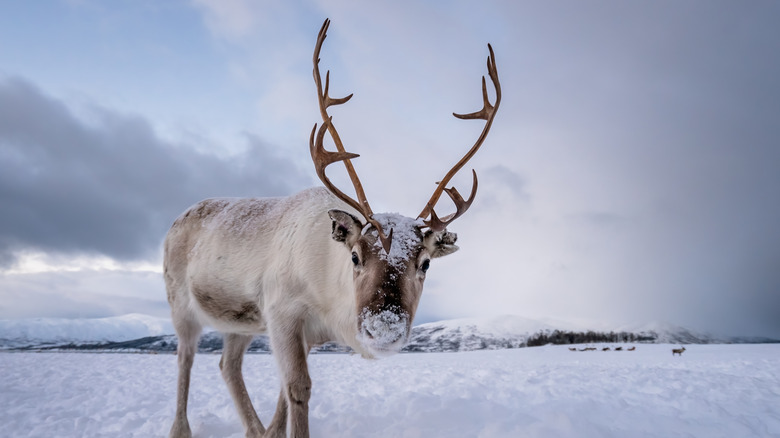
The wide availability of reindeer meat makes Alaska a great destination to visit for those looking to try something new. But an interesting fact is that while the similar species of the Alaskan caribou is native to the region, reindeer were actually brought over from Siberia (which Alaska is extremely close to) in the late 19th century. Despite not being native, the similar arctic conditions allowed reindeer to thrive in the harsh Alaskan environment, where other livestock are known to struggle.
Reindeer meat also has great benefits for the Alaska Native population. Under the federal Reindeer Act of 1937, ownership of reindeer herds in Alaska was historically restricted to Alaska Natives to provide them with a reliable source of income, food, and clothing. Today, there's also the Reindeer Herders Association (RHA), which is primarily managed by a collection of Native communities that shape how the industry is run.
Beyond Alaska, you can find reindeer consumed all over the world. It is common in Scandinavian countries, particularly within the Indigenous Sámi community, who occupy the northern parts of Sweden, Norway, Finland, and a small part of Russia. Classic dishes include bidus, a slow-cooked stew featuring reindeer meat, carrots, and potatoes. Another Sámi delicacy is suovas, which is smoked reindeer meat. Like Alaska, reindeer farming primarily exists as herding, making it a hugely sustainable and deeply cultural institution.