

Why You Should Wrap Used Aluminum Foil Around Hummingbird Feeders
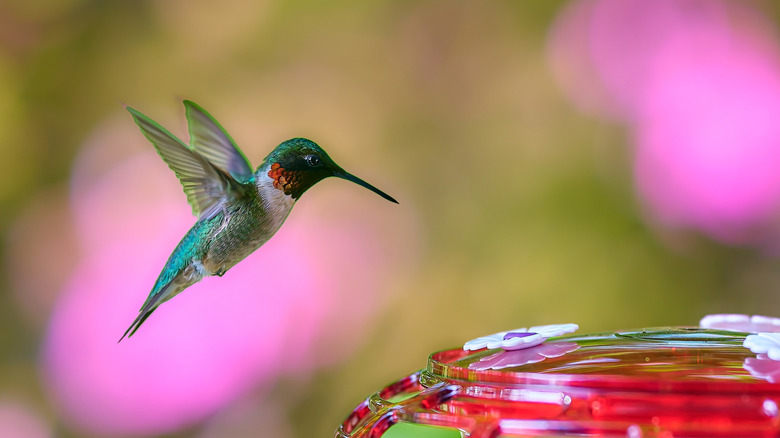
When the first hummingbirds appear in your yard in the spring, it is the ideal time to put out feeders to provide the nectar they need to replenish their energy. This sugar-water solution supplements the natural food sources they collect from flowers and their insect diet. However, as temperatures rise, the liquid inside can warm to dangerous levels. To prevent this, hummingbird lovers wrap aluminum foil around the feeders.
In a feeder that is exposed to sunlight on a warm or hot day, the temperature can easily reach over 100 degrees Fahrenheit. According to a 2017 study on heat dissipation, once the outside temperature hits between 96 to 104 degrees, the loss of a "thermal gradient" interferes with the rapid hummingbird metabolism. Hummingbirds consume about half of their body weight in sugar every day to fuel their constant wing movements. Hot temperatures also turn the nectar into a breeding ground for mold and bacteria, which can make the tiny birds sick. Wrapping the reservoir of a feeder in aluminum foil can help keep the nectar cooler by reflecting solar radiation. According to a 2019 study, common household aluminum foil reflects approximately 86% of visible light and up to 97% of near-infrared light. As is true in culinary applications, the orientation of the foil doesn't matter.
Keep in mind that while it is possible to repurpose foil, it must be clean. Material that has food residue from cooking attracts pests when used in the garden. If you would rather not use aluminum foil, simply place your hummingbird feeder in a shady spot to help keep the nectar cool.
Additional tips for a hummingbird-friendly yard
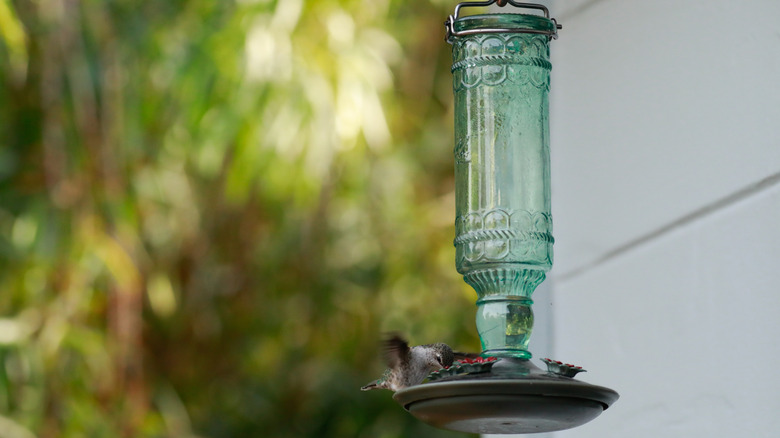
In addition to keeping the nectar in the hummingbird feeder cool, there are several other things you can do to turn your yard into a hummingbird haven. There is no need to put any dye or other additives in the nectar. Artificial coloring does not attract more hummingbirds and is actually harmful to them. Stick to the simple formula of mixing one part white sugar to four parts water. Find a place for the feeder where it is safe from predators such as other birds and cats, but where it can be easily found and accessed by hummingbirds, at a safe distance from windows.
The hummingbird feeder should also be easy for you to reach because it needs to be cleaned regularly — in hot weather, every other day. Rinse it with a solution of vinegar and water, and use a brush to dislodge any dirt and mold. Afterwards, thoroughly rinse the feeder with clean water and fill it with fresh nectar. A feeder wrapped in aluminum foil may develop mold underneath the foil, so you might have to replace the foil as needed.
Hummingbirds love a diverse diet, so do not limit yourself to feeding them nectar. Overripe bananas can help you attract more hummingbirds to your garden, and so do chopped up fruit peels — both draw in the tiny insects they rely on for protein. Native plants that attract hummingbirds are also an integral part of a hummingbird habitat. To attract the ruby-throated hummingbird, one of the most commonly found hummingbird species in eastern North America, plant perennials with red, tubular flowers such as the cardinal flower.