

Grow Healthier Rosemary With A Simple Soil Addition
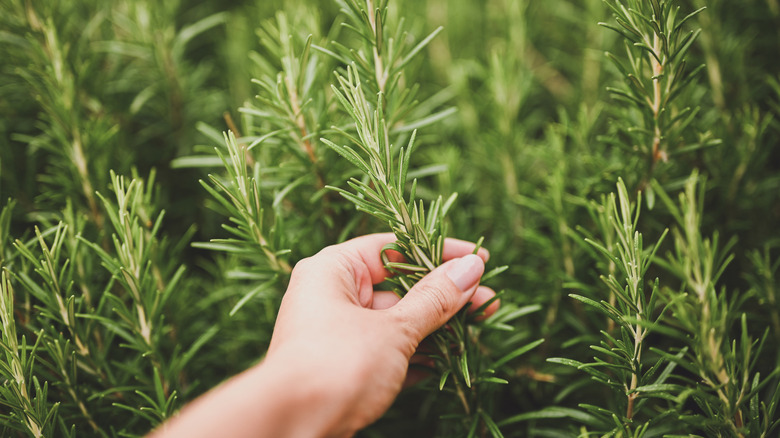
A few fresh rosemary sprigs, tucked into the cavity of a roasted chicken or scattered over roasted potatoes, give simple dishes a distinct flavor. Growing your own rosemary, in a pot or in your garden, gives you easy access to the freshest rosemary whenever you need it. Rosemary is a perennial herb that you plant once, and, if the conditions are right, it can last for up to a decade. But to grow healthy rosemary, you need to create soil conditions similar to those in its native Mediterranean habitat: rocky, gravely soil that is on the dry side (though it likes mild acidity, so consider reusing coffee grounds in a very thin layer).
The ideal soil for rosemary should be gritty, coarse, and sandy because that ensures that the soil has excellent drainage. If the soil in your garden drains fast (after a rain or watering, it dries out quickly), it contains a high amount of sand, which is perfect for rosemary. Soil with a high clay content, on the other hand, drains slowly, which is detrimental to rosemary because it is prone to root rot, which kills the plant.
If the soil in your garden holds together in a clump when squeezed instead of crumbling, it is too heavy and dense. Work a 1- to 4-inch layer of organic matter (peat moss, or, as a more sustainable alternative, coconut coir, and compost) into the top 6 inches of soil. Depending on how much clay is in your soil, you can additionally add between 15% and 40% perlite, a natural volcanic material that improves drainage, or gravel. For potted rosemary, a cactus and succulent potting mix works well, as it is formulated to provide good drainage.
Other tips for successfully growing rosemary
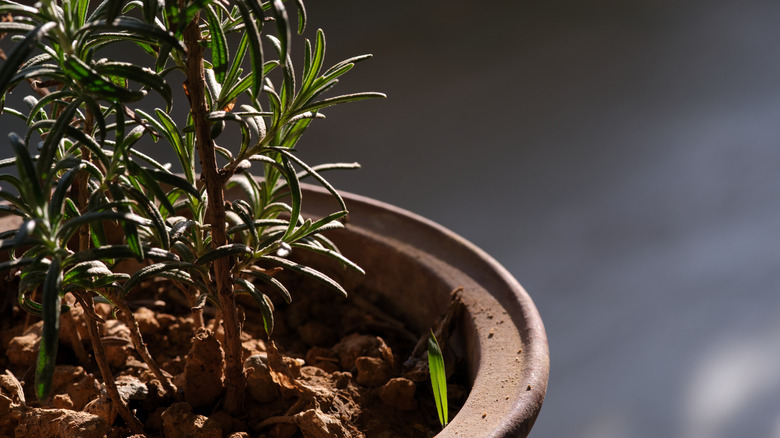
Unlike mint, which is perfect for beginner gardeners but whose runners overgrow all the other plants around it, rosemary is a well-behaved garden dweller with a bushy, shrub-like shape. And you don't need a backyard to grow rosemary; the herb does just as well in a pot, but it needs lots of sun. At least 6 hours of full sun every day is indispensable for growing rosemary. Anything less and the plant will struggle; besides a weak, leggy growth, it will also be less fragrant. Because rosemary is native to the Mediterranean climate with wet winters and dry summers, not overwatering is also very important. The plants only need water every 1 to 2 weeks, which is usually provided by rainfall. If you end up watering the plant during a dry spell, make sure to let the soil dry out before watering again. Because the soil of potted plants dries out faster, they need more frequent watering.
When it comes to fertilizing rosemary, less is more. There is usually no need to fertilize your plant; in fact, overloading it with nitrogen, the main ingredient in standard garden and houseplant fertilizers, may backfire, and your rosemary will develop spindly, weak growth and diminished fragrance. While you can skip fertilizing, pruning is key to keep your rosemary plants thriving. And remember, if you harvested more than you need, store fresh rosemary in a jar of water.
Another key tip to make your rosemary plant live as long as possible is to know whether it will survive the winter outdoors. Rosemary is only hardy in USDA Zones 8-11; everywhere else, it's best to grow it in pots, so you can bring it indoors in the fall.