

How Often Should You Clean Your Oven? (It's Probably More Than You Think)
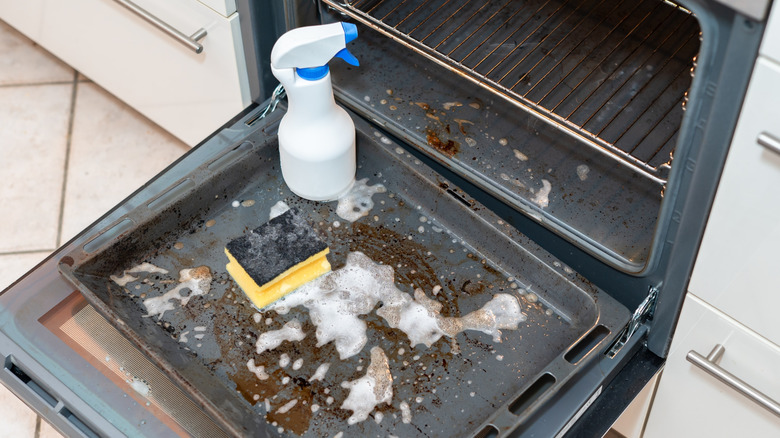
Your kitchen is one of the most important places to keep clean, but certain spots can sometimes slip through the cracks. We're not here to judge — it's mainly just an out of sight, out of mind situation. There are spaces like the inside of the dishwasher, behind certain larger appliances, and of course, your oven. These spots can be a hassle to clean, and what you can't see can't hurt you, right? Well ... not really. It's actually considered good practice to clean every part of your oven once every three months, and failing to do so could potentially turn your entire kitchen into one big safety hazard.
Before getting into safety, there are plenty of practical reasons to clean your oven on a semi-regular basis. For starters, it makes life much easier over time. As you bake or roast, fats and oils vaporize into steam, then settle on the walls, floors, and racks. Bit by bit, that residue builds up and hardens until it becomes a nightmare to remove. Keeping your oven clean also helps prevent unwelcome surprises when you cook. As that hardened grease heats up, it can release smoke and a lingering odor that fills your kitchen. Beyond being unpleasant, those smells can seep into your food and subtly affect its flavor.
Now let's get into the safety part. Grease poses a serious fire risk as it's highly flammable. Should some freak accident happen in the kitchen, an oven with months upon months of grease buildup could quickly cause the situation to spiral out of control.
How to prevent grease buildup and keep your oven clean
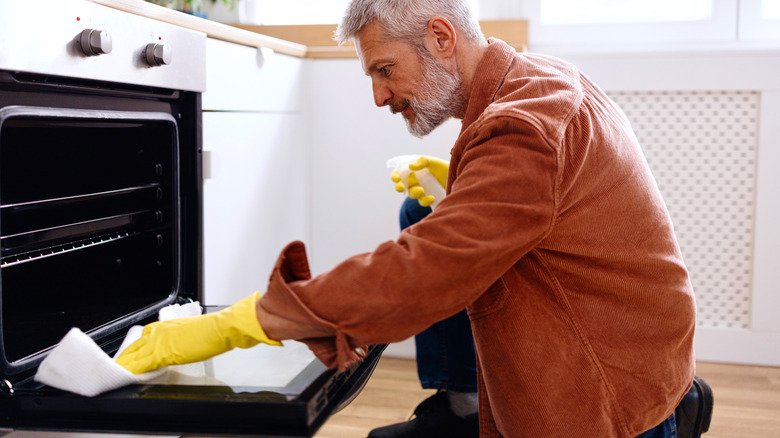
Grease buildup is a pain to deal with anywhere in the kitchen. From ruining perfect stainless steel pans, making your backsplash look grimy, and, of course, being a general nuisance to remove. In an ideal world, you'd wipe down your oven with soap and water after every use, but that's not really practical for most people. The good news is that you don't need to be that diligent to stay ahead of grease buildup. A few simple habits can keep things under control and save you a much bigger headache later on.
Even if you stick to a semi-regular cleaning routine, prevention goes a long way. For example, an oven-safe liner on the bottom rack will catch drips before they bake and harden. Or, when you're cooking with something prone to splattering, like chicken or bacon, keep it covered with aluminum foil or use a lid where applicable. It's also worth investing in a proper roasting pan. It'll help contain spitting hot grease before it ends up all over your oven's wall.
If you've neglected cleaning your oven for some time and come to find a hardened grease disaster, there are some quick fixes. While you're definitely going to need more than just soap and water, a common pantry item — baking soda — has got your kitchen covered. Create a poultice by mixing the baking soda with vinegar. This will create a fizzing reaction that helps lift and cut through stubborn grease. Leave it to sit on the target for up to 30 minutes (or longer, depending on the severity of the buildup) and then remove it with a nylon scourer pad.