

The Fascinating Way Nabisco Marketed Graham Crackers During The Great Depression
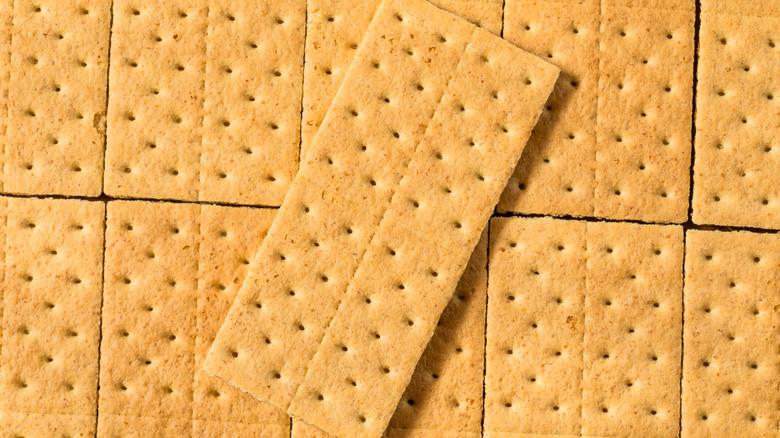
The Great Depression was a time of unprecedented hardship for many, but what came out of it was a surprising degree of culinary innovation. As a matter of fact, many of our favorite dishes were created during the Great Depression. That's because people had to get creative with what little they had, and the National Biscuit Company — now known as Nabisco — found a clever way to market crackers during a time when many didn't have money for such luxuries.
Through newspapers and radio ads, Nabisco portrayed graham crackers as more than just simple crackers. It promoted a style of cooking called "cracker cookery," which involved substituting graham crackers for more expensive pantry ingredients. This is how graham cracker pie crusts became normalized. Instead of expensive ingredients like flour and sugar, which had suddenly shot up in price, graham crackers could be crushed and mixed with butter to form the perfect pie base. This inventive thinking fit into a broader food trend called "desperation pies," which were delicious pies stripped back to the basics (there was literally a water pie!) in the absence of expensive ingredients like fresh fruit, vanilla, or other flavor enhancers.
This style of marketing aligned with a wider advertisement trend of the time. Posters and ads often targeted housewives, emphasizing that even without access to costly luxuries, they could still prepare desserts that were both delicious and attractive. This appealed to families looking to maintain a sense of normalcy in a time of unrivaled economic hardship.
Over the years, graham crackers have been enjoyed in many different forms
The graham cracker has a rather inconsistent history, and was once a very different product to what we know it as today. It was invented in 1829 by Sylvester Graham, a leading figure of the temperance movement. He believed that moral purity was linked to diet, so set out to create the most plain cracker. By using whole wheat flour — also known as graham flour – he believed the graham cracker would protect its eaters from sinful thoughts. However, he never patented them, which allowed the recipe to be reproduced without his permission.
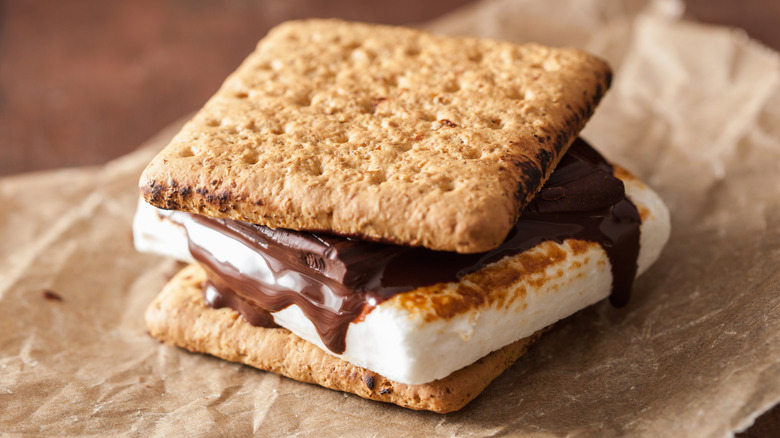
In 1898, The National Biscuit Company began selling graham crackers for the first time on a commercial scale. It altered Graham's original recipe, introducing a honey sweetened version in 1925. One of the most familiar uses of graham crackers — the s'more — was also created around this time, first appearing as the "Graham Cracker Sandwich" in a 1927 Girl Scout handbook. Considering the initial purpose of graham crackers, this does make us wonder what Sylvester Graham would have thought about these indulgent recipe tweaks.
Alongside becoming a Depression-era favorite, the graham cracker's popularity persisted throughout history and remains hugely popular today. While some uses didn't catch on, like adding it to meatloaf as a filler to stretch expensive meats, others did. Today, there are countless recipes which call for graham crackers to be used. It now forms the base of many desserts, especially New York-style or no-bake cheesecakes, as well as continuing to be a popular pie base.