

Blueberry Plants Thrive With This Natural Fertilizer That's Already In Your Kitchen
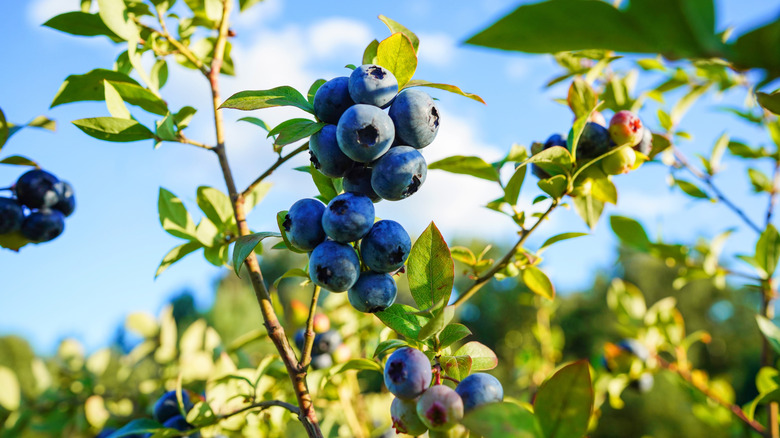
Blueberries are the perfect topping for your morning granola bowl and make for refreshing blueberry lemonade. If you'd rather skip a trip to the grocery store, you'll be glad to know they're also super easy to grow at home. Even better, there's a simple, often-discarded ingredient that can help you achieve a more beautiful and abundant harvest. Although they can't be reused, leftover coffee grounds can still be put to good use in your garden.
Blueberry plants and coffee grounds might seem like a random pairing, but there are two reasons why they're the perfect match. For starters, coffee grounds are loaded with nutrients, including nitrogen, potassium, and phosphorus — the three primary nutrients essential for plant growth. Another reason why coffee grounds benefit blueberry plants is that they make the soil more acidic. Blueberry plants need acidic soil as their roots are unable to absorb essential nutrients in neutral or alkaline conditions. This will encourage healthy growth and high fruit yields.
The best way to add coffee grounds to your blueberry plants is by sprinkling them as a top coating. Once you've finished your morning cup of java, set aside the grounds in a small container. We recommend drying them beforehand to prevent root rot from occurring. Fortunately, all you need to do is dry them in the oven or leave them to air-dry outside — add a thin layer to a pan or plate to dry them fast. Or, you could also even use dry, unused coffee grounds. Once dry, sprinkle them around the base of the plant and top it up once a week.
Things to remember when using acidic composts in your garden
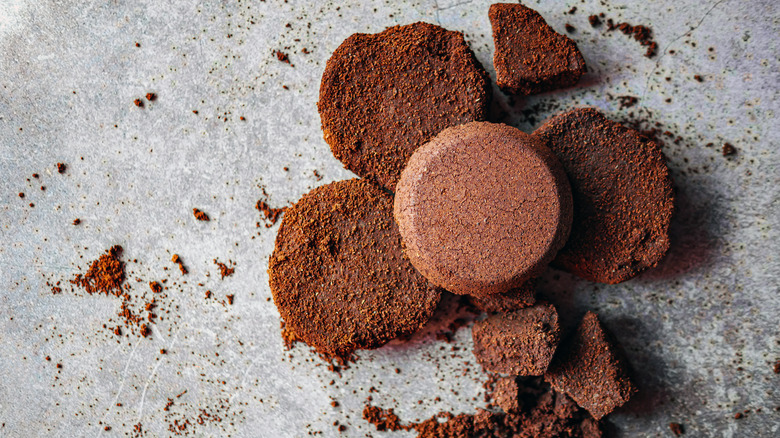
Coffee grounds are a great nitrogen-rich fertilizer on their own, but there are plenty of ways you can use them to boost your garden. Composting is an excellent way to store organic scraps, allowing them to break down into a nutrient-rich material for your soil. Just a word of advice: Don't go overboard with the amount of coffee grounds in your compost. Not every plant enjoys an acidic soil, and other household garden faves like lettuce, spinach, or radishes grow much better in a neutral or alkaline soil. So if you're looking to build a multi-purpose compost, it's better to scale back on the coffee grounds, adding just a small amount and saving the rest for your acid-loving plants.
On that note, there are also some plants that don't benefit from extra nitrogen. The primary examples of this are root vegetables and alliums like garlic or onions. In these cases, too much nitrogen can cause excessive foliage to develop with stunted root or bulb development (the part you actually want to eat).
If you're not a coffee drinker, there are still plenty of high-nitrogen kitchen scraps you can use. Orange peels are a great option. Like coffee grounds, they are slightly acidic, and their strong citrus scent can even help deter pests. For tea drinkers, tea bags are another excellent alternative. They can be added directly to a compost pile, or the loose leaves can be sprinkled around your plant for a similar benefit.