

Why Your Cast-Iron Pots Deserve This Paper Towel Trick
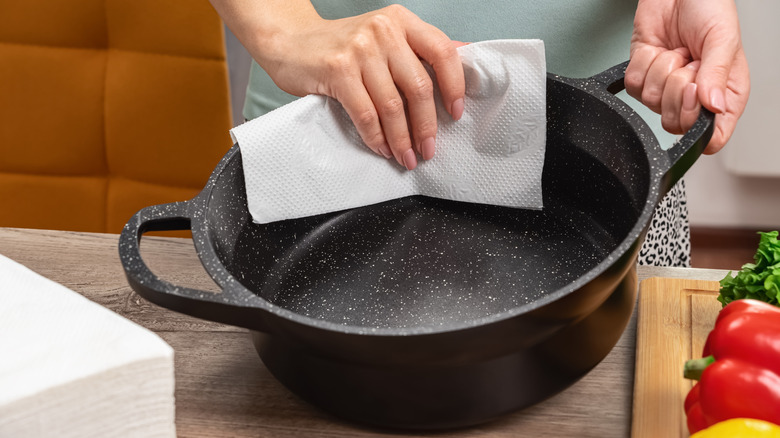
Cast-iron pots and pans serve as incredibly trusty cookware — perform proper upkeep and they'll last generations. Yet as with any heirlooms, longevity only results from delicate care. You'll need to verse yourself in the best oil to use to season your cast-iron skillet, as well as which foods to avoid cooking in such vessels. Furthermore, if your cast-iron pot comes with a lid, take note of this simple paper towel trick to prolong durability.
Here's the thing: Storing a lid atop a pot or pan increases the risk of rust. Enclosing the interior space of cookware traps water, even if you've simmered it all away after cooking. The trapped humid air triggers oxidation of water droplets not visible to the eye. Your cast-iron pots and lids deserve better.
Start by cleaning, drying, and lightly seasoning both the pot and lid after each use, followed by thoroughly drying with paper towels. Then, grab even more of the kitchen roll and layer it onto the cookware before storage. Ideally, ease the airflow by at least cracking the lid, or store the pot and lid separately. With both paper towel absorption and circulation on your side, the risk of rust is minimized.
Additional cast-iron pot and lid care
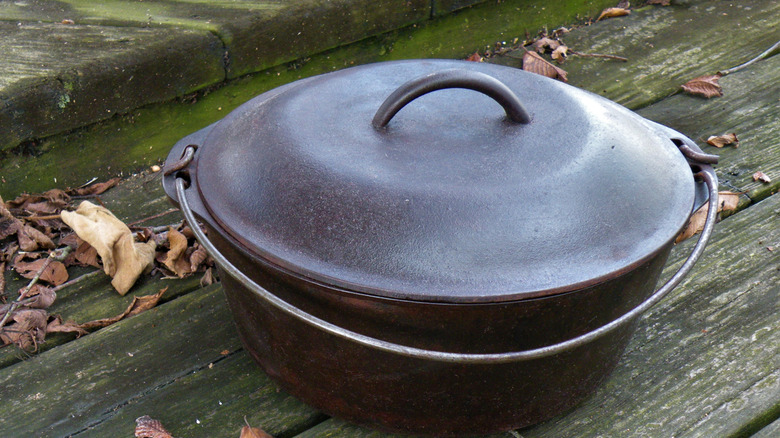
Although cast-iron pots and pans are easy to use, keep more cast-iron cookware hacks in mind to make the most of these cooking vessels. Specifically, the lid and pot maintenance is often overlooked. Start by focusing on seasoning – arguably the most important aspect of cast-iron care. Just like the cooking surfaces, the lid also requires seasoning. Polymerized oil will protect against splashes as well as steam, preventing unwanted rust during storage. Since both lids and the pot's sides don't naturally come in contact with fat, make sure to re-season after each use. Just skip the old-school saturated fat seasoning method, and stick to a simple unsaturated oil like grape seed instead.
In parallel, keep a close eye on cleaning, too. Avoid extended soaking time or the dishwasher, but nevertheless, make sure you thoroughly remove food particles. A touch of salt or chain mail scrubber performs well on pots and lids, making sure nothing organic goes into storage. Remember cast iron readily holds onto flavor — so although the cleaning process should be brisk, give it more time than a quick rinse. Always finish by thoroughly drying, so your cast iron will be ready-to-go for decades to come.