

Ceviche Vs Escabeche: How The Dishes Are Different
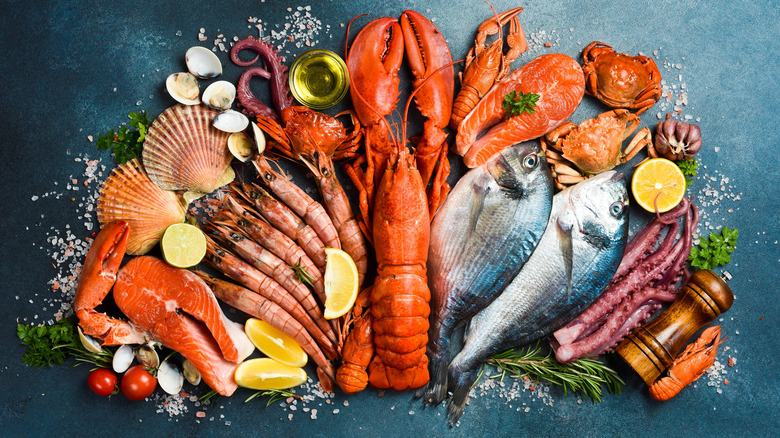
Cultures across the world marinate fish in acid to get something flavorful, flaky, and fairly easy to make. But even cross-pollinating cultures like Spain and Latin America have their different recipes, with classic South American ceviche served raw and Spanish esabeche cooked before it's seasoned.
Both recipes rely on sharp, powerful ingredients to transform mild fish into pure firecrackers of flavor. Acid, whether it's vinegar or citrus juice, creates a sort of "fast pickling" that suffuses the flesh with potent taste. However, neither recipe would be complete without extra ingredients like raw onion, cilantro, and garlic, though herbs like thyme and bay leaves aren't uncommon additions. Both recipes are always eaten cold, as leaving raw seafood to marinate at room temperature is a recipe for food poisoning.
Neither type of food has a single, "authentic" recipe either. Peruvians often serve ceviche alongside carbs like sweet potatoes and corn to create a more filling meal, while in Ecuador, cooks prepare it with shrimp and serve plantain chips, creating more of a "chips and dip" snacking food. Escabeche varieties are just as numerous and often reflect historical access to different ingredients. For example, you'll sometimes see coastal Italian towns serving theirs with pomegranate juice, a callback to their connection with the Middle East, whereas France loves to use fruity vinegars and wines instead.
Ceviche is raw, fresh, and uses lean fish
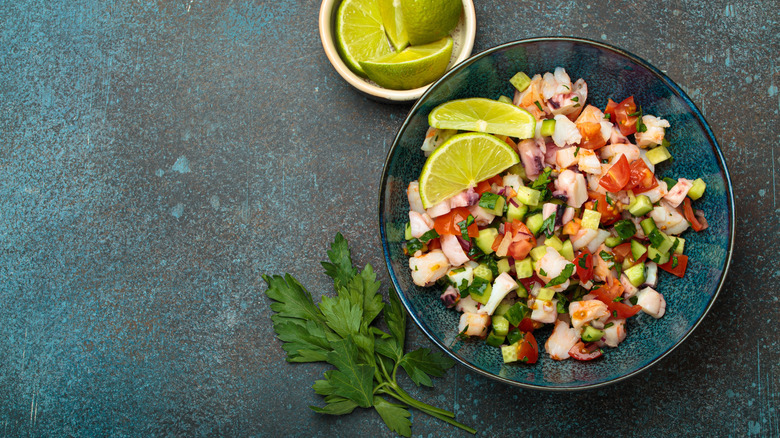
While Japan's sushi culture proves that there are plenty of fish you can eat raw, most ceviche eaters still want theirs "cooked" in a sense. Any highly acidic ingredient denatures proteins, creating a texture as if it were cooked, while also killing off any bacteria. While technically raw, you won't ever mistake the texture of a ceviche-style seafood with truly raw fish.
The key to any main ingredient for this recipe is that it must be fresh — no compromises. Not only does this deliver the best flavor, but it also greatly reduces the presence of harmful pathogens that a quick marinade may not have time to kill. Outside of that, you can use just about anything that swims in the sea, but the best kind of fish for a non-mushy ceviche is white fish like sole, snapper, or sea bass, all favorites of Peruvians and Panamanians. You'll want to find something that's a bit on the firmer side, as it tends to stand up well to the "cooking" of acid and won't fall apart when stirred.
Just like escabeche, ceviche is also quite light and considered an appetizer in most places where it's enjoyed. However, it's usually served alongside crunchier textures, from lettuce to chips, whereas Europeans prefer to serve escabeche with some nice bread to sop up all the leftover juices. Still, you'll find plenty of people from either side of the world enjoying their meal straight, choosing to experience the full flavors by themselves.
Escabeche transforms oily fish into something bright
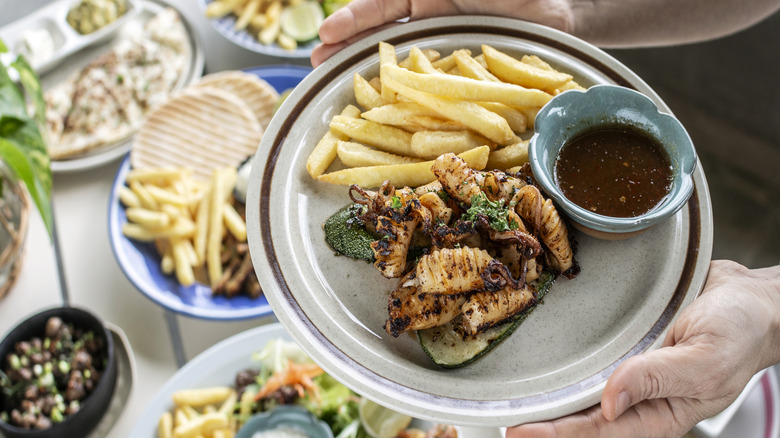
Whether fried, grilled, or seared, cooking escabeche before marinating gives it a heartier, richer flavor. However, it also played a historically important role in extending its shelf life.
Much like ceviche, it's difficult to pin down the exact historical origins of escabeche. Some historians believe it came about during the Moorish occupation, and others claim it originates with the Phoenicians. Regardless, whereas ceviche is a way to "cook" and season fish, escabeche has its roots in preservation. Many European countries adore preserved fish, whether dried, cured, or pickled, and the spirit of escabeche recipes can be found in things like Spanish and Portuguese tinned tuna. Unlike proper pickling or fermenting, however, escabeche usually only requires 8-24 hours to fully saturate a food, whereas ceviche can be ready in as quickly as 30 minutes.
Similar to its Latin American cousin, you can make escabeche with just about any fish or shellfish, provided it's firm enough to stand up to a heavily acidic marinade. However, in a reflection of its European origins, you're more likely to see it made with Mediterranean staples like anchovies or sardines. Still, it's not uncommon to see vegetables pickled using escabeche methods, and this proves to be quite popular in Latin America, where jalapeños, carrots, and onions are fast-pickled as a common side dish/garnish.