

Can A Bar Of Soap Protect Your Tomato Plants?

Tomatoes require a lot of work, from frequent fertilizer applications to trellises to prevent breakage. When pests come around, it can be a bit frightening to think about how they may sabotage everything you've done already. While a bar of soap can help deter some of them from your precious crop, using it comes with some caveats.
Like using coffee grounds to keep pests out of your garden, scattering shavings from a strongly scented bar of soap can create a barrier that may discourage some insects. However, to do so effectively, you'd have to reapply it once a month, and this would only act as a mild deterrent rather than an effective way to evict your current pests. Soap high in sodium or boron can also quickly absorb into tomatoes' shallow roots, damaging the plant. Castile soap, the active ingredient in some organic insecticidal sprays, is ideal, but only when sprayed directly on the bugs or used as a perimeter defense.
However, large chunks of soap placed around the perimeter of your garden can help deter larger wildlife, like mice, rabbits, and deer. Like ants, they're fended off by powerful, manmade smells, but you face the same problem as before with soap washing into your soil from rain and your regular watering schedule. While a bar of soap may be cheaper than other, more effective options, such as predator urine, it should be used sparingly to prevent damage to your plants and in conjunction with other methods to provide a comprehensive defense system.
Strategic planting and natural predators deter garden pests
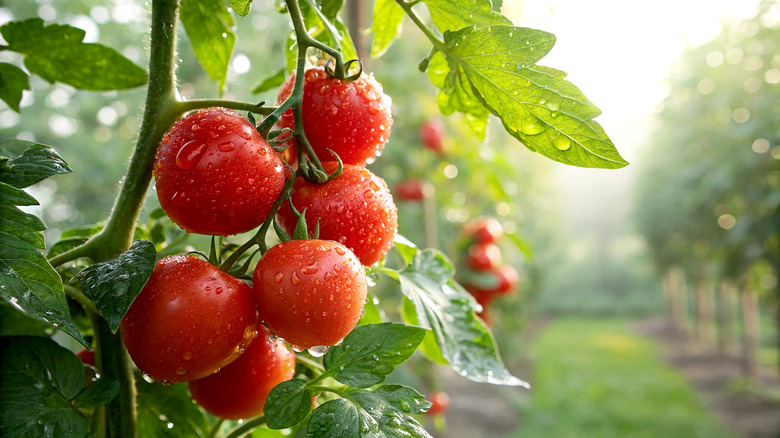
Organic pest control is all about using more than one trick at a time. Some infestations may be highly vulnerable to one trick, but immune to another, but luckily, most methods are quite easy to implement.
A fantastic herb to plant alongside your tomatoes is basil. Ignoring the fact that both crops go together in just about any recipe — smoked mozzarella Caprese salad, anyone? — basil also has a potent smell may mask your crops from ants. Plus, its essential oils feel unpleasant to other insect pests, like hornworms and flies, that may burrow into your fruit. Pair basil with a nice perimeter of dwarf marigolds, and you'll have a fragrant gardening experience that's anathema to anything with an exoskeleton. Just be sure to deadhead your flowers and regularly prune your basil to encourage growth and maintain its repelling properties.
One of the most effective ways to prevent incursions is to simply reduce the population of ants and other bugs. While you can always seek out and destroy mounds and nests, the most long-term solution is to cultivate an environment for their predators. Some species of birds are great for this, but the best defenders of your crops can be purchased at the store. Ladybug nymphs can be purchased at most gardening suppliers, and nematodes can actually sabotage ant mounds quite easily. Just be sure to avoid overly fragrant bug repellents, like soap and baking spices, if you want them to stick around.