

Moldy Keurig? These Parts Should Be Cleaned Weekly
Since Keurig coffeemakers debuted to the wider population in 1998, they have insinuated themselves into the everyday lives of many Americans, with an installed base of approximately 40 million households now using these machines (per Mordor Intelligence). But along with having another appliance comes the responsibility of cleaning it, and if we had to hazard a guess, it would be that you don't necessarily perform maintenance on your Keurig as often as you should. In fact, there are some parts that should be cleaned weekly — namely, the drip tray and the water reservoir.
The reason these two parts require such frequent scrubbing is because they remain damp for extended periods of time, and they can encourage mold growth. Think about it: Whenever you remove your mug right after the machine is done brewing, there are always a few drips that end up in the tray. Left over time, they accumulate, and if you're using your Keurig to brew your tasty Kirkland Signature K-cups regularly, those drips re-moisten what's already there. Since the perforated cover keeps things mostly dark inside, it's the perfect environment to grow that which is fuzzy.
Another part you might not have considered, but which should likewise receive a weekly bath, is the K-cup holder insert. This is the typically black part into which you actually place the K-cups before brewing. Like an iceberg, the top is just a small part of the whole; the funnel extends further down the machine than you likely realized.
How to clean the drip tray and the water reservoir
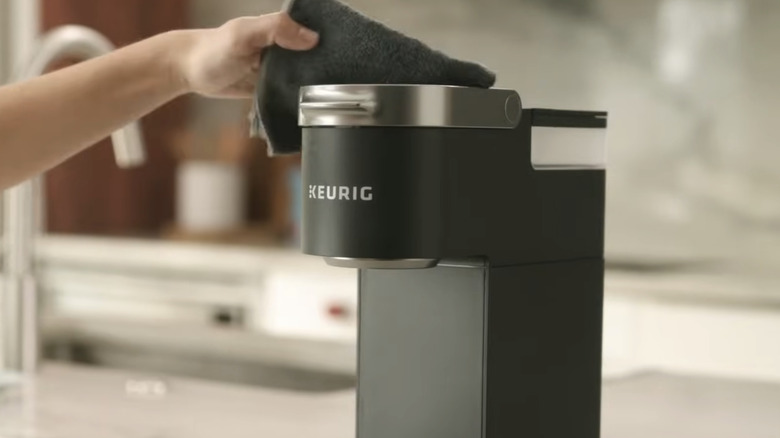
Luckily, Keurig seemed to have realized that if people are to be encouraged to clean certain parts of their machine weekly, those parts are going to have to be removed easily — and they can be. These components each pop or slide out with minimal effort, and perhaps more importantly, it's equally painless to reattach them. But that's getting ahead of ourselves. To clean each part, use warm, soapy water and a soft sponge or washcloth.
If your drip tray is particularly heinous, with caked-on layers of dried coffee residue and splashes, you might want to let the tray soak for 20 to 30 minutes to save yourself the hassle of scrubbing. If your tray happens to be hosting mold, rinse off the growth and soak the component in distilled white vinegar to kill any remaining spores before proceeding with a final soapy wash.
It's also worth mentioning that while you can towel-dry the drip tray and K-cup holder insert, it's best to let the water reservoir air-dry. This prevents bits of lint from getting left behind and ending up in whatever you opt to make with your Keurig, such as easy-peasy ramen in a cup or a one-and-done oatmeal breakfast.