

Why 1980s Meals Were Always Garnished With Parsley
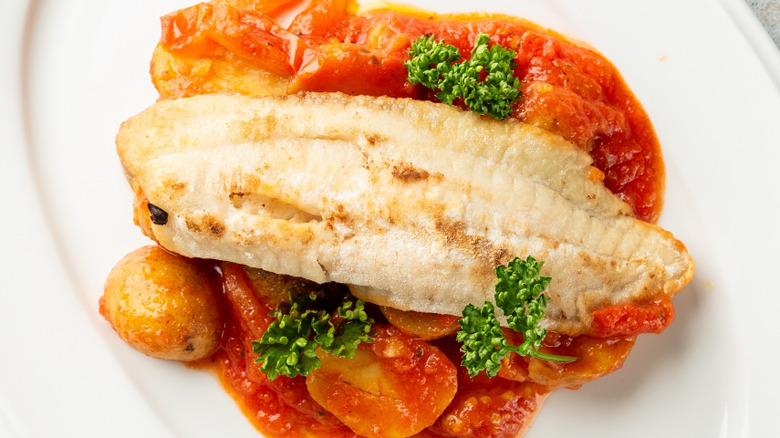
In modern culinary culture, a food garnish is often a contentious topic. Yet flash back to the 1980s, and curly parsley twigs fell onto just about everything, landing on the plates of both upscale restaurants and modest eateries. But why?
Historically, most parsley in the U.S. went straight to commercial food suppliers — in fact, in the late 19th century, the herb was used to decorate steaks, solidifying the sprig as a part of butcher culture and later establishing the garnish trend among professional chefs rather than home cooks as early as the 1910s. This craze continued for decades. In the 1970s, the advent of widely distributed frozen food further escalated parsley usage, though most of the time, the herb appeared for no purpose other than presentation — a leftover habit, perhaps, from the meatpacking trade. Whether it was a classic boomer steak dinner, a plate of fried chicken, or even a bowl of soup, diners were expected to look at the dash of green and set the sprig aside — because by now, the garnish had transformed into a symbol of status..
Parsley signaled sophistication. During the decade, French cuisine was particularly in vogue among American cooks, and the herb served as a marker of European plating habits. Subsequently, a sprig of it functioned as a quick and accessible way to inflect a dash of color and Old World charm.
Garnishing trends change over time
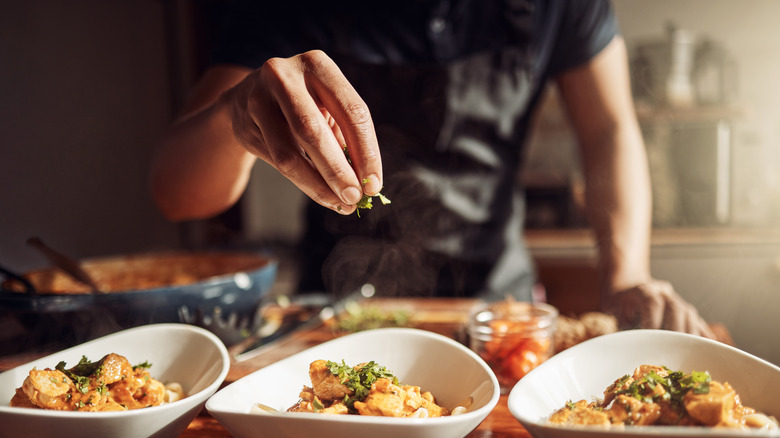
Herb trends change. Today, it's all about flat-leaf parsley, long viewed as the more culinarily versatile choice over the curly variety so popular in the 1980s. However, as that decade concluded, new herbs rose to star status. First came the rise of fresh basil driven by the pesto craze of the late '80s and early '90s, then later a massive surge in cilantro popularity as Southwestern and Tex-Mex cuisines went national. When the latter herb arrived on the scene, it embedded into foods not only as a garnish, but as a central flavor in itself. From green salsas to herb-tinged sandwiches, Americans turned to cilantro with added enthusiasm.
In the 1980s, microgreens also appeared for the first time, initially served at influential Northern Californian restaurants. It took a few decades for the foodstuff to appear in a retail context — even the term microgreen didn't emerge until 1998 — but this nonetheless heralded a more dainty garnish era. By the conclusion of the '80s, fine-dining chefs also reinvigorated the use of edible flowers, further pushing parsley out of the culinary zeitgeist.
Subsequently, sprigs of the herb didn't vacate kitchens entirely, but their application toned down to more reasonable quantities. The essential tip to remember when garnishing food is that the herb should serve a flavor or textural purpose, an ethos now more widely practiced in American kitchens.