

Why You Should Grow Carrots In Toilet Paper Tubes
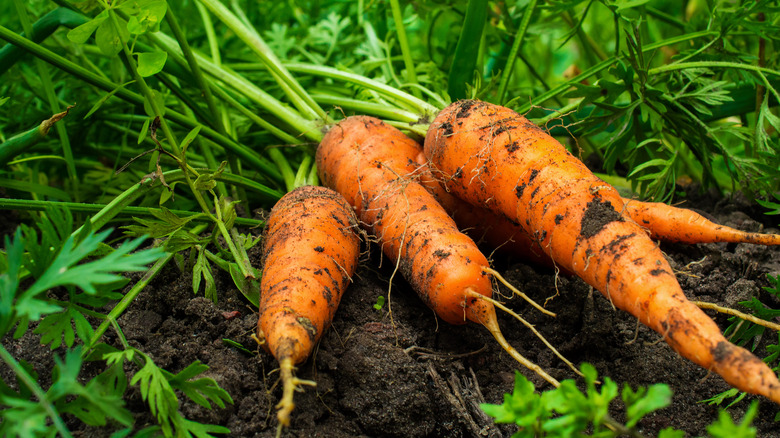
People rarely think twice about tossing toilet paper tubes out, but any savvy gardeners will tell you that they're great for starting carrot seeds. Whether you're looking to get a head start on the growing season or just want a simple, hands-on activity to enjoy with the kids. To make your tiny TP pot, simply cut and fold one end to create a base, fill it with soil, and plant your seeds.
This method is ideal for gardeners who want to start seeds indoors and eventually move them outside. One of the more interesting facts about carrots, however, is that they hate being transported. This is because of their extremely delicate taproot, which it uses to acquire essential water and nutrients. Repotting your carrots or transporting them can disturb or damage the taproot, which can cause it to go into shock. This can stunt your carrots' growth and cause them to grow deformed. This is why the toilet paper tube is so useful. As a biodegradable container, they can be planted directly into the ground along with the seedling, reducing the risk of disturbing the root. With consistent moisture, the cardboard will gradually break down in the soil, allowing the carrot to continue growing undisturbed.
Another benefit of growing carrots in toilet paper tubes is the added layer of protection they can offer against pests. While some gardeners turn to solutions like sprinkling cayenne pepper around plants, these methods can still harm animals. In contrast, the cardboard tube acts as a simple physical barrier, helping to shield young roots from pests such as carrot root fly larvae, which can be particularly damaging. Although it will eventually break down in the soil, it provides protection during the plant's earliest and most vulnerable stage.
Tips for growing healthy carrots
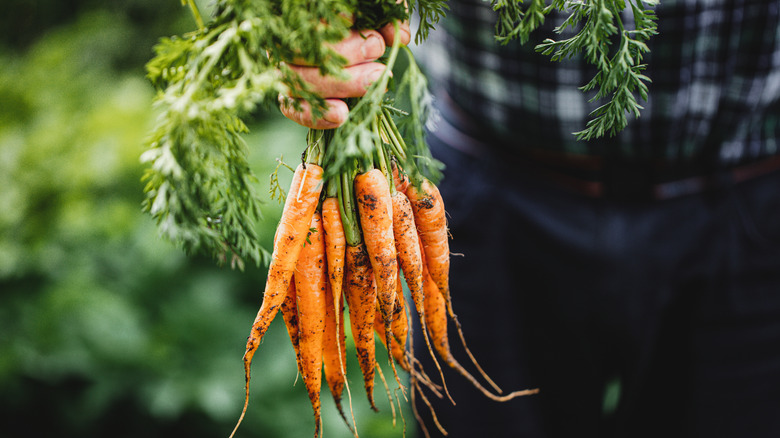
Being hearty root vegetables, carrots are pretty hardy. But they still require a degree of care in order to thrive. For example, while a cardboard toilet tube will help protect the taproot, it's still important to acclimatize your seedlings before planting them outdoors. This process, known as hardening off, helps reduce the stress caused by sudden changes in temperature and conditions. To acclimatize your seedlings, gradually increase the amount of time they spend outside over the course of one to two weeks. Start with a few hours in a sheltered spot, then slowly expose them to more sun, wind, and cooler temperatures. This gentle transition gives your plants the best chance to establish themselves once planted in the ground.
You'll want to make sure the soil you plant your seedlings in is loose. If there are too many rocks, your carrot may look misshapen as they act as physical barriers that cause the taproot to change its direction. For this reason, one of the best ways to grow carrots is in a raised bed, which will allow you to control the depth and composition of the soil.
Fertilizers can give your carrots a boost, and in the spirit of this zero-waste trick, you can also turn leftover kitchen scraps into a homemade compost mix. Just be careful with nitrogen-rich options, as too much nitrogen can encourage leafy top growth at the expense of the roots (the part you actually want to harvest). Most food scraps work well in compost, but if you're planning on using it for carrots, avoid overloading it with high-nitrogen scraps like coffee grounds or eggshells.