

10 Traditional (And Delicious) Easter Dishes From Around The World
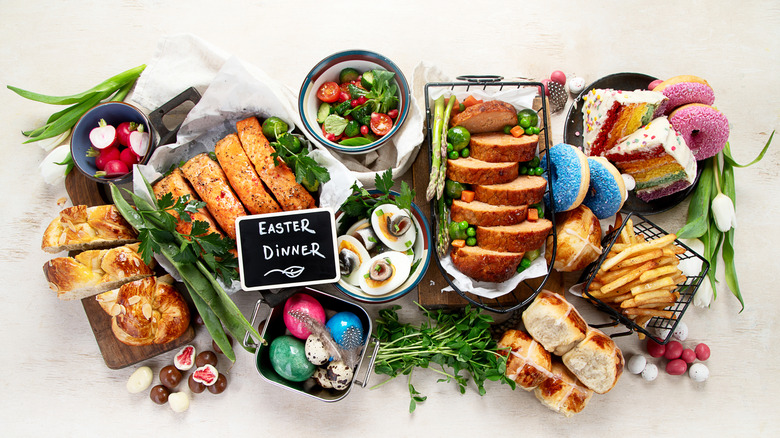
Easter is a joyous time for many people across the globe. The delicious smells of baking bread and roasting hams begin to fill the home. Eggs are boiled and dyed with bright colors, while others are boiled and turned into deviled eggs. And pretty much everyone who celebrates is happy to feast after a long Lent, especially if they've gotten tired of fish for dinner.
Fortunately, there are a myriad of special dishes that have been served worldwide for generations. With everything from stews to pies to cheeses, different cultures have developed their own take on the holiday using local ingredients and culinary know-how. These dishes have served as the basis for countless meals and variations of family recipes. So, if you're looking for inspiration for this year's menu, or just curious how the rest of the world eats for Easter, these dishes will help you enjoy the holiday international-style. They might even become a new tradition for you.
1. Hot cross buns - UK
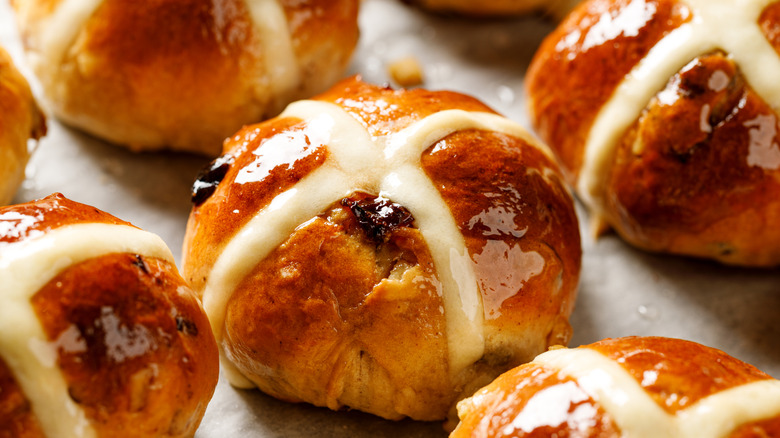
Once used as wards against evil, legend has it that a batch of hot cross buns made on Good Friday won't mold or harden. Unfortunately, that isn't true, but odds are the freshly baked goods will be long gone before you have a chance to notice. A traditional treat in the U.K. on Easter, hot cross buns are spiced breads with fruit and a distinctive pale cross decorating the top. The bread was so popular that the street vendor's call advertising it was turned into a nursery rhyme. If you've ever heard someone saying, "One a penny, two a penny, hot cross buns," you were hearing an echo from the 1800s.
But the buns have an even longer history than that. The bread's origin goes back to ancient Greek cakes that were decorated with crosses, possibly symbolizing the seasons or phases of the moon. The cakes evolved into bread, and bakers began carving them into loaves to help the bread rise. As crosses became associated with Christianity, the buns transitioned into an Easter treat. While the bread isn't strictly for the holiday anymore, the buns are still a staple on British Easter tables, and many people wouldn't have it any other way.
2. Pashka - Russia and Ukraine
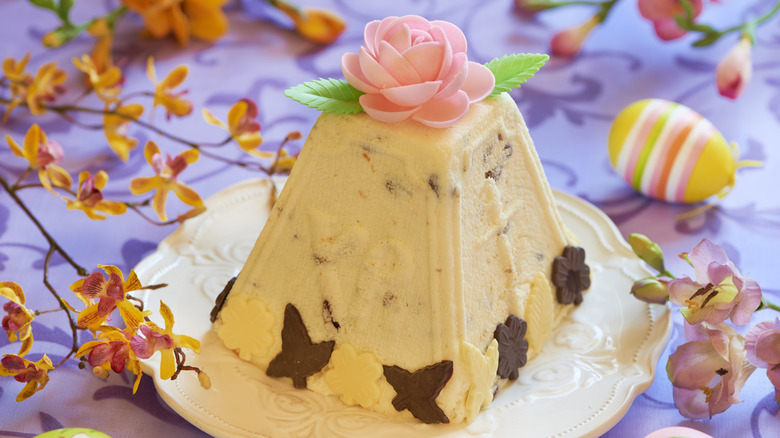
Pashka is an Eastern European sweet cheese that's spread over fresh bread. It's usually drained overnight to firm it enough to stand on its own. This impressive cheese dish is traditionally served in a pyramid shape, with Christian symbols and Greek letters that mean "Christ is risen" molded onto the sides. In fact, the pyramid shape is believed to represent Christ's tomb. The cheese might also be decorated with nuts, fruit zest, or candy.
In Russia and Ukraine, cooks use farmer's cheese, but in the U.S., many people have greater access to cream and cottage cheeses. Butter, cream, sugar, and spices are added to the cheeses, along with three raw egg yolks. If you'd like to make pashka yourself, be sure you're using good-quality fresh eggs for the best flavor and the least chance of bacterial poisoning. You can also substitute hard-boiled egg yolks, but they will change the color and texture of the finished product.
3. Tsoureki - Greece
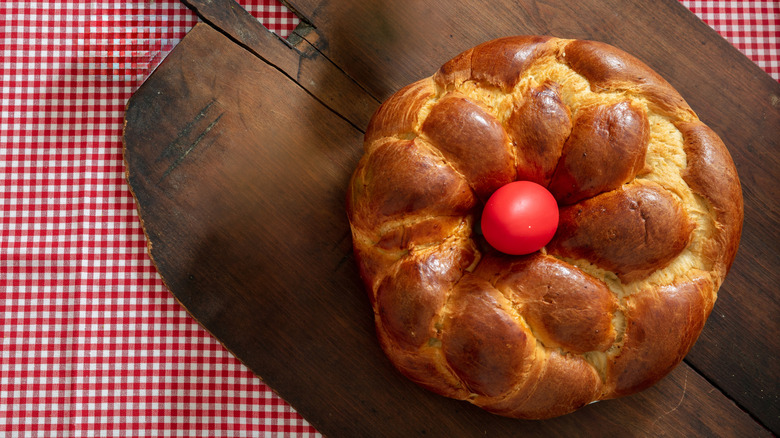
If you've ever seen beautifully braided loaves of bread with brightly colored eggs woven in, you were probably looking at a tsoureki, Greece's answer to challah bread. Because the Greek Orthodox Church's date for Easter is based on the Julian calendar, it can fall anywhere from April 4 to May 8. This means secular Easter and Greek Orthodox Pascha rarely happen on the same day, and you might see these loaves months after you thought the holiday had passed.
Tsoureki is enriched with eggs and butter and flavored with mastic and mahlep. Mastic is a Greek ingredient that can only be found on one of its islands, Chios. The resin comes from the Mastic tree, has a floral taste, and is dried into small pieces. To use it, you have to grind the resin crystals into a powder. Mahlep, on the other hand, comes from finely-ground cherry pits. The flavor is almond-like.
Tsoureki dough is separated into three strips and braided together. In ancient times, these shapes were thought to protect against evil and later began to symbolize the Christian Holy Trinity. Another element that was absorbed into the bread was decorated eggs, namely in the form of red dye. Eggs have long been part of pagan spring celebrations, and when they were adopted as a part of the Easter holiday, Greek cooks dyed them bright red to represent Christ's blood. The eggs perch on a nest of bread, serving as a powerful fusion of traditions.
4. Colomba pasqua - Italy
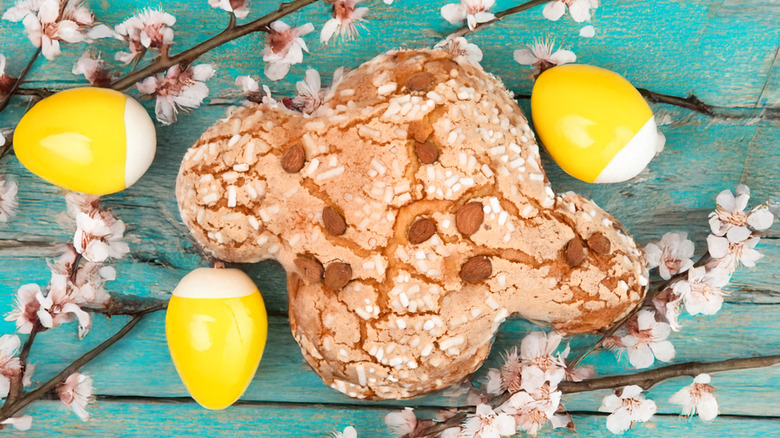
No matter if you spell it colomba pasqua or pasquale, it's the same delicious treat. This Italian sweet bread is often made in the shape of a dove to symbolize the Holy Spirit in the Christian trinity. It's covered in pearl sugar, giving it a satisfyingly sweet crunch when you bite it. That sweetness was hard to come by a few decades ago, when butter, sugar, candied orange, and vanilla were so expensive that few families cooked with them outside of important holidays. If those ingredients sound familiar, the colomba pasqua is very similar to a panettone and is just as revered in Italy. The yeasted colomba bread can also take several days to make, depending on the baker.
Colomba's origin is shrouded in mystery, with some saying it dates back to the 500s and others placing its creation around the 1100s. Either way, the bread was a hit and spread across the various regions of what would become Italy a few centuries later. Today, the recipe has changed slightly, with new cooks tweaking ingredients to include cardamom, lemon, and pistachio.
5. Torta pascualina - Italy, Argentina, and Uruguay
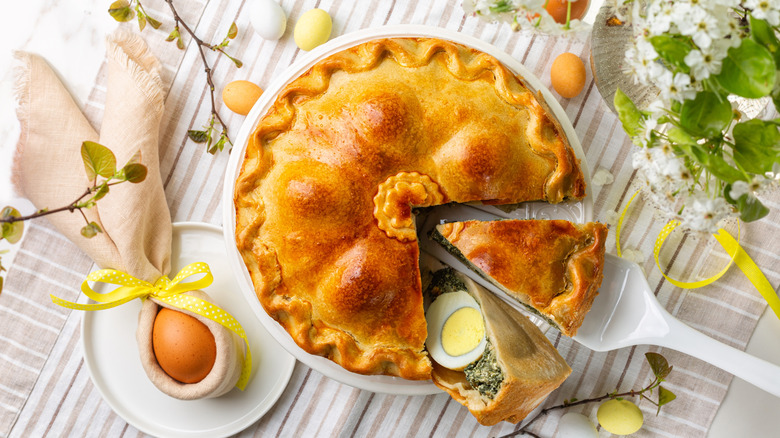
Torta pascualina was created in Liguria, Italy, around the 1500s and migrated across the ocean to South America with immigrants. In particular, Argentinians and Uruguayans developed a taste for the thick, rustic pie as nearly half of each country's population has Italian ancestry. It's filled with spinach, ricotta, and hard-boiled eggs encased in a thick pastry. Traditionally, whatever spring greens grew in a region would be incorporated into the dish, along with a strong-tasting cheese to complement the ricotta. Beyond that, recipes vary between regions and even between families. Some have adapted the pie to include more veggies, such as garlic, peas, onions, and artichokes.
Legend has it that cooks originally made the pie with 33 layers to honor the 33 years of Christ's life. The pie has evolved into a much simpler version since then, with a shell made from flour, water, salt, olive oil, and sometimes butter. Home cooks can also opt to use pre-made phyllo dough to make the pie even easier to assemble.
6. Mämmi - Finland
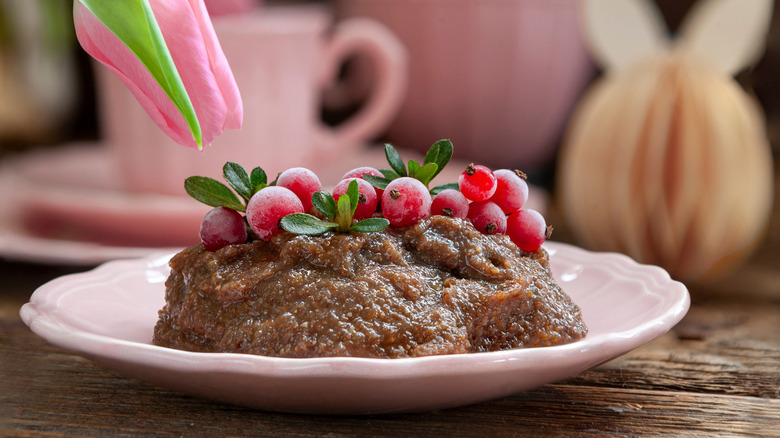
Rye is a staple of Finnish cooking, and the country's Easter treat, mämmi, is built around it. The thick, black or dark brown dessert is made in three stages with a variety of rye flours, water, dark syrup, and orange peels. This gives the dish a deeply molasses flavor, while the cooking technique gives it a rich, pudding-like texture.
This isn't a dessert for faint-hearted cooks. It requires preparation and patience, as well as a good oven thermometer to ensure the temperature stays consistent. The first stage of making mämmi involves boiling water and two types of rye flour, before sealing the mixture in a warm oven for a few hours. This allows the base flavors to develop while the flours hydrate. After that, water is again boiled before being added to the warm rye flour mixture in the oven. The mixture will cook in the oven for another two hours before the final ingredients are added.
The third phase is the most labor-intensive because the cook has to re-boil the mixture with all the ingredients incorporated, cooking it down into a thick batter consistency. The mixture is then, you guessed it, divided and baked again for around two and a half hours. The final bake is done in a hot oven, causing the pudding to bake into a thick dessert that tastes better after a night of rest, allowing the flavors to finish developing.
7. Advocaat - The Netherlands and Germany
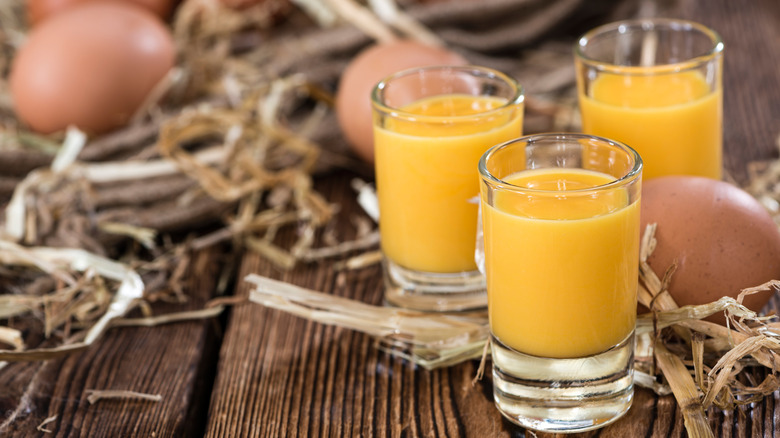
If you've never heard of advocaat, you're not alone. The drink is popular in the Netherlands and Germany around the holidays, particularly Easter, and is the region's version of an eggnog. It's sometimes thick enough to be eaten with a spoon.
Advocaat is the Dutch word for lawyer, and legend has it that the libation was given to legal counsel before they spoke publicly to coat their throats for the event. Whether or not that's true, it's almost as good a story as the origin of the drink. One theory involves Dutch colonists enjoying an alcoholic drink made with avocados while in South America, before they adapted the recipe to use eggs and brandy back home.
Today, advocaat is typically made with vanilla and spices like nutmeg, giving it an even closer association with eggnog. The drink has also made its way into desserts, breads, and cocktails. This riff on a classic snowball cocktail will let you add advocaat to your Easter festivities with a refreshing orange twist.
8. Souvla - Greece and Cyprus
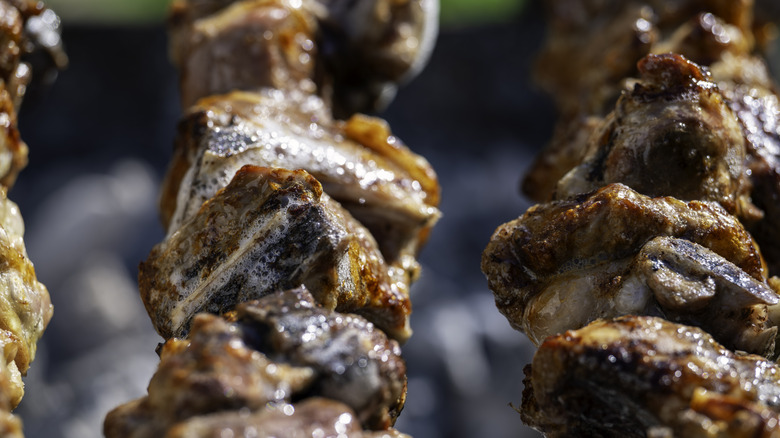
Lamb is as traditional as it gets for Easter meals, as many Christians refer to Christ as the lamb of God. In France, they roast whole lamb shanks, but in Greece and Cyprus, pieces of the meat are slow-roasted barbecue-style, over charcoal. The name souvla refers to the Greek word for a rotating spit, which is exactly how the lamb is cooked. Large chunks of lamb are repeatedly rotated for hours, allowing the dish to cook slowly and evenly. It's typically seasoned simply with salt, pepper, garlic, and oregano. Some cooks add lemon too, but the lamb is always the star of the show.
Making souvla is a family event on Easter Sunday. Often, the family's patriarch will tend the spit, and traditional music is played. If you're looking for the best cut of lamb for your own Easter roast or barbecue, the leg is a flavorful cut that remains moist during cooking, thanks to the collagen it contains.
9. Capirotada - Mexico
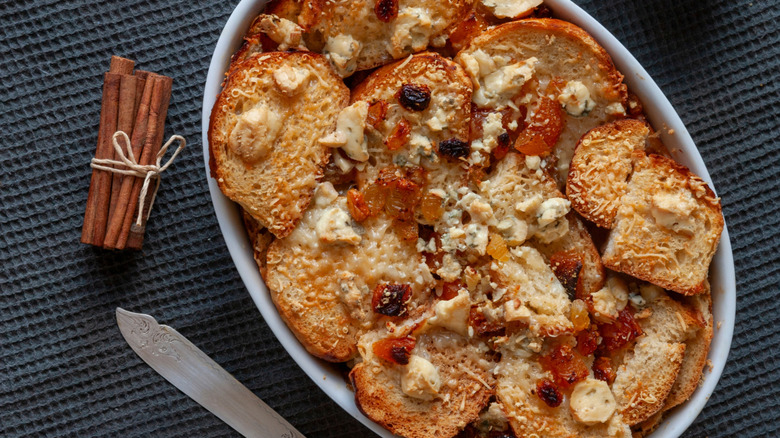
Mexico's version of bread pudding has a long and fascinating history. Originating around 500 years ago, capirotada began as a savory dish with meat and eggs before transitioning into a dessert. The original recipe still had sugar in it, although not to make the meal sweeter. Instead, sugar was seen as a spice at the time, so it was often incorporated into savory dishes. Capirotada also has the distinction of having been named by the Spanish Inquisition as a way to interrogate converts to Catholicism over their faith, just like not eating eels or cooking in olive oil.
Thankfully, those days are long past, and what remains is a dessert that's taken on heavy Catholic symbolism through the years. For believers, the pieces of bread represent Christ's body, while the dish's syrup substitutes for the blood. Salty cheese stands in for the death shroud, and cinnamon sticks take over for the cross. The result is a customizable dessert that's cemented as an Easter staple on many tables throughout Mexico.
10. Doro wat - Ethiopia
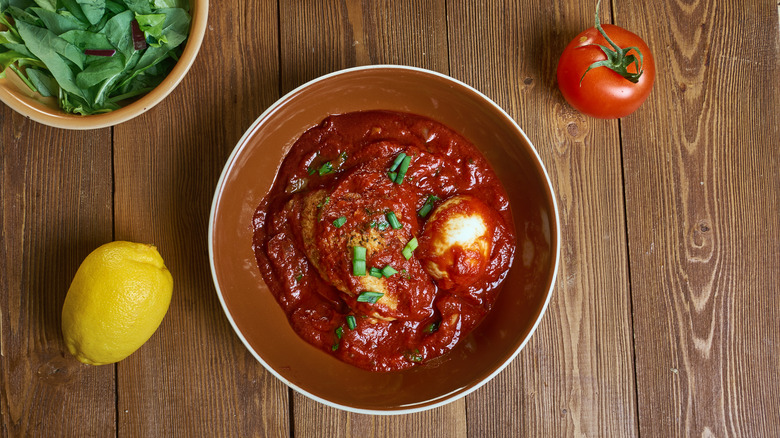
Ethiopia is home to one of the world's oldest Christian traditions and the world's oldest Bible. It's no wonder then that the country takes the holiday very seriously. Among the many traditional foods in the country, one recipe you'll find on household tables at Easter, called Fasika in Ethiopia, is the national dish, doro wat. The spiced chicken stew is served with hard-boiled eggs and the traditional flatbread, injera. Doro wat also uses the spice blend berbere, which is a rich mix of spices and herbs, such as chili powder, coriander, cardamom, and paprika.
The dish is part of a communal experience, with large pieces of injera spread across the dining table for each guest to tear off pieces to use as a utensil for scooping up the stew. This approach is used throughout the Horn of Africa, where injera bread is common. To be polite, it is customary to eat the sauce and eggs before moving on to the chicken.
Static Media owns and operates Tasting Table and Food Republic.