

The Law-Breaking Act You Never Want To See Your Bartender Commit
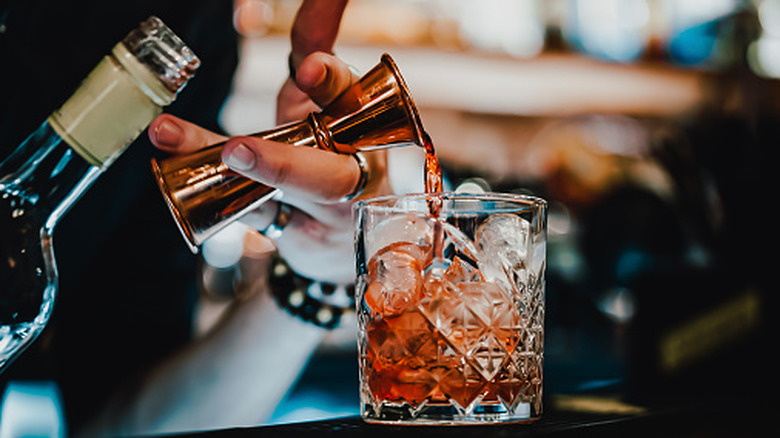
A trip out for drinks should always be a fun and carefree experience. But one of the biggest red flags at a cocktail bar is seeing your bartender combine two bottles of alcohol. This practice, known as "marrying bottles," can have entirely reasonable motivations, such as saving space and reducing wastage. However, regardless of the intention, it's illegal under federal regulation 27 CFR § 31.201. This provision bans adding any substance not contained in the original bottle. As this is a federal law, it's binding across the United States, and many state liquor laws also mirror this rule.
Although illegal, this practice often goes on behind the scenes. On Reddit, many bartenders have revealed firsthand that the practice is still commonplace within the industry. "I work at a nice place and we definitely marry like bottles even though it is against the law," one commenter admitted. "It's a workplace rule that we have to do it at the end of our shifts," another Redditor revealed. "I just make sure no customers see me do it."
While some bartenders are quick to argue that the rule is overkill, it does serve an important purpose. It primarily protects customers from fraud, as there's a big difference between top-shelf and call drinks, and it prevents bars from refilling premium liquor bottles with cheap or counterfeit alcohol. The rule also supports public health by reducing the risk of cross-contamination with allergens or from potentially contaminated batches.
What happens if a bar is caught marrying bottles?
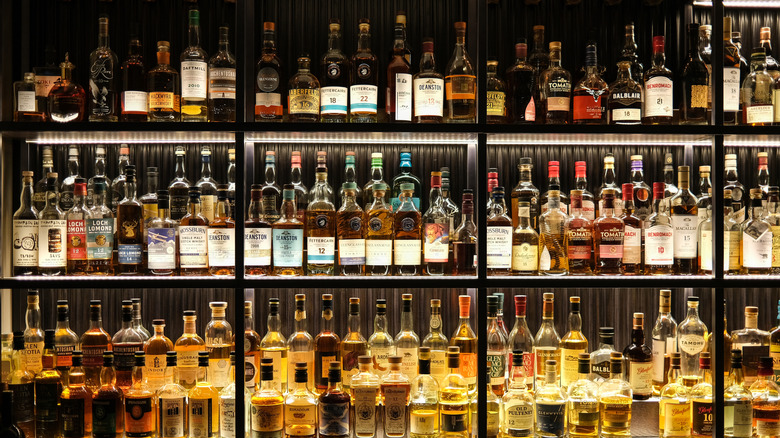
While the practice of marrying bottles is illegal, it is likely under-enforced. As many bartenders have admitted, it usually takes place behind closed doors or when the bar is closed, making it difficult to spot unless a customer witnesses it or a staff member reports it. However, if a bar is caught marrying bottles, the repercussions are serious.
There are several possible outcomes, each ranging in severity. For example, in Maryland, a bar was fined $2,500 by the Board of License Commissioners for refilling smaller bottles from a larger single bottle. In a similar case, a Texas bar was also fined $900. These cases represent the more "harmless" side of marrying bottles, where the motivation is based more on practicality than cost-cutting or fraud. In calculated, organized cases of marrying bottles, the consequences can be much more severe. In Iowa, a bar had its liquor license temporarily revoked for knowingly refilling luxury bottles with cheap brands. In one of the most famous crackdowns, known as "Operation Swill," 29 New Jersey bars were raided for substituting premium liquor with cheaper alternatives, including dirty water and rubbing alcohol, which resulted in a staggering $500,000 settlement.
If you're at a bar and want to spot a married bottle, look for damaged labels or dirty, worn bottles, which are potential signs they have been used longer than expected. While some cheap liquor can taste top-shelf, another potential clue is "premium" alcohol tasting unusually harsh, which can indicate cheaper liquor. Still, unless you see it happen firsthand, proving a bottle has been married can be a challenge.